Introduction to Multimodal AI
Multimodal AI represents the frontier of artificial intelligence systems that can process, understand, and generate information across multiple types of data simultaneously. While traditional AI systems specialize in a single modality — text-only language models, image-only vision systems, or audio-only speech recognizers — multimodal AI breaks down these boundaries, creating systems that can reason across text, images, audio, video, and other data types in an integrated way. This ability to work across modalities mirrors human perception more closely than any single-modality system, opening up richer and more natural forms of human-AI interaction.
The significance of multimodal AI extends far beyond academic interest. A model that can both read text and interpret images can understand memes, analyze charts, describe photographs for visually impaired users, and read handwritten notes. A system that integrates audio can transcribe speech while recognizing emotional tone, identify music from a hummed melody, and understand video content by combining visual and auditory information. As these capabilities mature, multimodal AI is transforming industries from healthcare (analyzing medical images alongside patient records) to education (creating interactive learning experiences) to entertainment (generating and understanding multimedia content). Several major AI models now offer multimodal capabilities, including GPT-4V, Claude 3/3.5 with vision, Gemini, and open-source models like LLaVA and ImageBind.
How Multimodal Models Work
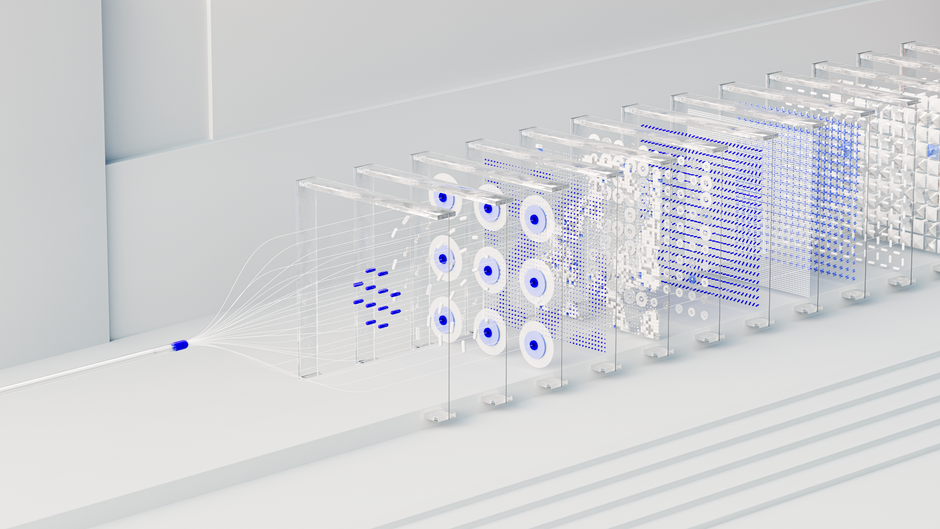
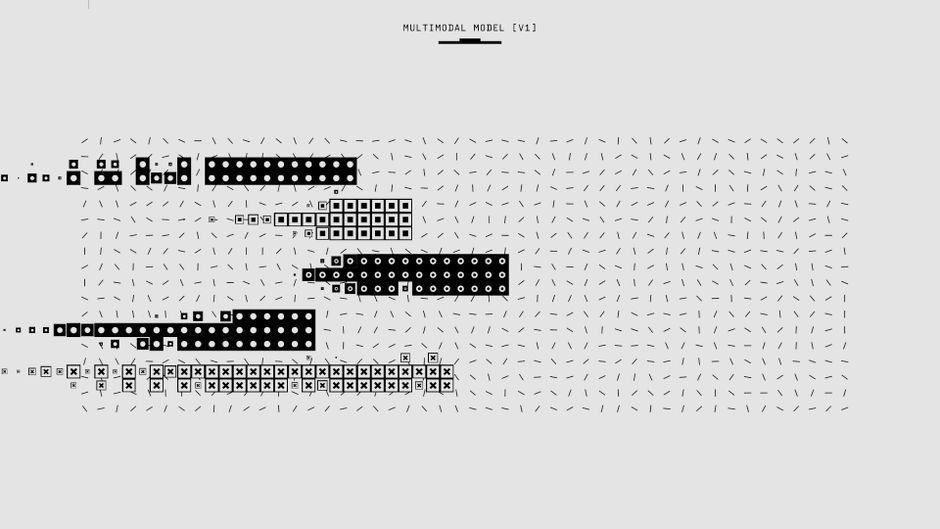
Multimodal AI systems face a fundamental architectural challenge: how to combine information from different modalities that have fundamentally different structures and statistical properties. Text is discrete and sequential, images are dense grids of pixels with spatial structure, audio is a time-varying signal, and video extends across both space and time. Most successful multimodal approaches address this through a combination of three strategies: modality-specific encoders, alignment learning, and cross-modal fusion.
The typical architecture begins with modality-specific encoders: each input type is processed by a specialized neural network that extracts meaningful features. Text is processed by a language model (often a transformer), images by a vision encoder (a vision transformer like ViT, or a convolutional network), and audio by an audio encoder (like Whisper or HuBERT). These encoders produce representations in their own dimensional spaces. The key challenge is alignment — learning to map these different representations into a shared embedding space where corresponding concepts from different modalities are close together. CLIP (Contrastive Language-Image Pre-training) pioneered this approach by training a text encoder and an image encoder jointly on 400 million image-text pairs, learning to project the description "a dog playing in the park" and an image of exactly that into nearby points in a shared embedding space. Finally, cross-modal fusion combines information from different modalities for tasks like visual question answering, where the model must integrate text and image information to produce an answer. Fusion can occur at different levels: early fusion combines raw inputs, late fusion combines high-level features, and intermediate fusion builds cross-modal interactions through attention mechanisms at multiple layers. For more on the underlying architectures, see our guide on the transformer architecture.
What's the catch?
Major Multimodal Models and Architectures
Several landmark multimodal models have defined the field's trajectory. CLIP (OpenAI, 2021) demonstrated that contrastive learning on 400 million image-text pairs could produce a model that performs zero-shot image classification, text-guided image retrieval, and image-text similarity matching with remarkable accuracy across diverse visual concepts. CLIP's dual-encoder architecture (separate text and image encoders connected through a contrastive loss) became the foundation for many subsequent multimodal systems.
Flamingo (DeepMind, 2022) introduced the concept of gated cross-attention to enable few-shot visual reasoning. By interleaving pre-trained vision and language encoders with learnable gating parameters, Flamingo could adapt a large frozen language model to process visual inputs with minimal additional training, demonstrating strong in-context multimodal learning. LLaVA (Large Language and Vision Assistant) popularized a simpler and more accessible architecture using a projection layer (a simple linear or MLP mapping) to connect a pre-trained vision encoder to a large language model, demonstrating that even lightweight cross-modal connections can produce capable multimodal systems. ImageBind (Meta, 2023) extended multimodal alignment to six modalities (images, text, audio, depth, thermal, and IMU data) by binding them all to images as a common reference point, showing that alignment generalizes beyond vision and language.
GPT-4V and GPT-4o from OpenAI represent the current state of the art in commercially available multimodal AI, with the ability to process images alongside text in a unified manner. Claude 3.5 Sonnet and Claude Opus 4 support image inputs for visual reasoning and document analysis. Gemini from Google is natively multimodal, trained jointly on text, images, audio, and video from the ground up rather than stitching together separate modality-specific components. These models demonstrate that native multimodality — joint training across modalities from the start — produces more coherent cross-modal understanding than late fusion of separate encoders. To learn more about how these models handle data, see our article on embeddings in machine learning.
But does it actually work that way?
Training Strategies for Multimodal Models
Training multimodal models presents unique challenges that have driven innovative training strategies. Contrastive learning (used in CLIP and similar models) trains the model to pull matching image-text pairs together in the embedding space while pushing non-matching pairs apart. The contrastive loss operates on batches containing N image-text pairs, computing a (N x N) similarity matrix and maximizing the similarity of N correct pairs relative to N² - N incorrect pairs. This approach is data-efficient and produces strong representations. Masked modeling extends the masked language modeling approach to multiple modalities: the model is trained to predict masked portions of any modality given unmasked portions of all modalities. For example, the model might predict a masked region of an image given the surrounding image context and the full text caption.
I'll be honest: Multi-task training trains the model simultaneously on multiple multimodal objectives — image-text matching, image-text contrastive learning, masked language modeling conditioned on images, and text-conditioned image generation — building a more comprehensive understanding through shared representations. Interleaved pre-training on data where text and images naturally co-occur (web pages, documents with figures, social media posts) teaches models to switch between modalities within a single context. The scale of multimodal training data is enormous: CLIP used 400 million pairs, Flamingo trained on 2.1 billion image-text pairs, and GPT-4V's training data is undisclosed but likely exceeds these by a large margin. Data quality, diversity, and alignment between modalities are critical — noisy, poorly matched, or biased data produces models with corresponding weaknesses. Synthetic data generation is increasingly used to augment multimodal training datasets with higher-quality, more diverse, and better-aligned examples.
Applications Across Industries
From what I've seen, multimodal AI is transforming many industries through its ability to reason across different types of information. In healthcare, multimodal systems can analyze medical images (X-rays, MRI, CT scans) alongside patient records, lab results, and clinical notes to provide more comprehensive diagnostic assistance. A multimodal AI might identify a suspicious region in a lung CT scan, correlate it with the patient's smoking history from text records, and flag the case for urgent review — integrating information that would require consulting multiple specialists.
In autonomous vehicles, multimodal perception is essential. Self-driving systems combine camera images, LiDAR point clouds, radar data, audio (sirens, honks), and GPS/map data to build a comprehensive understanding of the driving environment. Each modality provides complementary information: cameras excel at recognizing objects and reading signs, LiDAR provides precise depth information, radar works in adverse weather, and microphones detect emergency vehicles. In content creation, multimodal AI enables text-to-image generation (DALL-E, Midjourney), image-to-text captioning, text-to-video generation, and AI-assisted video editing where natural language commands can modify visual content. E-commerce uses multimodal search where users can search for products using images, text descriptions, or both, and recommendation systems that understand product relationships across visual and textual features. In education, multimodal AI tutors can present information through text, diagrams, and spoken explanations while understanding student questions in any modality.
Too good to be true?
Challenges and Future Directions
Multimodal AI faces several significant technical challenges. Alignment granularity is a persistent issue — while CLIP-level alignment captures coarse correspondence between images and text descriptions, fine-grained alignment (matching specific objects, attributes, and relationships in an image to specific words in a description) remains difficult. Cross-modal hallucination occurs when models generate information in one modality that contradicts information in another — for example, describing an object in an image that isn't actually there, or generating an image from a text description that misses key details.
Computational cost is another major challenge: processing multiple modalities simultaneously requires significantly more compute than single-modality models, and training multimodal models at scale requires enormous datasets and compute budgets. Data scarcity for certain modality combinations (e.g., video-audio-text triplets) limits progress in those areas. Evaluation of multimodal models is more complex than single-modality evaluation — there are more dimensions to measure, and it's harder to disentangle whether failures stem from misunderstanding one modality or from the cross-modal integration itself.
Future directions include truly native multimodality where models are trained from scratch on all modalities jointly rather than connecting pre-trained single-modality components; video understanding moving beyond short clips to long-form video comprehension with narrative and temporal reasoning; embodied multimodal AI where robots and agents use multiple sensory modalities to interact with the physical world; and multimodal reasoning that performs complex chains of reasoning across modalities, understanding causal relationships between textual descriptions and visual evidence. The convergence of these developments points toward AI systems that perceive, understand, and interact with the world in increasingly human-like ways.
My Honest Take
- Multimodal AI processes and integrates multiple data types (text, images, audio, video) for richer, more human-like understanding.
- Typical architecture uses modality-specific encoders, cross-modal alignment (contrastive learning), and fusion mechanisms for integrated reasoning.
- Major models include CLIP (vision-language alignment), Flamingo (few-shot visual reasoning), LLaVA (lightweight multimodal), and native multimodal models like GPT-4V and Gemini.
- Training strategies include contrastive learning, masked modeling, multi-task training, and interleaved pre-training on naturally multimodal data.
- Applications span healthcare (integrated diagnostics), autonomous driving (multi-sensor fusion), content creation, e-commerce, and education.
- Key challenges include alignment granularity, cross-modal hallucination, computational cost, and evaluation complexity.