Introduction to Embeddings
Game changer.
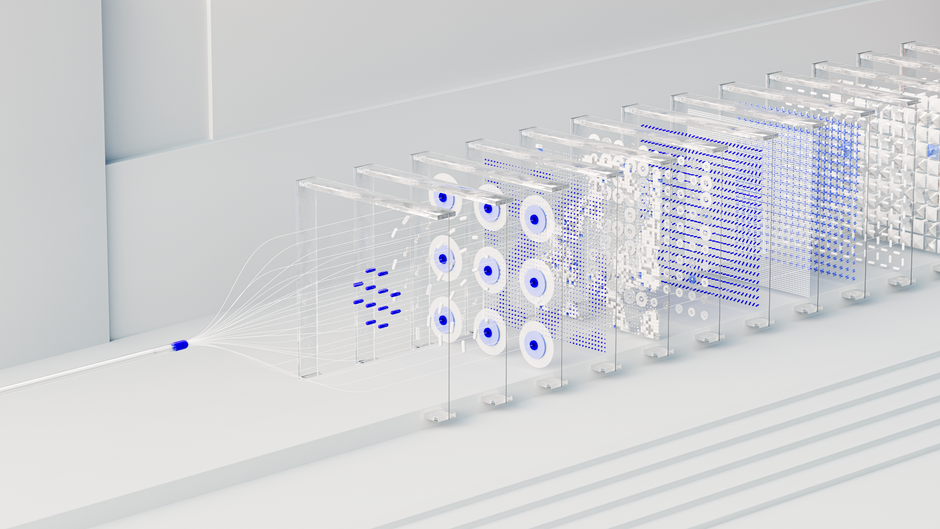
Embeddings are among the most fundamental and transformative concepts in modern machine learning. At their simplest, embeddings are numerical representations of real-world data — words, sentences, images, products, users, or any other type of entity — mapped into a continuous vector space. What makes embeddings powerful is that this mapping is learned to preserve semantic relationships: similar items end up close together in the embedding space, and meaningful relationships between items are captured as vector arithmetic operations.
The concept of embeddings has changed how machines process and understand data. Before embeddings became widespread, models typically represented categorical data using one-hot encoding — sparse vectors where each category had a dimension of its own, with no notion of similarity between categories. The word "cat" and "dog" were as different as "cat" and "quantum physics." Embeddings changed this by learning dense, low-dimensional representations where semantically similar items naturally cluster together. This ability to capture meaning and relationships in a mathematically tractable form underlies virtually every modern AI application, from search engines and recommendation systems to large language models and multimodal AI.
But does it actually work that way?
How Embeddings Are Created
The process of creating embeddings involves training a neural network to map input data into a vector space where specific properties are preserved. For word embeddings, the classic approach uses a sliding window over a large text corpus, training the model to predict a word from its context (Continuous Bag of Words, or CBOW) or predict the context from a word (Skip-gram). These approaches, popularized by the word2vec model (Mikolov et al., 2013), produce embeddings where words that appear in similar contexts end up with similar vectors. For example, "king" and "queen" will be nearby, and the famous analogy "king - man + woman = queen" can be approximately computed through vector arithmetic.
Modern embedding methods have evolved significantly. Contextual embeddings, produced by models like BERT and its successors, generate different embeddings for the same word depending on its surrounding context — the word "bank" receives a different embedding in "river bank" versus "savings bank." This contextual sensitivity dramatically improves performance on tasks requiring nuanced language understanding. Sentence embeddings (from models like Sentence-BERT, Instructor, or text-embedding-3) represent entire sentences or paragraphs as single vectors, enabling semantic similarity comparison across documents. The training process for sentence embeddings typically uses contrastive learning: pairs of similar sentences are pulled together in the embedding space while dissimilar pairs are pushed apart. Image embeddings from convolutional neural networks or vision transformers capture visual features, with similar images (same object, scene, or style) clustering together. Modern multimodal models like CLIP produce aligned embeddings across modalities — images and their text descriptions map to the same region of the embedding space. For more on how these models process information, see our guide on neural network architectures.

Properties of Embedding Spaces
The geometry of embedding spaces encodes meaningful semantic information in several ways. Proximity (measured by cosine similarity, Euclidean distance, or dot product) indicates semantic similarity: words with similar meanings, images of similar objects, or documents on similar topics will have similar embedding vectors. Cosine similarity, which measures the angle between vectors regardless of their magnitude, is the most commonly used similarity metric for embeddings because it focuses on direction rather than magnitude, which tends to capture semantic relationships more reliably.
Directional relationships encode analogical structure. The classic example "king - man + woman = queen" demonstrates that certain directions in the embedding space correspond to specific semantic dimensions (gender, royalty, etc.). This property enables algebraic manipulation of concepts. Clustering naturally emerges in embedding spaces — documents on the same topic, products in the same category, or users with similar preferences form distinct clusters, enabling applications like topic discovery, anomaly detection, and recommendation. Hierarchical structure often emerges as well: broad categories (animal) contain subcategories (mammal, reptile), which further contain specific instances (dog, cat). The curse of dimensionality affects high-dimensional embeddings — distances become less meaningful in very high dimensions, which is why embedding dimensions are carefully chosen (typically 384, 768, or 1536 dimensions) to balance expressiveness with practical utility.
What's the catch?
Applications of Embeddings
What surprised me was embeddings power a remarkably diverse range of AI applications. Semantic search is one of the most widespread uses: instead of keyword matching, search systems using embeddings can find documents that are semantically similar to a query, even if they share no exact words. A search for "how to fix a leaking faucet" can return results about "plumbing repair" and "water tap maintenance" because these concepts have similar embeddings. This semantic understanding dramatically improves search quality, especially for long-tail queries.
I've been using this for a while now, and Recommendation systems use embeddings to represent users and items (products, movies, articles) in a shared embedding space. User embeddings are learned from their interaction history, and recommendations are made by finding items whose embeddings are closest to the user's embedding. This approach captures subtle preference patterns and enables serendipitous discovery. Anomaly detection leverages the clustering property of embeddings: normal data points cluster together in the embedding space, while anomalous points are far from any cluster. This is used in fraud detection, network security, and manufacturing quality control. Retrieval-Augmented Generation (RAG) uses embeddings for its retrieval stage, converting queries and documents into embeddings and finding the most relevant documents through similarity search in a vector database. For a deeper dive into this architecture, see our article on RAG. Transfer learning frequently involves using pre-trained embeddings as input features for downstream models, allowing smaller models to benefit from the rich representations learned by large, pre-trained models.
Does this live up to the hype?
Embedding Models and Vector Databases
The practical deployment of embedding-based applications requires two key technologies: embedding models to generate vectors, and vector databases to store and search them efficiently. Embedding models come in many varieties optimized for different use cases. OpenAI's text-embedding-3-small and text-embedding-3-large are popular general-purpose models. Open-source alternatives include the BGE family from BAAI, the E5 models from Microsoft, and the Instructor models from HKU. For multilingual applications, models like multilingual-e5 and LaBSE support 100+ languages. For code, models like code-search-ada or starencoder produce embeddings optimized for code search and understanding.
Vector databases are specialized database systems designed for efficient storage and retrieval of embedding vectors. They implement Approximate Nearest Neighbor (ANN) algorithms that can search billions of vectors in milliseconds with high recall. Popular options include Pinecone (fully managed), Weaviate (open-source with hybrid search), Qdrant (Rust-based and fast), Milvus (enterprise-grade scalable), Chroma (lightweight, developer-friendly), and pgvector (brings vector search to PostgreSQL). The choice of vector database depends on factors including scale, latency requirements, availability needs, hybrid search capabilities, and budget. Most vector databases support CRUD operations on vectors, metadata filtering, and various distance metrics (cosine, Euclidean, dot product), making them the backbone of modern embedding-powered applications.
Evaluating Embedding Quality
Measuring the quality of embeddings is essential for building effective applications. Intrinsic evaluation measures the quality of the embedding space itself through tasks like word similarity (how well cosine distances correlate with human similarity judgments), analogy completion (accuracy on "king:queen :: man:?" tasks), and concept categorization (clustering accuracy). Standard benchmarks include WordSim-353, SimLex-999, and the Google Analogy dataset. These evaluations help characterize the semantic properties of different embedding models.
Extrinsic evaluation measures how well embeddings perform on downstream tasks. For RAG systems, this means retrieval metrics like recall@k, mean reciprocal rank (MRR), and NDCG on question-answering datasets. For classification tasks, it means accuracy or F1 score when embeddings are used as features. The Massive Text Embedding Benchmark (MTEB) has become the standard leaderboard for evaluating embedding quality across 50+ datasets covering retrieval, classification, clustering, and semantic similarity. Robustness considerations include how well embeddings handle out-of-domain data, typos, variations in phrasing, and ambiguous queries. Bias evaluation is increasingly important — embeddings trained on biased text can encode harmful stereotypes, and measuring and mitigating these biases is an active area of research in responsible AI.
Sound familiar?
The Short Version
I learned this the hard way: - Embeddings are dense vector representations that capture semantic meaning, with similar items positioned close together in the embedding space.
- They are created through neural network training using context prediction (word2vec), contrastive learning (sentence embeddings), or multimodal alignment (CLIP).
- Embedding spaces exhibit useful geometric properties: proximity indicates similarity, directional relationships encode analogies, and clustering reveals natural categories. — wish I'd known this six months ago
- Key applications include semantic search, recommendation systems, anomaly detection, RAG, transfer learning, and classification.
- Embedding models (text-embedding-3, BGE, E5) generate vectors, while vector databases (Pinecone, Weaviate, Qdrant, pgvector) store and search them efficiently.
- Embedding quality is evaluated through intrinsic benchmarks (similarity, analogy) and extrinsic tasks (retrieval, classification, clustering).