Introduction to Edge AI
Edge AI refers to the deployment of artificial intelligence algorithms directly on local devices — smartphones, IoT sensors, cameras, wearables, industrial controllers, and other edge hardware — rather than running AI computations in centralized cloud servers. This shift from cloud-centric AI to edge-based processing represents one of the most significant trends in modern AI deployment, driven by the convergence of powerful mobile hardware, efficient model architectures, and growing demands for real-time processing, privacy preservation, and offline functionality.
The motivation for edge AI is compelling. When AI runs on the device itself, there's no need to send data to the cloud for processing, eliminating network latency and bandwidth costs. A smartphone-based face unlock system running entirely on-device unlocks in milliseconds; a cloud-dependent equivalent would require capturing an image, uploading it, waiting for server-side processing, and downloading the result — introducing latency that could be hundreds of milliseconds or longer. Edge AI also enables operation without internet connectivity, a critical requirement for applications in remote locations, industrial environments, and automotive systems. Most importantly, processing data locally means sensitive information never leaves the device, fundamentally addressing privacy concerns that have become central to AI regulation and user trust.
Does this live up to the hype?
Hardware for Edge AI
Big difference.
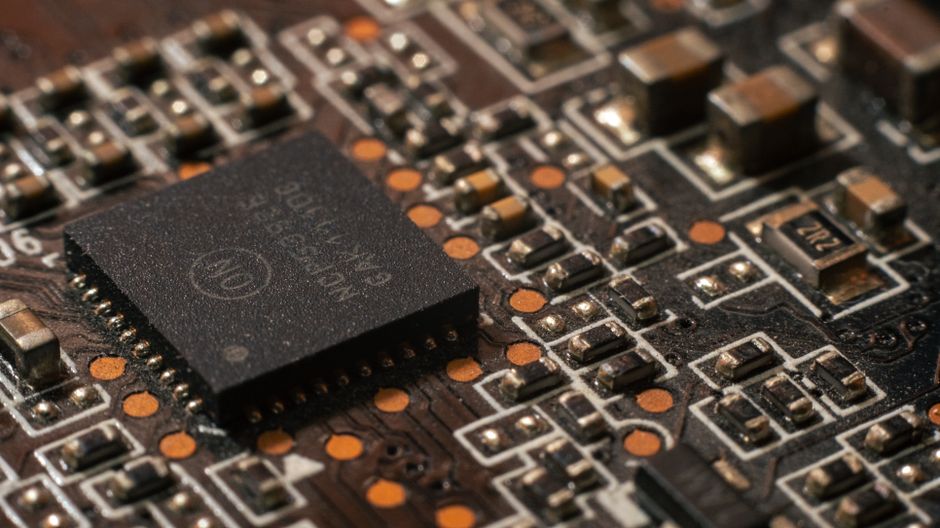
The successful deployment of edge AI depends critically on specialized hardware capable of running neural network inference efficiently within strict power, thermal, and cost constraints. Modern smartphone systems-on-chip (SoCs) include dedicated neural processing units (NPUs) designed specifically for AI workloads. Apple's A17 Pro and M-series chips include a 16-core Neural Engine capable of 35 trillion operations per second. Qualcomm's Snapdragon 8 Gen 3 features a Hexagon NPU that supports INT4 and INT8 precision with memory compression. Samsung's Exynos and Google's Tensor chips (used in Pixel phones) similarly integrate dedicated AI accelerators that handle everything from photography enhancement to voice recognition to real-time translation with minimal energy consumption.
Beyond smartphones, a diverse ecosystem of edge AI hardware has emerged. Microcontroller-class devices like the Arduino Nicla Vision and Espressif ESP32-S3 bring basic AI capability to ultra-low-power devices running on coin cell batteries, enabling applications like keyword spotting, anomaly detection, and simple image classification in IoT sensors. These devices run TinyML — machine learning on microcontrollers with as little as 256KB of RAM and 2MB of flash storage. Single-board computers like the NVIDIA Jetson series (Orin, Xavier NX) and Google Coral provide more capable edge AI for robotics, drones, and smart cameras, supporting complex models with GPU acceleration. Edge servers from Dell, HPE, and AWS (Outposts, Snowball Edge) bring intermediate compute capacity between device and cloud for applications needing more power than a device but lower latency than the cloud. Custom AI accelerators like Intel's Movidius, Google's Edge TPU, and Hailo-8 provide specialized inference chips optimized for specific deployment scenarios. For more on how these models are optimized for edge deployment, see our article on AI model compression and optimization.
Model Optimization for Edge Deployment
Let me give you a concrete example. Deploying AI models on edge devices requires aggressive optimization to fit within the strict memory, compute, and power budgets of edge hardware. The optimization pipeline typically combines multiple techniques to achieve the necessary efficiency. Quantization is the most impactful single technique, reducing model weights from 32-bit floating point to 8-bit integer (INT8) or 4-bit integer (INT4). INT8 quantization typically reduces model size by 4x and can increase inference speed by 2-4x on hardware with integer-arithmetic support, with minimal accuracy loss (often less than 1%). INT4 quantization achieves 8x compression but requires more careful calibration to maintain acceptable accuracy.
After testing this extensively, Pruning removes redundant weights or neurons from the model, with structured pruning (removing entire channels or layers) being particularly effective for edge deployment because the resulting dense, smaller model runs efficiently on any hardware. Knowledge distillation trains a compact student model to mimic a larger teacher model, often achieving surprisingly good accuracy from models small enough to fit on microcontrollers. Architecture search (NAS, or Neural Architecture Search) automatically discovers efficient architectures for specific edge hardware, with MobileNet, EfficientNet-Lite, and MCUNet being examples of architectures discovered or optimized for edge deployment. Operator optimization reimplements neural network operations to be more efficient on specific hardware: fusing adjacent operations, using hardware-specific instructions, and minimizing memory allocations. Model conversion to optimized formats like TensorFlow Lite, Core ML (Apple), ONNX Runtime, and NCNN translates models into the most efficient representation for the target hardware. Tools like the XNNPACK backend in TFLite and Apple's ANE (Apple Neural Engine) optimizations provide additional hardware-specific acceleration.
Applications and Use Cases
Not even close.
Edge AI has found transformative applications across numerous domains. In smartphones and consumer devices, on-device AI powers computational photography (real-time HDR, portrait mode, night sight), voice assistants (wake word detection, on-device speech recognition), keyboard prediction and autocorrection, face unlock and biometric authentication, and real-time language translation — all running locally without cloud connectivity. Apple's on-device intelligence features, Samsung's Galaxy AI, and Google's Pixel AI capabilities demonstrate the depth of edge AI integration in modern mobile devices.
In industrial IoT and manufacturing, edge AI enables predictive maintenance by running vibration analysis on sensor-equipped machinery, detecting anomalies in real-time and predicting failures before they occur. Smart cameras on production lines perform visual quality inspection at full production speed, identifying defects that human inspectors would miss. Autonomous vehicles represent the ultimate edge AI challenge: self-driving cars must process camera, LiDAR, radar, and ultrasonic sensor data in real-time to make split-second safety-critical decisions, with no tolerance for cloud latency or connectivity dependence. The NVIDIA Drive platform and Mobileye's EyeQ chips are purpose-built for this automotive edge AI workload.
I've been using this for a while now, and Healthcare and wearables use edge AI for continuous health monitoring — detecting arrhythmias from ECG data on smartwatches, analyzing sleep patterns, counting steps, and detecting falls — all while preserving patient privacy by keeping health data on the device. Smart home devices like security cameras, thermostats, and smart speakers run AI locally for person detection, voice commands, and energy optimization. Agriculture deploys edge AI on drones and tractors for crop monitoring and pesticide targeting. Retail uses edge AI for inventory management and checkout-free shopping experiences. For a broader perspective on distributed AI approaches, see our article on federated learning.
Privacy and Security Benefits
Edge AI offers fundamental privacy advantages over cloud-based AI. When all data processing happens locally on the device, sensitive information — personal photos, voice recordings, health data, location history, financial information — never leaves the user's control. This eliminates the privacy risks associated with transmitting, storing, and processing personal data on cloud servers: no data breaches exposing user information, no unauthorized access by cloud provider employees, no secondary use of data without consent, and no government surveillance of data in transit or at rest.
This architectural privacy has concrete regulatory advantages. Applications processing personal data on-device fall outside the scope of many data protection regulations (GDPR, CCPA) since data is not being collected, stored, or processed by the service provider. Apple, Google, and Samsung have increasingly positioned on-device AI as a privacy feature, highlighting that their voice assistants, photo analysis, and health monitoring features work without sending data to their servers. Federated learning complements edge AI by allowing models to improve from user interactions without centralizing training data — model updates (anonymized gradient information) are shared rather than raw data. For applications where some cloud interaction is needed, on-device preprocessing can extract features locally and send only the minimal, privacy-preserving derived information to the cloud. Edge AI's privacy properties are increasingly recognized as a competitive advantage in a regulatory environment that grows more protective of personal data.
Challenges and Limitations
Worth every penny.
Here's what I've noticed: despite its advantages, edge AI faces several significant challenges. Hardware heterogeneity means that models must be adapted and optimized for each target platform, increasing development and testing effort. An AI feature developed for a specific smartphone chip may not work on different hardware without substantial re-optimization. Limited resources — memory, compute, battery, and thermal constraints — impose hard limits on model size and complexity. While cloud models continue to scale to trillions of parameters, edge models are typically limited to millions or tens of millions of parameters, resulting in capability gaps.
I learned this the hard way: Model update logistics present operational challenges: updating models on billions of deployed devices requires robust over-the-air update infrastructure, with careful version management, backward compatibility, and staged rollouts to catch regressions. Battery impact is a critical consideration for battery-powered devices — even efficient inference consumes power, and poorly optimized AI features can significantly reduce battery life. Connectivity asymmetry means edge devices may need to operate in intermittent or no-connectivity environments, requiring offline fallback modes that maintain core functionality. As hardware continues to improve and optimization techniques advance, the capability gap between edge and cloud AI is narrowing. Emerging techniques like split computing (running part of a model on-device and part in the cloud) and early exiting (using simpler model variants for easier inputs) provide flexibility in allocating computation between edge and cloud based on current conditions and requirements.
So, Should You Try It?
- Edge AI runs AI inference directly on local devices, eliminating network latency, enabling offline operation, and preserving privacy.
- Edge AI hardware spans from microcontrollers (TinyML, KB RAM) to NPUs in smartphones (trillions of ops/second) to edge servers.
- Model optimization for edge deployment combines quantization (INT8, INT4), pruning, knowledge distillation, architecture search, and hardware-specific conversion.
- Key applications include smartphones (photography, assistants, translation), IoT (predictive maintenance, visual inspection), automotive, healthcare wearables, and smart home devices.
- Privacy is a fundamental advantage: data never leaves the device, eliminating cloud-related privacy and security risks. — game changer in my workflow
- Key challenges include hardware heterogeneity, resource constraints, model update logistics, battery impact, and intermittent connectivity management. — took me a while to figure this out
Sound familiar?