Parameters: The Brain of the Model
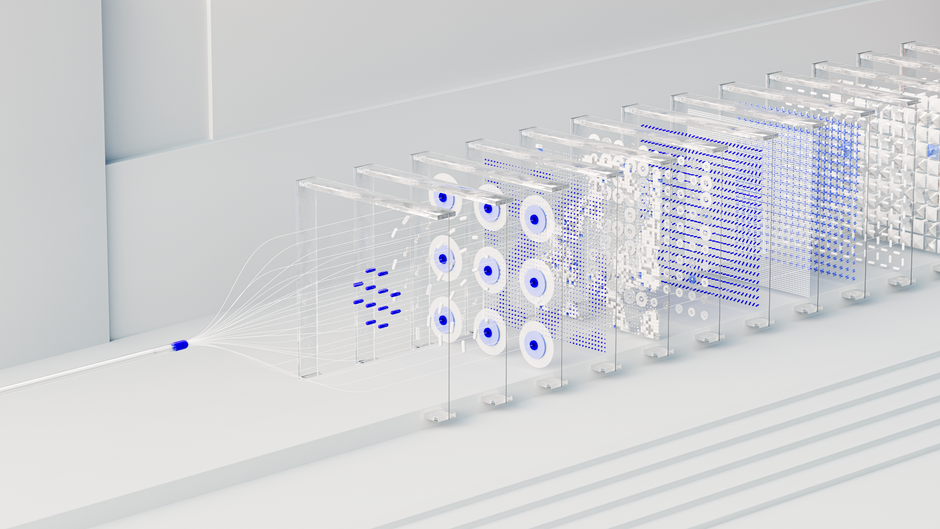
with artificial intelligence, parameters are the numerical values that define a model's learned knowledge. Think of parameters as the model's memory and understanding encoded in mathematical form. Every connection between neurons in a neural network has an associated parameter — a weight that determines how much influence one neuron has on another. The total number of parameters is a key metric for describing the size and capacity of an AI model.
When a model is trained, it starts with random parameter values. Through the training process — forward passes, loss calculation, backpropagation — these parameters are gradually adjusted to reduce the model's error. Each parameter is nudged, over millions of iterations, toward a value that makes the model more accurate. The final set of parameter values represents everything the model learned from its training data. These values encode not just facts but also linguistic patterns, reasoning approaches, stylistic conventions, and conceptual relationships.
Parameter count has become a shorthand for model capability, and for good reason. Larger models — those with more parameters — generally perform better across many tasks. GPT-3 had 175 billion parameters. GPT-4 is estimated to have over 1 trillion parameters, though OpenAI has not confirmed the exact number. Smaller models like Llama 3.1 8B (8 billion parameters) can run on consumer hardware, while massive models require data center infrastructure. The parameter count directly affects the model's ability to store and recall information, handle complex reasoning, and generate nuanced responses.
However, parameter count is not the only factor that matters. Model architecture, training data quality, training methodology, and fine-tuning all significantly affect performance. A well-trained 7-billion-parameter model can outperform a poorly trained 70-billion-parameter model on specific tasks. Researchers are actively working on making smaller models more capable through better architectures and training techniques, challenging the assumption that bigger is always better.
How Parameters Store Knowledge
it's important to understand that parameters don't store knowledge in the way a database stores records. A database might store the fact "Paris is the capital of France" as a discrete entry that can be retrieved exactly. A model's parameters encode this information as a distributed pattern across millions of interconnected values. There's no single parameter that means "Paris" or "capital" or "France." Instead, these concepts emerge from the collective pattern of many parameters working together.
I remember the first time I tried this— this distributed representation gives models remarkable flexibility. Because knowledge isn't stored in discrete locations, the model can combine concepts in novel ways, draw analogies between different domains, and generalize beyond its training data. When the model answers a question about "the capital of France," it is not retrieving a stored fact but reconstructing the concept from the distributed pattern in its parameters, guided by the context of your question.
The distributed nature of parameter storage also explains certain failure modes. Because information is spread across many parameters, fine-tuning a model on new data can inadvertently affect knowledge in other areas — a phenomenon called catastrophic forgetting. Adding specialized medical knowledge might degrade the model's general conversation ability. Researchers use techniques like elastic weight consolidation and parameter-efficient fine-tuning to mitigate this interference.
Parameter storage is also the reason models have a fixed knowledge cutoff. The model cannot learn new information without retraining or fine-tuning, which updates the parameter values. This is why even the most advanced models have a knowledge cutoff date and are unaware of events that occurred afterward — their parameters were fixed at the end of training and ddon'tautomatically update.
Does this live up to the hype?
Tokens: The Atomic Units of Text
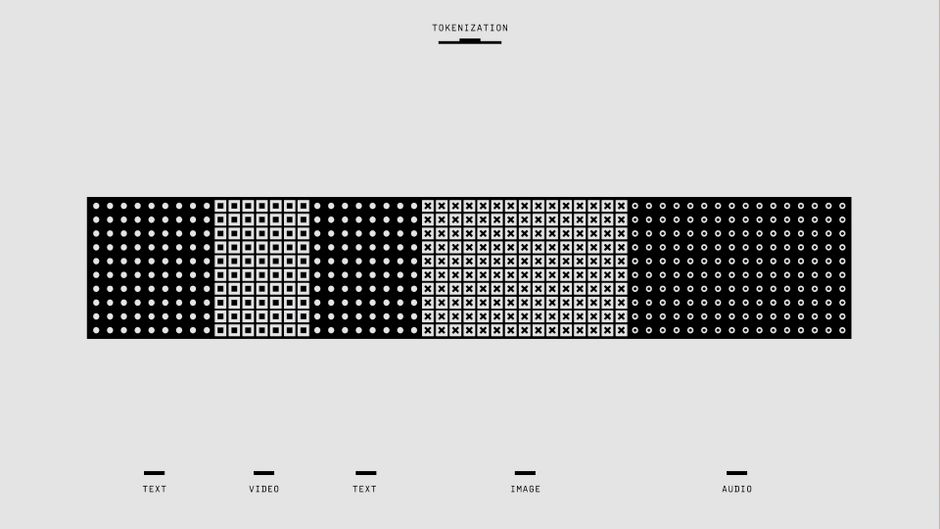
While parameters represent the model's internal knowledge, tokens are the units of text that the model processes. When you type a prompt into an AI chatbot, your text is not processed as characters or words — it is converted into tokens. A token is a chunk of text that the model's tokenizer recognizes, typically consisting of a few characters up to a full word. Common words like "the" and "and" are usually single tokens. Less common words are split into multiple tokens.
Tokenization is the process of converting raw text into tokens. The tokenizer uses a vocabulary — a predefined mapping of text chunks to numerical IDs. Modern language models use subword tokenization algorithms like Byte-Pair Encoding (BPE) or WordPiece that balance efficiency and coverage. These algorithms start with individual characters and iteratively merge the most common pairs into new tokens, building up a vocabulary of the most frequent subword units in the training data.
The choice of tokenization affects model behavior in subtle ways. Different languages tokenize differently — English typically requires fewer tokens per word than languages with richer morphology or different writing systems. This means the model is more "efficient" in English, able to process more meaning per token. Rare technical terms may consume many tokens, effectively making them more "expensive" for the model to process. Some biases in model output can be traced back to tokenization artifacts — words that share tokens may be processed more similarly than their meanings would suggest.
Context Windows: The Model's Working Memory
The context window is the maximum number of tokens a model can process in a single request. This window includes the system prompt, the conversation history, any retrieved documents, and the response being generated. The context window essentially defines the model's working memory — how much information it can consider at once when generating a response.
Early language models had very small context windows — GPT-2 handled 1,024 tokens, and GPT-3 handled 2,048 or 4,096 tokens. The field has made dramatic progress, with modern models supporting 100,000, 200,000, or even 1 million tokens. Google's Gemini 1.5 Pro can process up to 1 million tokens — enough to handle entire books or multi-hour video content in a single query. This expansion has enabled entirely new applications like processing entire codebases, analyzing long documents, and maintaining coherent conversations across very long interactions.
Larger context windows come with trade-offs. Processing more tokens requires more computation and memory, increasing both latency and cost. The attention mechanism at the heart of Transformer models scales quadratically with context length — doubling the context quadruples the computational cost. Researchers have developed various optimizations, including sparse attention patterns and efficient attention implementations like Flash Attention, to make longer contexts practical.
There is also evidence that models use their context windows imperfectly. Even when a model has a 100,000-token context window, it may perform better with relevant information near the beginning or end of the context — a phenomenon called lost-in-the-middle. Retrieval strategies that place the most relevant information strategically within the context can significantly improve performance.
Practical Implications for AI Users
Understanding parameters and tokens has practical implications for how you use AI tools. Token awareness helps you manage costs — many AI services charge by the token for both input and output. A long, verbose prompt costs more than a concise one. Being efficient with tokens means being efficient with your budget.
Token limits affect how you structure your interactions. For tasks involving long documents, you need to ensure the total fits within the model's context window. You may need to chunk documents, summarize sections, or strategically include only the most relevant portions. Understanding context limits helps you design interactions that work within the model's constraints.
Parameter count helps you choose the right model for your task. For simple tasks like summarization or classification, a smaller model with fewer parameters may be perfectly adequate and much cheaper to run. For complex reasoning, creative generation, or tasks requiring broad knowledge, a larger model with more parameters is worth the additional cost. Matching the model to the task is an important skill for effective AI use.
The relationship between parameters, tokens, and compute also explains why AI systems have the capabilities and limitations they do. The scale of training required to adjust billions of parameters across trillions of tokens defines the frontier of what is possible. For a deeper understanding of how these concepts come together, read about how AI chatbots actually work and explore the differences between AI, ML, and deep learning.
If You Only Remember One Thing
- Parameters are the numerical values learned during training; parameter count is a key measure of model capacity — took me a while to figure this out
- Knowledge is stored in distributed patterns across many parameters, not in discrete locations
- Tokens are the atomic units of text that models process — subword chunks mapped to numerical IDs
- The context window limits how much text a model can process at once, defining its working memory — game changer in my workflow
- Larger context windows enable new applications but require significantly more computation (this one actually surprised me)
- Token awareness helps manage costs and stay within model limits — wish I'd known this six months ago
- Choosing the right model size means balancing capability, speed, and cost for your specific task (this one actually surprised me)
But is that the whole story?