The Evolving Legal Landscape for AI
Big difference.
The rapid advancement of artificial intelligence has created a legal and regulatory landscape that is struggling to keep pace with technological change. Questions that seemed abstract just a few years ago are now the subject of major court cases, regulatory proceedings, and legislative debates around the world. Can AI-generated works be copyrighted? Is training AI on publicly available internet data fair use or infringement? who's liable when an AI system causes harm? These questions are being answered in real-time through landmark legal decisions that are shaping the future of AI development and deployment.
In 2026, we're entering a new phase of AI law. The initial period of legal uncertainty, where there were no clear answers to most AI-related legal questions, is giving way to a more structured if still evolving legal framework. Major court decisions have established important precedents, several jurisdictions have enacted comprehensive AI legislation, and regulatory agencies have issued guidance on AI use across multiple sectors. While many questions remain unresolved, the legal landscape is becoming clearer, offering more guidance for creators, businesses, and developers.
I learned this the hard way: this article provides a comprehensive update on the most significant AI copyright and legal developments in 2026, covering training data litigation, copyright protection for AI-generated works, regulatory frameworks, liability issues, and practical guidance for navigating this complex landscape. Whether you are an artist, developer, business owner, or legal professional, understanding these developments is essential for making informed decisions about AI use.
But how do you actually use this?
Training Data and Copyright Infringement Lawsuits
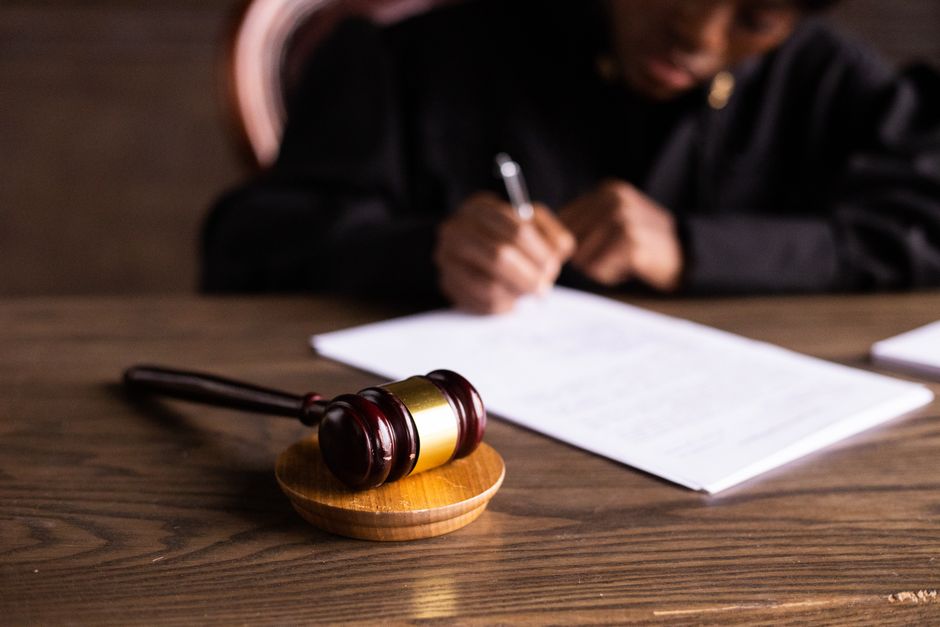
The most high-stakes legal battle in AI continues to be the question of whether training AI models on copyrighted works constitutes infringement. A wave of class-action lawsuits filed by authors, artists, photographers, news publishers, and other creators against AI companies has been working its way through the courts, with several reaching critical decisions in 2025 and early 2026. The outcomes of these cases will fundamentally shape the economics and legality of AI model development.
The key legal question centers on fair use doctrine, which permits limited use of copyrighted material without permission for purposes such as criticism, research, and education. AI companies argue that training on publicly available data constitutes transformative fair use, analogous to how a human artist learns by studying existing works. Plaintiffs counter that AI training involves systematic copying at an unprecedented scale for commercial purposes, creating products that directly compete with the original works. The courts have been divided, with some decisions favoring fair use and others finding that the commercial nature and scale of copying weigh against it.
Several notable settlements have also shaped the landscape. Major news organizations including The New York Times, The Associated Press, and Axel Springer have reached licensing agreements with AI companies, establishing a framework for compensated use of news content in AI training. These deals set important precedents for how training data rights might be commercialized. The Getty Images lawsuit against Stability AI resulted in a significant settlement that included both financial compensation and licensing arrangements, establishing that visual works used in training require proper attribution and compensation. The trajectory suggests a future where training on copyrighted data will increasingly require licensing, creating new markets for training data rights.
But is that the whole story?
Copyright Protection for AI-Generated Works
A parallel legal battle involves whether AI-generated works can receive copyright protection, a question that has divided courts and copyright offices around the world. The United States Copyright Office has maintained its position that copyright requires human authorship, meaning that works entirely generated by AI without meaningful human creative input are not eligible for copyright registration. However, the office has also issued guidance clarifying that works containing AI-generated elements can be copyrighted if the human contribution is sufficiently creative and original.
The key distinction is between AI as a tool and AI as an autonomous creator. Works where AI is used as a tool under substantial human direction, where the human makes creative decisions, selects inputs, and curates outputs, are generally eligible for copyright protection on the human-authored elements. Works where AI generates content autonomously from minimal human input remain uncopyrightable. This distinction has been applied in practice, with the Copyright Office granting registration for graphic novels and artworks that incorporate AI-generated elements alongside substantial human creative contributions.
Other jurisdictions have taken different approaches. The United Kingdom has adopted a more permissive stance, granting copyright protection to computer-generated works with the person who made the necessary arrangements considered the author. The European Union's AI Act includes provisions requiring disclosure of AI-generated content without directly addressing copyright eligibility. China has taken yet another approach, with courts ruling that AI-generated works can be copyrighted if they demonstrate sufficient intellectual creation. This international divergence creates challenges for global AI content distribution and enforcement, with the same work potentially having different copyright status in different countries.
Regulatory Frameworks and AI Governance
Beyond copyright, comprehensive AI regulatory frameworks are being implemented around the world, with the European Union's AI Act leading the way as the most comprehensive AI regulation to date. The AI Act, now fully in force, categorizes AI applications by risk level, with different requirements for transparency, documentation, human oversight, and conformity assessment for each category. High-risk AI applications, including those in critical infrastructure, employment, education, and law enforcement, face the strictest requirements.
The United States has taken a sectoral approach rather than enacting a single comprehensive AI law. Executive orders, agency guidance, and sector-specific regulations create a patchwork of requirements that vary by industry and application. The Federal Trade Commission has been particularly active, using existing consumer protection authority to take enforcement actions against deceptive AI practices, including false claims about AI capabilities and the use of AI in discriminatory decision-making. Several states have also enacted their own AI legislation, with California's AI transparency act and Colorado's AI consumer protection law among the most significant.
Here's what I've noticed: china has implemented some of the strictest AI regulations in the world, requiring algorithmic transparency, content control, and government approval for certain AI applications. The Personal Information Protection Law and the Data Security Law impose stringent requirements on AI training data handling and cross-border data transfers. These diverse regulatory approaches create compliance challenges for global AI companies, but they also provide clearer rules of the road than the legal vacuum that existed just a few years ago. Companies that invest in robust compliance programs are well-positioned to navigate this complex landscape.
Practical Guidance for Creators and Businesses
For creators, businesses, and developers navigating this evolving legal landscape, several practical principles have emerged. First, document your creative process when using AI tools. Keep records of prompts, iterations, curation decisions, and modifications to demonstrate human creative contribution if copyright protection is needed for AI-assisted works. This documentation can be crucial in establishing copyright eligibility and defending against infringement claims.
Honestly, second, implement transparent AI use policies. Clearly label AI-generated or AI-assisted content, both as a legal requirement in many jurisdictions and as an ethical practice that builds trust with audiences. Most regulatory frameworks require disclosure of AI-generated content, and voluntary transparency is increasingly expected by consumers and business partners.
Third, understand the terms of service for AI tools you use. Most AI platforms include provisions about ownership of generated content and whether your inputs can be used for training. These terms vary significantly between platforms and can affect your legal rights to commercialize AI-generated content. Fourth, conduct due diligence on training data when developing custom AI models. Ensure that training data is properly licensed or falls within clearly established fair use boundaries. As the legal landscape continues to evolve, staying informed and seeking qualified legal advice for specific AI legal questions is essential. The era of AI legal uncertainty is not over, but the contours of a stable legal framework are becoming visible, offering more guidance for responsible AI use.
What I'd Tell My Past Self
- Courts remain divided on whether AI training on copyrighted data constitutes fair use, with notable settlements establishing licensing frameworks for news and visual content.
- AI-generated works without meaningful human creative input are generally not copyrightable in the US, though AI-assisted works with substantial human authorship can be protected.
- The EU AI Act provides the most comprehensive regulatory framework, categorizing AI applications by risk level with graduated compliance requirements. — wish I'd known this six months ago
- Global regulatory divergence creates challenges for international AI deployment, with the US taking a sectoral approach, the EU enacting comprehensive regulation, and China imposing strict state oversight. — wish I'd known this six months ago
- Practical steps including documenting creative processes, implementing transparent AI use policies, and understanding platform terms of service can help creators and businesses navigate legal uncertainty.
- Explore open source AI tools and licensing considerations — took me a while to figure this out
- Learn about AI security and privacy regulations
- Read about the environmental impact of AI data centers
Is it worth the effort?