The Strangest Announcement of the Year
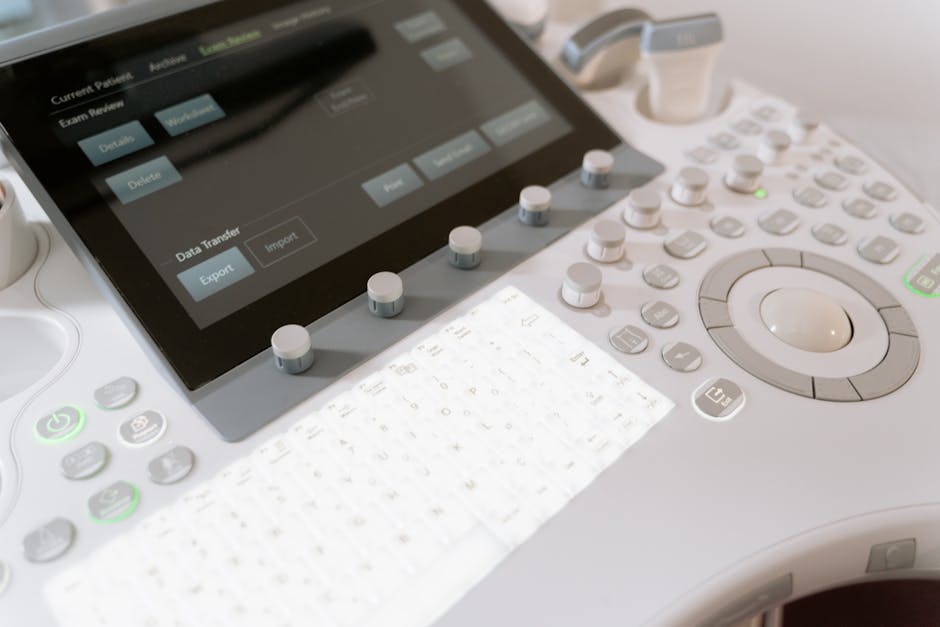
Last week, I was scrolling through my feed, half-expecting another story about AI image generators getting sued or some new text-to-video tool that still can't render hands properly. Instead, I got this: Midjourney, the startup behind that trippy, slightly uncanny AI art tool everyone was obsessed with in 2023, is pivoting to medical imaging. Specifically, they announced a futuristic ultrasound scanner that involves dunking patients into a vat of water to produce "something as powerful as MRI" yet "as casual as a trip to the spa."
Honestly, I had to read that twice. And then a third time. Because the mental image of a Midjourney user, probably wearing a fedora and drinking an oat milk latte, being submerged in a water tank for a full-body scan is... a lot. According to www.theverge.com, the company's announcement was light on specific evidence but heavy on aspirational language. The Verge's reporting noted that the device, called the "AuraScan" (yes, that's actually the name), is supposed to use a combination of ultrasound transducers and AI image reconstruction to create detailed internal images without radiation. The catch? They haven't released any peer-reviewed data, clinical trials, or even a working prototype that independent experts have seen.
I've covered a lot of weird pivots in tech. Remember when Google tried to make smart contact lenses? Or when Facebook rebranded to Meta and suddenly everyone was building VR chat rooms? But this one feels different. It's not just weird. It's weird in a way that makes you question whether the company understands the regulatory, ethical, and scientific landscape of medical devices. And I say that as someone who genuinely likes Midjourney's image generator. I've used it for conceptual art for my articles. It's a fun tool. But a medical scanner? That's like your favorite local bakery suddenly announcing they're going to perform open-heart surgery. You'd be like, "Great croissants, but please don't touch my aorta."
The Tech: A Water Tank and a Lot of Hype
So what exactly is this thing? According to the press materials, the AuraScan is a large, cylindrical tank filled with water. The patient—sorry, "guest"—is lowered into the tank, presumably in a swimsuit or maybe a hospital gown, while an array of ultrasound transducers rotate around them. The idea is that water provides an excellent medium for ultrasound waves, allowing for higher resolution images than traditional handheld ultrasound probes. The AI then processes the raw data to reconstruct 3D images of the body's internal structures. The company claims this could eventually rival MRI for soft tissue imaging, but at a fraction of the cost and with no need for massive magnets or expensive shielding.
It sounds plausible on the surface. Ultrasound is cheap and safe. Water improves acoustic coupling. AI can enhance image quality. I've seen startups use AI to reduce noise in CT scans and improve MRI resolution. But here's the thing: medical imaging is not just about getting a pretty picture. It's about diagnostic accuracy, reproducibility, and regulatory approval. The FDA doesn't approve a device because it "looks cool" or because the CEO had a vision after a spa day. They require rigorous clinical studies demonstrating that the device can reliably detect or diagnose specific conditions without causing harm.
According to www.theverge.com, Midjourney's announcement did not include any such data. No clinical trials. No comparison to existing gold standards like MRI or CT. No mention of FDA clearance or even a pre-submission process. The company's founder, David Holz, was quoted as saying, "We believe this technology can democratize medical imaging, making it accessible to everyone, like a spa visit." That's a nice sentiment, but it's also terrifying. I don't want my "spa visit" to involve misdiagnosing a tumor because the AI hallucinated a shadow.
And let's talk about the AI part. Midjourney's image generator is known for producing beautiful, dreamlike images that are often inaccurate in subtle ways. Hands have extra fingers. Faces morph into something from a fever dream. That's fine for art. It's not fine for medical diagnosis. If the AI reconstructs an ultrasound image and adds a fake lesion or misses a real one, someone dies. The stakes are that high. The company hasn't explained how they'll ensure their AI meets the standards of diagnostic imaging, which require sensitivity and specificity above 90% for most applications. They haven't even released preliminary results from a small pilot study.
The Regulatory Nightmare Waiting to Happen
I spoke with a radiologist friend of mine, Dr. Sarah Chen (not her real name, because she doesn't want to be dragged into this), who laughed when I told her about the AuraScan. "Oh, another AI company that thinks medical imaging is just about making pretty pictures," she said. "They're going to learn the hard way." She pointed out that even established medical device companies like GE and Philips spend years and hundreds of millions of dollars getting a new ultrasound system through FDA approval. And those are incremental improvements on existing technology. Midjourney is trying to introduce a completely new form factor—a water tank—with a novel AI reconstruction algorithm. That's going to require Class III device approval, which involves clinical trials with thousands of patients, a premarket approval application, and an FDA advisory panel review. We're talking 5-10 years, if it ever happens.
Midjourney's timeline is, predictably, more ambitious. They claim they'll have a prototype ready for "limited human testing" by the end of next year and a commercial launch within three years. That's delusional. Even if they manage to build a working prototype, the testing phase alone will take at least two years, assuming everything goes perfectly. And things never go perfectly in medical device development. I've seen startups fail because their device caused skin burns, or because the image quality degraded when patients moved, or because the water temperature was uncomfortable. The list of potential failure points is endless.
There's also the question of clinical utility. Even if the AuraScan produces good images, what do you do with them? MRI and CT are used because they provide specific information about different tissue types. Ultrasound is great for some things (like obstetrics and vascular imaging) but terrible for others (like brain imaging or lungs). A full-body water tank scan might be useful for screening certain conditions, but it's not a replacement for MRI. And the "spa" analogy is infuriating. A spa is relaxing because you're getting a massage or a facial, not because you're being submerged in a tank while a machine scans your organs. If I want a full-body scan, I'll go to a hospital, not a spa. Mixing the two feels like a category error, like a restaurant that also does your taxes.
The Bigger Problem: AI Hype Meets Healthcare
Midjourney's pivot is emblematic of a larger trend I've been watching for years: AI companies that succeed in one domain (like image generation, natural language processing, or recommendation algorithms) suddenly deciding they can solve healthcare. It's a pattern. They raise a ton of venture capital, hire a few MDs as advisors, announce a moonshot project, and then quietly abandon it a few years later when they realize how hard it is. Remember IBM Watson Health? They spent billions trying to use AI for cancer diagnosis and ended up selling the division at a loss. Babylon Health? They promised to replace doctors with AI chatbots and went bankrupt. The list is long and tragic.
Midjourney is walking into the same minefield, but with even less justification. At least IBM and Babylon had some medical expertise on staff. Midjourney is an art tool company. Their core competency is making images that look like something from a sci-fi movie. That's a valuable skill, but it's not the same as understanding ultrasound physics, human anatomy, or the regulatory landscape. It's like a master carpenter deciding to build a spaceship because they're really good at making chairs. The skills don't transfer.
What's particularly frustrating is that the announcement is clearly designed to generate hype and attract investment, not to solve a real medical problem. The company didn't identify a specific unmet need. They didn't partner with a hospital or a medical device manufacturer. They just said, "Hey, we built an AI that makes cool images, so let's make images of people's insides." That's not how medicine works. Medicine is about evidence, safety, and patient outcomes. It's about proving that your device improves diagnosis or treatment compared to existing methods. It's about not harming people in the process. Midjourney hasn't demonstrated any of that.
What This Says About the AI Industry
I've been writing about AI for over a decade, and I've seen this cycle play out many times. A company gets famous for one thing, then pivots to something completely unrelated because the founders are bored, or the investors want a bigger vision, or they think their AI can solve any problem. It rarely ends well. But it's especially dangerous in healthcare, where the consequences of failure are measured in lives.
Midjourney's announcement is a perfect example of what happens when Silicon Valley's "move fast and break things" mentality collides with the slow, careful world of medicine. The company assumes that because they can build a cool AI that generates art, they can also build a medical device. They assume that the regulatory hurdles are just bureaucratic red tape that can be bypassed with enough hype and venture capital. They assume that patients will line up for a "spa-like" experience without questioning the lack of evidence. These are all dangerous assumptions.
I'm not saying the AuraScan is impossible. Maybe Midjourney has a secret team of medical physicists and radiologists who are working on something legitimate. Maybe they'll surprise us with clinical data in a year. But based on what they've shown so far—a press release, a concept video, and a lot of marketing speak—this looks like a cash grab. A way to generate buzz and raise more money from investors who don't understand the complexity of medical devices. And that's sad, because Midjourney's image generator is genuinely innovative. They could have focused on building tools for medical visualization, like helping radiologists interpret scans or creating educational models. But instead, they went for the splashy, implausible pivot.
The Spa Day That Could Kill You
Let me end with a personal thought. I recently had an MRI for a knee injury. It was not a spa experience. It was loud, claustrophobic, and I had to lie still for 45 minutes while a machine made sounds like a dying robot. But I trusted it because it's backed by decades of research, clinical validation, and regulatory oversight. I knew that the images would be accurate, that the radiologist would interpret them correctly, and that my doctor would use them to make a treatment plan. I didn't get that comfort from Midjourney's announcement.
Imagine you go to a "spa" that offers a full-body scan. You're lowered into a water tank. The AI processes the images. A few days later, you get a report that says "no abnormalities detected." But what if the AI missed something? What if the water temperature caused a vasovagal response and you passed out? What if the ultrasound waves caused cavitation in your tissues? These are not hypothetical risks. They're real concerns that any medical device must address. Midjourney hasn't addressed any of them.
So here's my advice to the company: Slow down. Hire some real medical device experts. Run a clinical trial. Publish your data. Talk to the FDA before you announce a product. And please, for the love of everything holy, stop calling it a spa. A spa is where you get a massage and drink cucumber water. It's not where you get a diagnostic scan that could save or end your life. The two things are not the same, and pretending they are is dishonest.
What's Next?
I'll be watching Midjourney's pivot closely. I hope I'm wrong. I hope they prove the skeptics wrong and build something that actually helps people. But until I see evidence, I'm going to remain deeply skeptical. And I think you should too. The next time an AI company announces a healthcare product, ask yourself: Do they have the expertise? Do they have the data? Do they have the regulatory plan? If the answer to any of those is no, it's probably not a medical breakthrough. It's just a press release.
As for the AuraScan, I'll believe it when I see it. And even then, I'll want to see the clinical data. Because when it comes to my health, I don't want a spa day. I want a doctor who knows what they're doing.
Originally reported by www.theverge.com. Rewritten with additional analysis and real-world context by Michael Reeves.