The Hidden Environmental Cost of AI
As artificial intelligence systems grow more powerful and more widely deployed, the environmental footprint of AI has become an increasingly urgent concern. The massive computing resources required to train and run state-of-the-art AI models consume enormous amounts of electricity, generate significant carbon emissions, and require vast quantities of water for cooling. In 2026, the AI industry is grappling with a fundamental tension between the desire for ever more capable models and the environmental costs of achieving that capability.
The scale of AI's energy consumption is staggering. Training a single frontier-class large language model can consume electricity equivalent to the annual energy use of hundreds of homes. The inference phase, where trained models are deployed to serve user requests, consumes even more energy in aggregate because it operates continuously at scale. Major AI companies are building data center campuses that consume as much electricity as small cities, placing strain on local power grids and competing with other energy needs including residential, commercial, and industrial consumption.
The environmental impact extends beyond electricity consumption and carbon emissions. AI data centers require enormous quantities of fresh water for evaporative cooling, consuming water resources in regions that may already face water stress. The manufacturing of AI hardware, including GPUs, TPUs, and networking equipment, requires rare earth minerals and generates electronic waste. The transportation and supply chain infrastructure supporting AI hardware deployment has its own carbon footprint. Understanding and addressing the full environmental lifecycle of AI systems is essential for responsible AI development.
But is that the whole story?
AI Training Energy and Carbon Footprint
The training of large AI models remains the most visible and concerning source of AI energy consumption. Training a model like GPT-5 or Llama 4 at full scale requires thousands of specialized processors running continuously for weeks or months, consuming tens of gigawatt-hours of electricity in the process. The carbon footprint of this training depends heavily on the carbon intensity of the electricity grid powering the data centers, creating significant variation between training runs conducted in regions with clean energy versus those dependent on fossil fuels.
The trend toward increasingly large models has driven exponential growth in training compute requirements. Each generation of frontier models has required roughly an order of magnitude more compute than its predecessor, and this trend shows no signs of slowing. However, there are positive developments. Research into more efficient architectures, training techniques, and hardware has improved the performance per watt of AI training significantly. Sparse models that activate only portions of the network for each input, mixture-of-experts architectures, and improved quantization techniques have all contributed to better compute efficiency.
Several initiatives within the AI industry aim to reduce the carbon footprint of training. Companies including Google, Microsoft, and Amazon have committed to powering their AI data centers with renewable energy, either through direct renewable energy procurement, power purchase agreements, or carbon offset programs. Some organizations have implemented carbon-aware training scheduling, shifting training runs to times and locations where the electricity grid has lower carbon intensity. These measures help mitigate the environmental impact of AI training, but they do not eliminate it, and the continued growth in total AI compute may outpace the carbon reductions achieved through efficiency improvements and clean energy adoption.
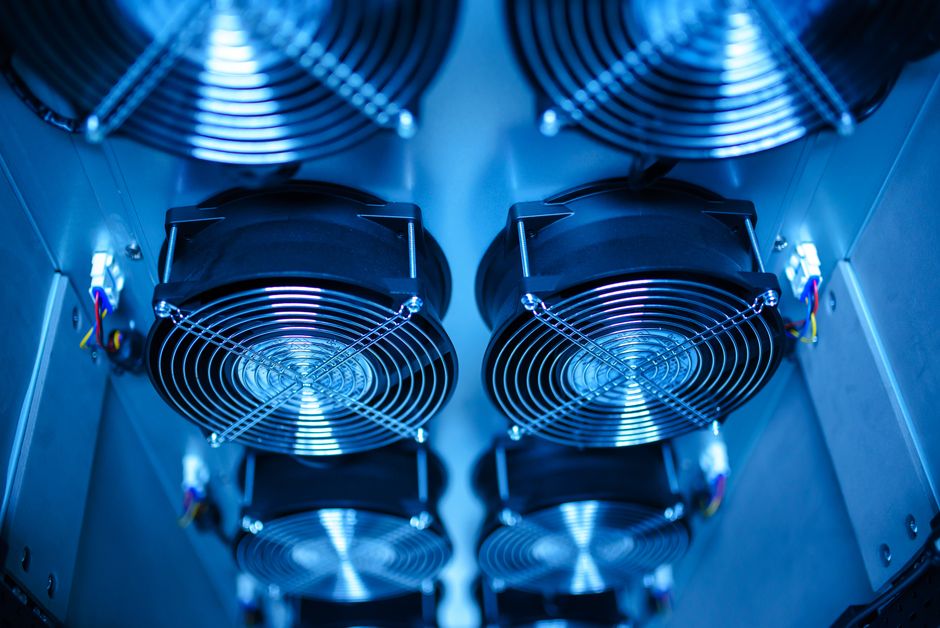
Inference Energy and Scalability Challenges
While training attracts the most attention, the energy consumption of AI inference, the process of using trained models to generate responses, is increasingly recognized as the larger long-term environmental concern. Unlike training, which is a finite process for each model generation, inference runs continuously and scales with user adoption. As AI becomes integrated into search engines, productivity tools, customer service, healthcare, and countless other applications, the aggregate inference energy consumption grows rapidly.
The energy cost per AI query varies significantly depending on the model size, task complexity, and hardware efficiency. A simple query processed by a small model on optimized hardware can consume minimal energy, comparable to a traditional web search. Complex queries processed by frontier models with long context windows and multi-step reasoning can consume orders of magnitude more energy. As users increasingly rely on AI for more complex and compute-intensive tasks, the energy cost per interaction is trending upward.
I learned this the hard way: several strategies are being deployed to manage inference energy consumption. Model quantization reduces the precision of model weights, dramatically reducing the computational requirements with minimal quality impact for many tasks. Speculative decoding uses small, efficient models to generate candidate responses that are verified by larger models, reducing the compute required per output token. Model distillation creates smaller, more efficient models that approximate the capabilities of larger models for specific tasks. Hardware optimization, including specialized AI accelerators designed for inference efficiency, continues to improve performance per watt. These techniques combined can reduce inference energy by an order of magnitude or more compared to naive deployment.
Water Usage and Other Environmental Impacts
The water consumption of AI data centers has emerged as a critical environmental concern, particularly in regions facing water scarcity. Data centers use water primarily for evaporative cooling, a process that consumes large quantities of fresh water. A typical large AI data center can consume millions of gallons of water per day, competing with local communities, agriculture, and ecosystems for this essential resource. During drought conditions, data center water consumption can become a source of significant community tension.
The water impact is geographically concentrated. Data centers are often located in regions with favorable conditions for their operation, including reliable electricity, fiber connectivity, and business-friendly policies. These regions don't always have abundant water resources. In areas like the American Southwest, parts of Europe, and regions of Asia facing water stress, data center water consumption adds to existing pressure on water systems. AI companies are increasingly investing in water-efficient cooling technologies, including closed-loop systems, liquid cooling that uses less water, and air cooling in suitable climates.
Beyond energy and water, AI's environmental footprint includes hardware manufacturing impacts, electronic waste, and land use for data center construction. The semiconductor manufacturing process is energy and water intensive, and GPUs and TPUs have relatively short useful lives due to rapid technological advancement. The resulting electronic waste stream contains hazardous materials that require careful handling. Data center campuses consume significant land area, potentially impacting local ecosystems and land use patterns. A comprehensive approach to AI sustainability must address all of these impacts, not just operational energy consumption.
Sustainable AI Practices and Industry Initiatives
The AI industry has recognized the importance of addressing environmental impacts and has implemented various initiatives to improve sustainability. Major AI companies have made public commitments to carbon neutrality, renewable energy procurement, and water stewardship. These commitments vary in ambition and credibility, with some companies pursuing comprehensive sustainability strategies while others face criticism for relying heavily on carbon offsets rather than direct emission reductions.
Several technical approaches to sustainable AI have gained traction. Green AI research focuses on developing models and training methods that achieve competitive performance with less computational resources, treating efficiency as a primary research objective rather than an afterthought. Model cards and system cards increasingly include energy consumption and carbon footprint information, providing transparency that allows users and deployers to make informed choices about which models to use for specific applications. Tools for measuring and reporting AI energy consumption have become more sophisticated, enabling organizations to track and optimize their AI-related environmental impact.
From what I've seen, regulatory attention to AI environmental impact is growing. The EU AI Act includes requirements for reporting the energy consumption of high-risk AI systems. Some jurisdictions are considering carbon taxes or energy efficiency standards that would apply to AI data centers. Investor pressure is also driving sustainability efforts, with environmental, social, and governance criteria increasingly applied to AI company evaluations. The AI industry is at an inflection point where environmental sustainability is becoming a competitive differentiator and regulatory necessity. The companies that invest seriously in sustainable AI practices will be better positioned for long-term success in a world where environmental considerations are increasingly central to technology policy and public expectations.
Bottom Line
- Training a single frontier AI model consumes tens of gigawatt-hours of electricity, equivalent to the annual energy use of hundreds of homes, with carbon footprint varying by grid energy source. (this one actually surprised me)
- AI inference energy consumption is the larger long-term concern as AI becomes integrated into billions of daily interactions across search, productivity, and other applications.
- AI data centers consume millions of gallons of fresh water daily for cooling, creating environmental pressure in water-stressed regions. — wish I'd known this six months ago
- Technical approaches including model quantization, distillation, and efficient architectures can reduce AI energy consumption by an order of magnitude.
- Regulatory requirements for AI energy reporting are emerging, with the EU AI Act leading the way in mandating transparency about AI systems' environmental footprint. — your experience may differ, but this worked for me
- Learn about AI security and data center infrastructure — wish I'd known this six months ago
- Explore open source AI models for efficient deployment — game changer in my workflow
- Read about AI startup funding in sustainable technology — your experience may differ, but this worked for me