Introduction to Transfer Learning
Big difference.
Transfer learning is one of the most impactful techniques in modern machine learning, fundamentally changing how AI models are developed and deployed. The core idea is elegantly simple: instead of training a model from scratch for every new task, we can take knowledge gained from solving one problem and apply it to a different but related problem. This mirrors human learning — a person who knows how to ride a bicycle can learn to ride a motorcycle much faster than someone who has never balanced on two wheels. In the AI world, transfer learning has become the standard approach for everything from computer vision to natural language processing, enabling remarkable performance gains with far less data and computational resources.
The rise of transfer learning is closely tied to the emergence of large pre-trained models. Organizations like OpenAI, Google, Meta, and Anthropic invest enormous resources in training foundation models on massive, diverse datasets. These models develop rich, general-purpose representations of language, images, or other modalities. Practitioners can then take these pre-trained models and adapt them to their specific tasks with minimal additional training — a process called fine-tuning. This democratizes access to state-of-the-art AI, allowing teams with limited compute budgets and modest datasets to build high-performing models for specialized applications.
Sounds simple, right?
How Transfer Learning Works
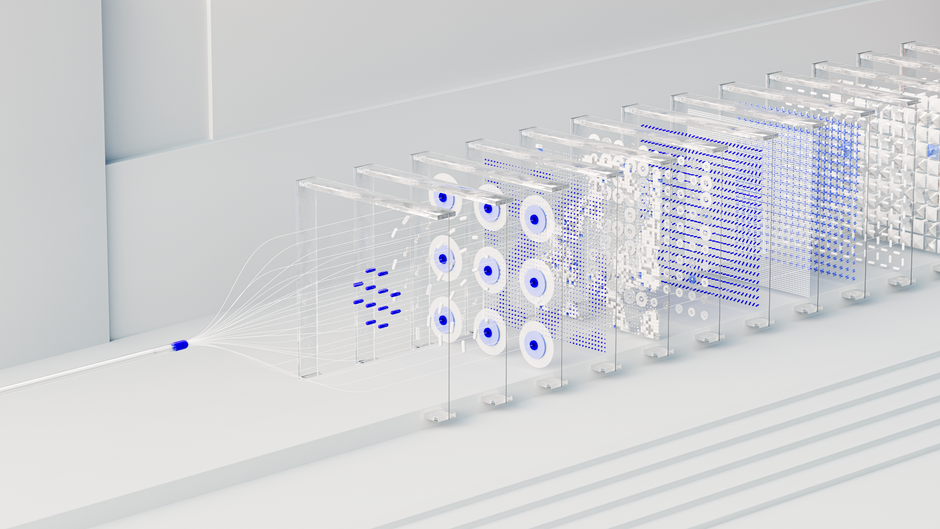
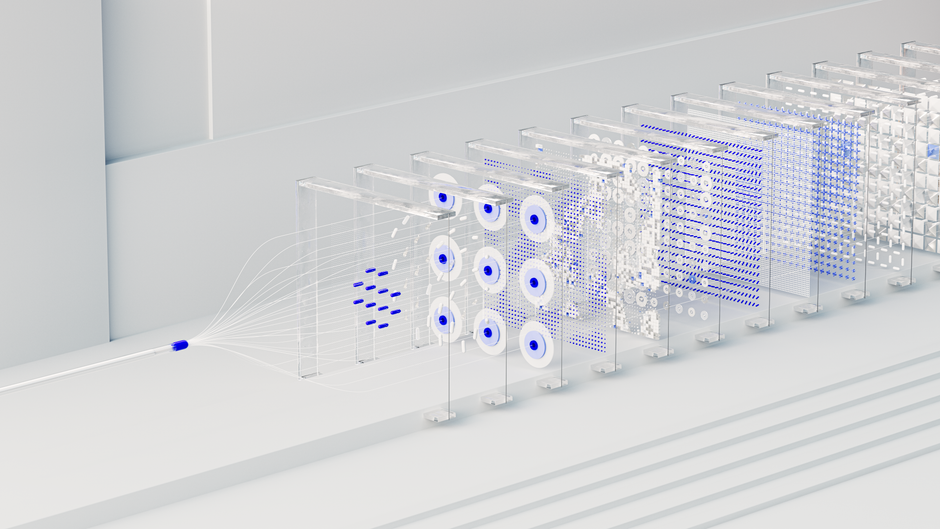
The mechanism behind transfer learning depends on the type of model and the nature of the source and target tasks. In deep neural networks, the core intuition is that earlier layers learn general, low-level features (like edges, textures, and shapes in images, or basic syntactic patterns in language), while later layers learn task-specific abstractions. When we transfer knowledge from a pre-trained model, we typically retain the earlier layers along with their learned weights, replace the final task-specific layers, and then fine-tune the network on the target task.
There are several common strategies for applying transfer learning. Feature extraction involves using the pre-trained model as a fixed feature extractor: you pass your target dataset through the pre-trained network, extract the activations from an intermediate layer, and use these as input features for a new classifier trained on your specific task. This approach is computationally efficient since the pre-trained weights remain frozen. Fine-tuning goes a step further by allowing the pre-trained weights to be updated during training on the target task. Typically, the earlier layers are fine-tuned with a lower learning rate (to avoid catastrophic forgetting of their general knowledge), while the new task-specific layers are trained from scratch with a higher learning rate. Progressive unfreezing is a hybrid strategy where layers are gradually unfrozen during training, starting from the final layers and working backward, allowing the model to adapt progressively without destabilizing early training.
Types of Transfer Learning
I'm not exaggerating.
Transfer learning encompasses several distinct scenarios, each suited to different relationships between the source and target domains and tasks. Inductive transfer learning occurs when the source and target tasks are different but related, and we have some labeled data for the target task. This is the most common scenario in practice — for example, using a model pre-trained on ImageNet (image classification across 1000 categories) and fine-tuning it for medical X-ray classification. The source task provides general visual feature representations, while the target task adapts these to the specific medical domain.
Transductive transfer learning, also known as domain adaptation, involves scenarios where the source and target tasks are the same but the domains differ. For instance, a sentiment classifier trained on product reviews might be adapted to analyze movie reviews — the task (sentiment classification) is identical, but the domain (product reviews vs. Movie reviews) has different vocabulary and stylistic patterns. Domain adaptation techniques aim to align the feature distributions between source and target domains, often through adversarial training or discrepancy minimization methods. Unsupervised transfer learning addresses the challenging scenario where no labeled data exists for the target task. This approach, related to unsupervised domain adaptation, learns to transfer knowledge using only unlabeled target data, often by leveraging shared structural properties between domains. For a broader view of machine learning paradigms, see our guide on unsupervised learning.
Does this live up to the hype?
Applications Across Domains
Transfer learning has changed virtually every subfield of AI. In computer vision, ImageNet pre-training was the standard practice for years, with models pre-trained on the 1.2 million ImageNet images serving as starting points for countless specialized vision tasks including medical imaging, satellite imagery analysis, facial recognition, and autonomous vehicle perception. More recently, self-supervised vision models like DINO, CLIP, and SimCLR have pushed transfer learning further by learning visual representations without any human labels, achieving even better transfer performance on downstream tasks.
In natural language processing, transfer learning has been especially transformative. The BERT model (2018) showed that language models pre-trained on massive text corpora could be fine-tuned to achieve state-of-the-art results on many NLP tasks including question answering, sentiment analysis, named entity recognition, and text classification. This paradigm — pre-training a large language model on unsupervised text data, then fine-tuning on specific tasks — has become the dominant approach in NLP. Modern large language models extend this further: models like GPT-4, Claude, and Gemini are pre-trained on enormous and diverse datasets, then adapted through fine-tuning, instruction tuning, and reinforcement learning from human feedback (RLHF) to follow instructions and perform thousands of different tasks. For more on how neural networks enable this, read about neural network architectures.
Benefits and Limitations
The advantages of transfer learning are substantial and well-documented. Reduced training time is often the most immediately apparent benefit — starting from a pre-trained model can cut training time from weeks to hours or even minutes. Improved performance with limited data is perhaps the most impactful advantage: models fine-tuned from pre-trained checkpoints consistently outperform models trained from scratch when the target dataset is small, often by very large margins. Better generalization is another key benefit, as pre-trained models bring prior knowledge that acts as a regularizer, reducing overfitting on small target datasets and often leading to better out-of-distribution performance.
Let me give you a concrete example. However, transfer learning is not without limitations and risks. Negative transfer occurs when the source task is too dissimilar from the target task, causing the pre-trained knowledge to actually harm performance. This highlights the importance of selecting appropriate source models and domains. Catastrophic forgetting is another concern: during fine-tuning, the model may overwrite valuable general knowledge from pre-training, degrading its performance on the original task or related tasks. Techniques like elastic weight consolidation (EWC), progressive neural networks, and multi-task learning can help mitigate this. Domain shift between pre-training and fine-tuning data distributions can limit transfer effectiveness, particularly in specialized domains like medical imaging or legal documents where the vocabulary and visual features differ significantly from the general domain. Despite these challenges, transfer learning remains one of the most powerful and widely adopted techniques in applied machine learning, and ongoing research continues to push the boundaries of what can be transferred between tasks and domains.
The TL;DR
- Transfer learning enables AI models to apply knowledge from source tasks to related target tasks, dramatically reducing data and compute requirements.
- Common strategies include feature extraction (frozen pre-trained weights), fine-tuning (updating all weights), and progressive unfreezing (gradual layer adaptation). (this one actually surprised me)
- Major types include inductive transfer (different tasks), transductive transfer/domain adaptation (same task, different domains), and unsupervised transfer (no labeled target data). (this one actually surprised me)
- Transfer learning has shaken up computer vision (ImageNet pre-training) and NLP (BERT, GPT) and is now standard practice across AI.
- Key benefits include reduced training time, improved performance with limited data, and better generalization.
- Risks include negative transfer from dissimilar source tasks and catastrophic forgetting during fine-tuning.