Introduction to Neural Network Architectures
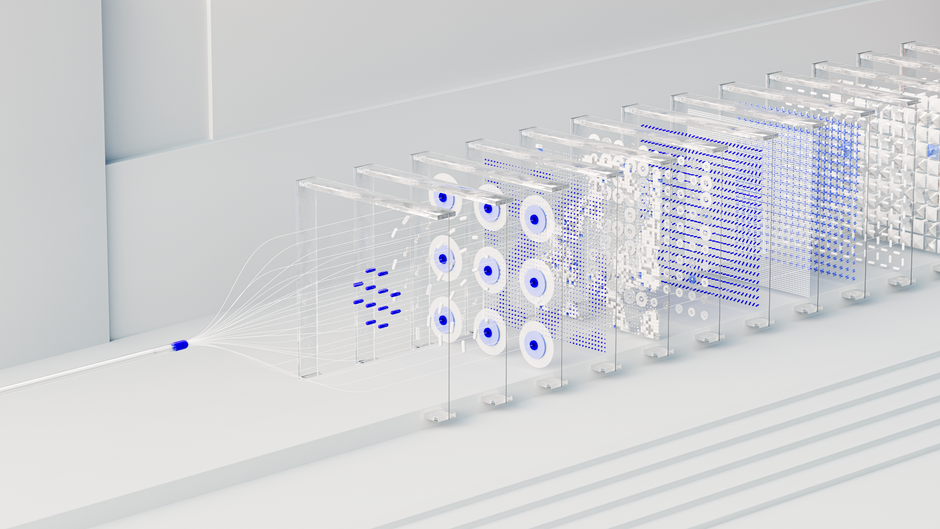
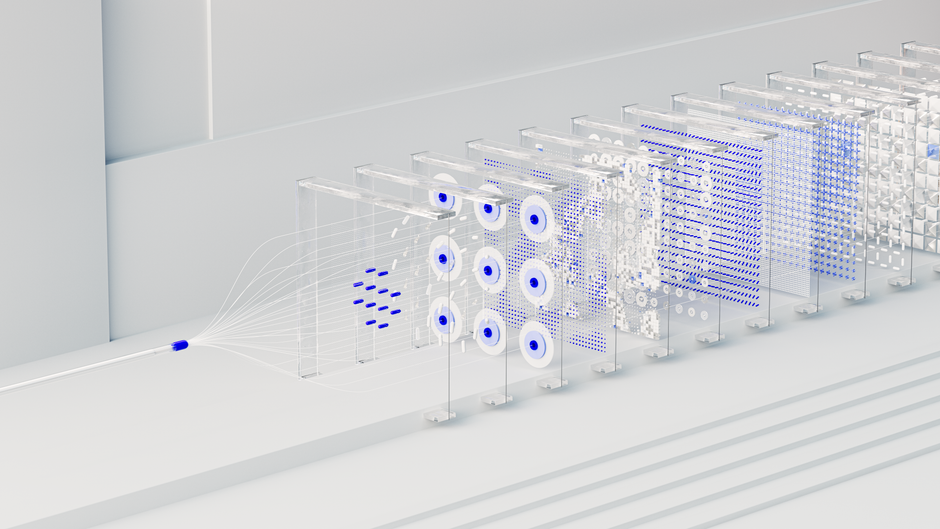
Neural networks form the backbone of modern artificial intelligence, powering everything from image recognition and natural language processing to game-playing agents and scientific discovery. At their core, neural networks are computational systems inspired by the biological neural networks that constitute animal brains. However, unlike their biological counterparts, artificial neural networks are carefully engineered mathematical structures optimized for specific computational tasks. The architecture of a neural network — the arrangement and connectivity of its layers and neurons — fundamentally determines what the network can learn and how efficiently it can process information.
The evolution of neural network architectures tells the story of AI's transformation from theoretical curiosity to practical powerhouse. From the simple perceptron of the 1950s to today's trillion-parameter transformer models, each architectural innovation has unlocked new capabilities and applications. Understanding these architectures is essential for anyone working with AI, as choosing the right architecture for a given problem is often the difference between a successful model and a failed project. This guide provides a comprehensive overview of the major neural network architectures, their underlying principles, strengths, limitations, and typical use cases.
Feedforward Neural Networks: The Foundation
The simplest and most foundational neural network architecture is the feedforward neural network, also known as the multilayer perceptron (MLP). In a feedforward network, information flows in one direction — from the input layer through one or more hidden layers to the output layer — without any cycles or loops. Each layer consists of neurons (also called units) that are fully connected to the neurons in the adjacent layers. Every connection has an associated weight, and each neuron computes a weighted sum of its inputs, applies an activation function, and passes the result to the next layer.
The activation function is a critical design choice in feedforward networks. Early networks used sigmoid or hyperbolic tangent functions, which squash input values into bounded ranges. However, these functions suffer from the vanishing gradient problem, where gradients become extremely small in deep networks, effectively preventing learning in earlier layers. The Rectified Linear Unit (ReLU) and its variants (Leaky ReLU, ELU, Swish) have largely replaced sigmoidal activations because they mitigate vanishing gradients and accelerate training. Feedforward networks are universal function approximators — given enough neurons and layers, they can theoretically represent any continuous function. Despite their simplicity, MLPs remain essential components in modern architectures, often serving as the final classification layers in convolutional networks and transformers.
Does this live up to the hype?
Convolutional Neural Networks: Vision Masters
Convolutional Neural Networks (CNNs) changed computer vision by introducing a fundamentally different approach to processing grid-structured data such as images. Instead of connecting every neuron to every input pixel, CNNs use convolutional filters (also called kernels) that slide across the input, detecting local patterns like edges, textures, and shapes. This local connectivity dramatically reduces the number of parameters compared to fully connected networks, making CNNs both more efficient and more resistant to overfitting.
A typical CNN architecture consists of three types of layers: convolutional layers that learn feature detectors, pooling layers that reduce spatial dimensions and provide translation invariance, and fully connected layers that perform high-level classification. Early landmark CNN architectures like LeNet-5 (1998) demonstrated the potential of convolutional networks for handwritten digit recognition, but it was AlexNet (2012) that truly launched the deep learning revolution by winning the ImageNet competition with a massive margin. Subsequent architectures introduced increasingly sophisticated design innovations: VGGNet showed that deeper networks with smaller filters perform better; GoogLeNet (Inception) introduced parallel convolutional paths at different scales; and ResNet solved the degradation problem with skip connections that allow gradients to flow directly through hundreds of layers. For more context on how these networks learn, check our article on supervised learning.
Is it worth the effort?
Recurrent Neural Networks and Sequence Processing
Game changer.
Recurrent Neural Networks (RNNs) were designed specifically for sequential data, where the order and temporal dependencies between elements carry crucial information. Unlike feedforward networks, RNNs maintain a hidden state that gets updated at each time step, allowing information to persist across the sequence. This makes RNNs naturally suited for tasks like language modeling, machine translation, speech recognition, and time series prediction.
The basic RNN architecture processes sequences step by step, applying the same weight matrix at every time step while maintaining a hidden state that captures information from previous steps. However, simple RNNs struggle with long-range dependencies due to the vanishing and exploding gradient problems — as gradients are backpropagated through many time steps, they tend to either vanish (become extremely small) or explode (become extremely large). Long Short-Term Memory (LSTM) networks and Gated Recurrent Units (GRUs) were developed specifically to address these limitations through carefully designed gating mechanisms. LSTM cells maintain an explicit cell state that can be read, written, or reset via input, output, and forget gates, enabling the network to learn what information to remember and what to discard over arbitrarily long sequences. While transformers have largely superseded RNNs for many NLP tasks, RNNs remain relevant for specific applications involving sequential data with strong temporal structure, such as real-time signal processing and certain robotics control problems.
The Transformer Revolution
The introduction of the Transformer architecture in the landmark 2017 paper "Attention Is All You Need" marked a shift in neural network design. Transformers dispensed with recurrence entirely, relying solely on attention mechanisms to capture relationships between elements in a sequence. The core innovation is the self-attention mechanism, which allows every element in a sequence to attend to every other element, computing weighted representations that capture contextual relationships regardless of distance. This parallel architecture enables transformers to process entire sequences simultaneously rather than step by step, leading to dramatically faster training and the ability to model much longer dependencies than RNNs.
The transformer architecture consists of an encoder and a decoder, each composed of multiple identical layers containing self-attention sublayers and feedforward networks. Positional encodings are added to the input embeddings to provide information about the order of elements, since the model has no inherent sense of sequence. Multi-head attention allows the model to attend to information from different representation subspaces simultaneously. Modern transformer variants have pushed the boundaries of scale and capability: BERT uses only the encoder for language understanding tasks, while GPT-family models use only the decoder for generative tasks. Large language models (LLMs) with hundreds of billions of parameters, such as GPT-4, Claude, and Gemini, are all fundamentally transformer-based. The retrieval-augmented generation (RAG) approach has also emerged as a powerful way to enhance transformer models with external knowledge. Learn more about this technique in our article on RAG.
So what does this mean in practice?
Emerging Architectures and Future Directions
The neural network architecture landscape continues to evolve rapidly, with several promising directions pushing beyond the transformer paradigm. Mixture of Experts (MoE) models divide computation across multiple specialized subnetworks (experts), activating only a subset for each input. This allows models with massive total parameter counts (like Mixtral 8x7B and GPT-4) to maintain reasonable inference costs by routing each input to the most relevant experts. State Space Models (SSMs) like Mamba offer an alternative to attention mechanisms for sequence modeling, achieving linear scaling with sequence length while matching transformer performance on many tasks.
Here's the thing: Graph Neural Networks (GNNs) extend neural network architectures to graph-structured data, enabling applications in molecular property prediction, social network analysis, and recommendation systems. Neural Architecture Search (NAS) automates the design of network architectures, using techniques like reinforcement learning and evolutionary algorithms to discover optimal architectures for specific tasks. Spiking Neural Networks (SNNs), which more closely mimic biological neurons by using discrete spikes for communication, promise extreme energy efficiency for neuromorphic hardware. As hardware continues to evolve and our theoretical understanding deepens, we can expect neural network architectures to become more specialized, efficient, and capable, driving the next wave of AI innovation across every domain.
What Actually Matters
Here's a real example from my own use: - Neural network architectures determine what a model can learn and how efficiently it processes information, making architecture choice critical for any AI project.
- Feedforward networks (MLPs) form the fundamental building block, serving as universal function approximators that are still used in modern architectures. (this one actually surprised me)
- CNNs changed computer vision through local connectivity and hierarchical feature learning, enabling breakthroughs in image recognition. (this one actually surprised me)
- RNNs and their gated variants (LSTM, GRU) enabled sequence processing, though transformers have largely superseded them for many tasks. (this one actually surprised me)
- The transformer architecture, built entirely on attention mechanisms, underlies virtually all modern large language models and has transformed NLP.
- Emerging architectures like mixture of experts, state space models, graph neural networks, and spiking neural networks point toward the future of AI computation.