Introduction
Global supply chains and logistics networks form the backbone of modern commerce, yet they face unprecedented challenges. Customer expectations for faster delivery, the complexity of global trade, labor shortages, and the need for resilience against disruptions have pushed traditional supply chain management approaches to their limits. Artificial intelligence has emerged as a critical technology for transforming supply chain operations from reactive, manual processes into intelligent, predictive, and automated systems. AI applications span the entire supply chain, from demand forecasting and inventory optimization to warehouse robotics, route planning, and last-mile delivery. By analyzing vast amounts of data and making real-time decisions, AI helps organizations reduce costs, improve service levels, and build resilience against disruptions. This guide explores the key applications of AI in supply chain and logistics and how organizations can leverage these technologies to gain competitive advantage.
AI-Powered Demand Forecasting
Accurate demand forecasting is the foundation of effective supply chain management. Traditional forecasting methods rely on historical sales data and simple statistical models that struggle to capture the complexity of modern demand patterns. AI transforms demand forecasting by incorporating diverse data sources and identifying complex patterns that human analysts and traditional models miss. Machine learning algorithms analyze not just historical sales data but also external factors such as weather patterns, economic indicators, social media trends, competitor pricing, and even news events to generate highly accurate demand predictions. Tools like Blue Yonder, Kinaxis, and Llamasoft use AI to create demand forecasts that continuously update as new data becomes available. These systems can predict demand at granular levels, forecasting specific products at specific locations for specific time periods. For example, a retailer using AI demand forecasting can predict how many units of a particular winter coat will sell at each store location based on local weather forecasts, fashion trends, and historical patterns. The system also detects sudden demand shifts, such as a viral social media post causing a product to trend, and adjusts forecasts in real time. During supply chain disruptions, AI models quickly assess the impact on demand and recommend inventory adjustments. This forecasting accuracy reduces both stockouts and overstock situations, improving customer service while reducing inventory carrying costs. Organizations implementing AI demand forecasting typically report forecast error reductions of 30 to 50 percent and corresponding improvements in inventory turnover.
Is it worth the effort?
Intelligent Warehouse Automation
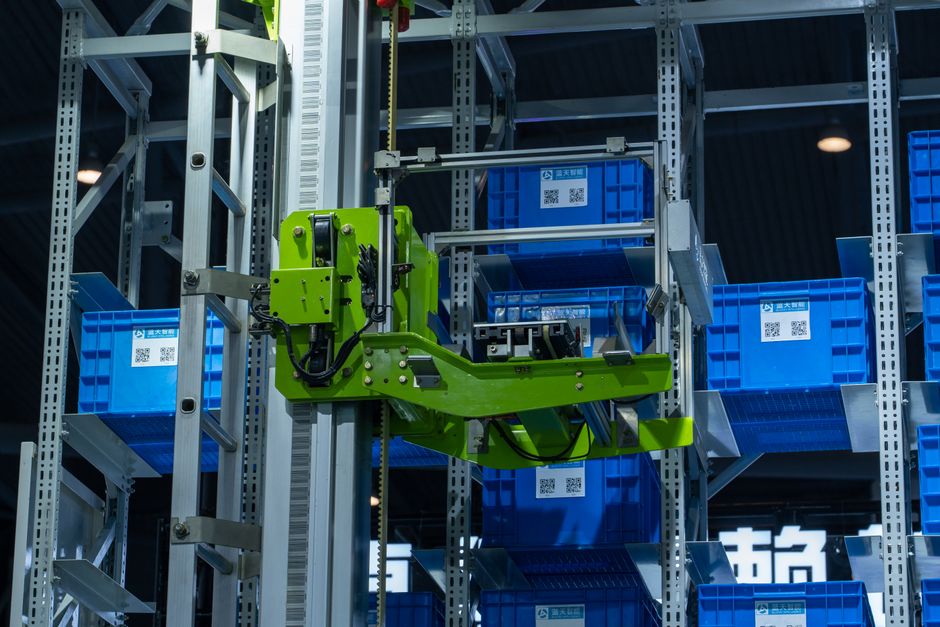
Warehouse operations are being transformed by AI-powered automation that goes beyond traditional conveyor systems and barcode scanning. Modern warehouses use AI to optimize virtually every aspect of operations, from receiving and putaway to picking, packing, and shipping. Autonomous mobile robots equipped with computer vision and AI navigation systems move inventory throughout warehouses, learning optimal paths and adapting to changing layouts without requiring reprogramming. These robots work alongside human pickers, with AI orchestrating the collaboration by assigning tasks to maximize overall throughput. AI-powered vision systems automate receiving by identifying incoming shipments, verifying quantities, and detecting damage without human inspection. For putaway, AI algorithms determine optimal storage locations for each item based on size, velocity, seasonality, and relationship to other items that are frequently ordered together. During picking, AI optimizes pick paths and batch orders to minimize travel time. Voice-directed picking systems enhanced with natural language processing allow workers to receive instructions and confirm picks hands-free. Machine learning algorithms also predict maintenance needs for warehouse equipment, scheduling repairs before breakdowns occur. Companies like Amazon, DHL, and Walmart have demonstrated dramatic productivity improvements through AI warehouse automation, with some facilities achieving picking speeds three to four times faster than manual operations. For smaller operations, cloud-based warehouse management systems with AI capabilities offer similar optimization benefits without requiring massive capital investment in automation hardware.
Route Optimization and Transportation Management
Transportation represents one of the largest cost components in logistics, and AI delivers significant savings through intelligent route optimization and fleet management. AI-powered route optimization systems go beyond simple shortest-path calculations to consider multiple variables including traffic patterns, weather conditions, delivery time windows, vehicle capacity, driver hours of service, and fuel costs. These systems use machine learning to predict traffic conditions at specific times and on specific routes, enabling truly optimized route planning that adapts to expected conditions rather than static distances. Tools like Optimoroute, Routific, and Trimble provide AI-based route optimization that continuously recalculates as new orders arrive or conditions change. For dynamic delivery operations, such as food delivery or same-day couriers, AI dispatchers make real-time decisions about which driver should handle each order based on location, capacity, driver preferences, and predicted delivery times. Load optimization AI determines how to best pack vehicles to maximize space utilization while ensuring stability and accessibility for multi-stop routes. For long-haul trucking, AI analyzes historical data to recommend optimal departure times, rest stops, and even which lanes to bid on in spot markets. The environmental impact is also significant, with route optimization reducing fuel consumption and emissions by 10 to 30 percent. Fleet management AI monitors driver behavior, vehicle health, and fuel efficiency, providing recommendations that reduce operating costs and improve safety.
 AI-powered supply chain platforms provide real-time visibility into logistics operations with predictive analytics and optimization recommendations.
Real-Time Visibility and Disruption Management
Supply chain visibility has become a top priority for organizations seeking to manage risk and improve customer service. AI provides unprecedented real-time visibility across the entire supply chain by aggregating data from suppliers, carriers, ports, warehouses, and retail points of sale. IoT sensors, GPS trackers, and RFID tags generate continuous data streams that AI systems analyze to provide accurate shipment status, estimated arrival times, and alerts when deviations occur. Platforms like FourKites and project44 use AI to predict shipment arrival times within minutes of accuracy, even for complex multi-modal shipments involving ocean freight, rail, and truck transportation. These predictions continuously update as conditions change, giving customers and supply chain managers realistic expectations rather than static estimates. When disruptions occur, such as port congestion, weather events, or supplier production issues, AI systems provide early warning and recommend mitigation strategies. For example, if a typhoon is predicted to impact a key shipping lane, the AI automatically identifies affected shipments, evaluates alternative routing options, calculates cost implications, and recommends actions to minimize disruption impact. These systems also model the cascading effects of disruptions across the supply chain, helping organizations understand how a delay in one component might affect production schedules and customer commitments downstream. By providing early warning and decision support, AI-enabled visibility helps organizations build supply chains that aren't just efficient but also resilient.
Supplier Management and Procurement AI
I'm not exaggerating.
Something I wish I'd known earlier: managing supplier relationships and procurement processes is a data-intensive function that benefits significantly from AI. AI-powered supplier management systems continuously monitor supplier performance across dimensions including quality, delivery reliability, financial health, and sustainability metrics. Machine learning models analyze historical performance data and external signals to predict supplier risk, flagging potential issues before they impact operations. For procurement, AI automates the source-to-contract process by analyzing supplier databases, past purchases, and market conditions to recommend optimal sourcing strategies. These systems can identify alternative suppliers for critical materials, evaluate total cost of ownership rather than just purchase price, and even automate routine procurement transactions. Natural language processing analyzes supplier contracts, identifying non-standard terms and potential risks. AI also supports strategic sourcing by analyzing spending patterns across the organization, identifying consolidation opportunities, and providing data-driven negotiation insights. During supplier negotiations, AI provides real-time market intelligence, benchmarking data, and scenario analysis that strengthens the buyer's position. For sustainable procurement, AI tracks supplier environmental, social, and governance performance, helping organizations meet sustainability commitments and regulatory requirements. By automating routine procurement tasks and providing strategic insights, AI enables procurement teams to focus on building strategic supplier relationships rather than processing transactions.
My Honest Take
- AI-powered demand forecasting incorporates diverse data sources to generate highly accurate predictions, reducing stockouts and inventory costs.
- Intelligent warehouse automation uses robotics, computer vision, and AI orchestration to make a big difference to picking and packing efficiency. — game changer in my workflow
- Route optimization AI considers traffic, weather, delivery windows, and vehicle constraints to minimize transportation costs and emissions. — took me a while to figure this out
- Real-time visibility platforms with predictive analytics help organizations monitor shipments and proactively manage disruptions. — wish I'd known this six months ago
- AI transforms supplier management through continuous performance monitoring, risk prediction, and automated procurement processes. — took me a while to figure this out
- Organizations implementing AI across supply chain operations typically achieve 10 to 30 percent cost reductions and significant service level improvements. — game changer in my workflow
Strengthen your supply chain knowledge further with our guides on AI Inventory Management Systems and AI Data Analysis Tools for comprehensive operational intelligence.