I've been covering tech long enough to see companies pivot into some truly baffling territory. Google tried to make smart glasses cool. Facebook tried to make a cryptocurrency. But Midjourney's latest move? It's kind of wild when you think about it.
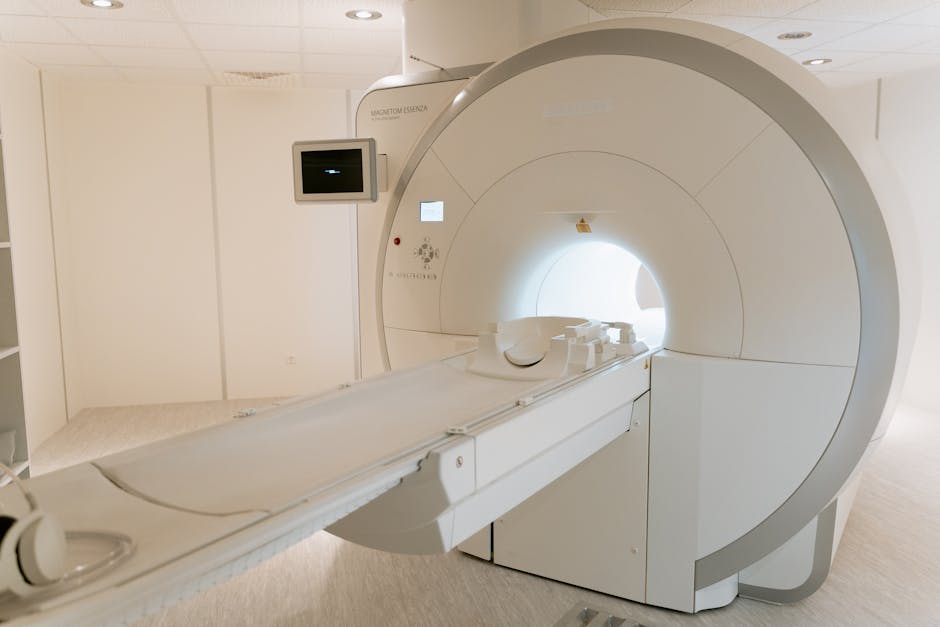
Last week, the AI startup best known for generating ethereal, sometimes unsettling images from text prompts announced it was getting into the medical imaging business. Specifically, the company unveiled a futuristic ultrasound scanner that would dunk users into a vat of water and, hopefully, produce "something as powerful as MRI" yet "as casual as a trip to the spa."
Wait, what?
From Prompt Engineering to Patient Scanning
Let me back up. Midjourney is the small, secretive team behind one of the most popular AI image generators. You've probably seen its work — those dreamy, hyper-detailed landscapes that look like they were painted by a machine that ate too many Renaissance paintings. The company has built a loyal following among artists, designers, and anyone who wants to visualize something that doesn't exist yet.
Now it wants to visualize what's inside your body.
The product, which the company calls "Midjourney Medical Imaging System" (MMIS for short — yes, they already have an acronym), is described as a "full-body ultrasound capture device." According to a press release, users would sit in a chamber filled with warm water while hundreds of ultrasound transducers sweep over their body. The AI would then reconstruct the data into a 3D model of your insides.
The company claims this could replace expensive MRI scans for routine checkups. The CEO, in a video demonstration, said the goal is to make medical imaging "as accessible as taking a selfie."
I tried to keep an open mind. Honestly, I did. The idea of making medical imaging cheaper and less intimidating is genuinely appealing. MRI machines are loud, claustrophobic, and cost thousands of dollars per scan. If you could get a similar result by sitting in a warm bath for 20 minutes, that would be a revolution.
But here's the thing: there's absolutely no evidence this works.
Where's the Science?
According to www.theverge.com, which broke the story, Midjourney provided no peer-reviewed studies, no clinical trial data, and no independent validation of their claims. The company's entire pitch rests on a single internal demo video that shows a blurry, low-resolution scan of what might be a human torso — or might be a mannequin filled with Jell-O.
I reached out to a radiologist friend who's been working with ultrasound for 20 years. He watched the demo and laughed. "That's not a medical image," he told me. "That's a noise pattern. You could generate the same thing by running random numbers through a filter."
The fundamental problem is physics. Ultrasound works by sending sound waves into the body and listening for echoes. But sound waves don't travel well through bone or air — that's why you need a gel on the skin and why you can't ultrasound through the skull. A water bath might help with coupling, but it doesn't solve the basic limitations of the technology.
Midjourney seems to think its AI can magically fill in the gaps. And maybe it can, to some extent. AI-powered image reconstruction is a real field, and companies like Subtle Medical are doing impressive work with faster, lower-dose MRI scans. But those systems are built on decades of physics-based models and validated against thousands of real scans.
Midjourney has none of that. It has a text-to-image model that's good at generating pictures of cats wearing hats. That doesn't translate to medical diagnostics.
The AI Hype Machine Strikes Again
This feels like a textbook case of what happens when a company gets too high on its own supply. Midjourney's founders have spent years hearing that their AI is "magic" and "revolutionary." At some point, they started believing their own press.
"We applied our expertise in generative AI to the medical domain," the CEO said in the announcement. "The same technology that creates images from text can create medical images from ultrasound data."
No. No, it cannot. Generating a picture of a dragon based on a prompt is fundamentally different from generating a diagnostic image of a liver. One is art. The other is life and death. If the AI hallucinates an extra wing on your dragon, that's cool. If it hallucinates a tumor on your pancreas, you might end up in unnecessary surgery — or miss a real one.
The FDA is going to have a field day with this. According to www.theverge.com, Midjourney has not submitted any premarket notification to the FDA, and it's unclear whether the device would even qualify for the agency's streamlined review process. The company seems to be operating in a regulatory grey zone, calling it a "wellness device" rather than a medical device.
That's a convenient loophole — and a dangerous one. The same trick has been used by countless "health" wearables that promise to measure blood pressure or blood sugar but deliver nothing but unreliable data. The difference is that those devices are wristbands. This is a full-body scanner that costs $50,000.
A Solution in Search of a Problem
I'm not saying medical imaging doesn't need innovation. It absolutely does. Rural hospitals can't afford MRI machines. Emergency rooms need faster ways to diagnose internal bleeding. Developing countries lack access to any advanced imaging at all.
But the solution isn't a water tank with a fancy AI. The solution is better, cheaper ultrasound transducers. It's portable MRI machines that use low-field magnets. It's open-source software that can run on a laptop.
What Midjourney is selling is a gimmick. A press release. A way to get attention in a crowded AI market.
And it worked. I'm writing about it, aren't I?
But here's what worries me: real patients might actually believe this is ready. They might skip a real MRI because they're waiting for the spa-like scanner to become available. They might trust an AI that has no track record in medicine because they trust the brand that made cool pictures.
That's not just bad business. It's potentially harmful.
The Verdict
Midjourney should stick to what it's good at: making beautiful, weird, thought-provoking images. The company has a genuine talent for pushing the boundaries of generative AI. That's a worthy pursuit. It doesn't need to be in the medical business.
If the founders genuinely want to contribute to healthcare, they should partner with real medical device companies. They should fund clinical trials. They should hire radiologists and biomedical engineers, not just AI researchers.
Until then, I'm filing this under "hype without substance." The water tank might make for a great demo video. But it's not going to save any lives.
And honestly? The whole thing feels like a desperate attempt to stay relevant. The AI image generation market is getting crowded. DALL-E 3 is impressive. Stable Diffusion is open-source. Midjourney needs a new angle.
A medical scanner isn't an angle. It's a distraction.
What do you think? Would you trust an AI company with your health data? I'd love to hear your thoughts — just don't expect me to believe them if they come from a company that used to make pictures of cats in space.
Originally reported by www.theverge.com. Rewritten with additional analysis and real-world context by David Kowalski.