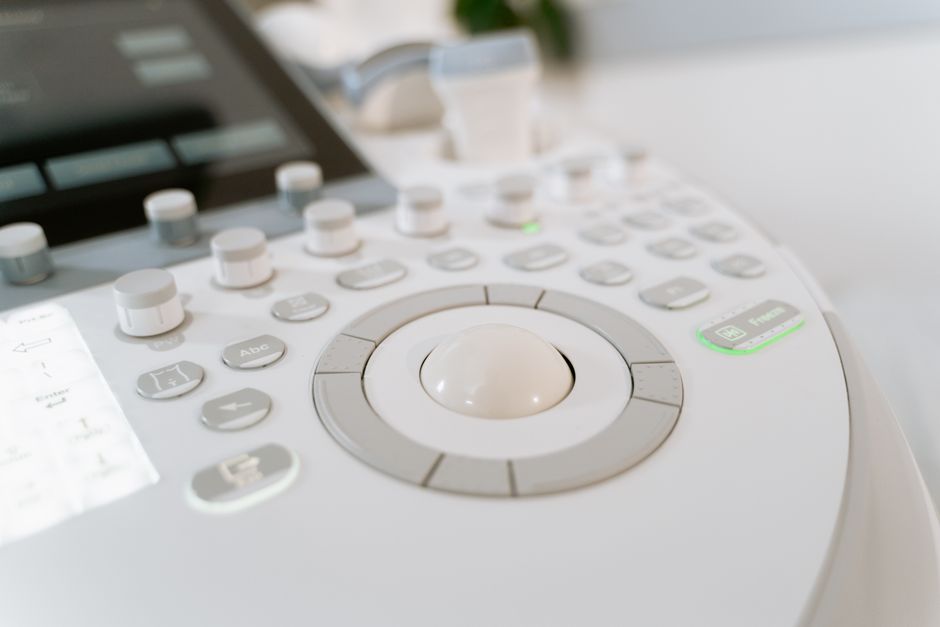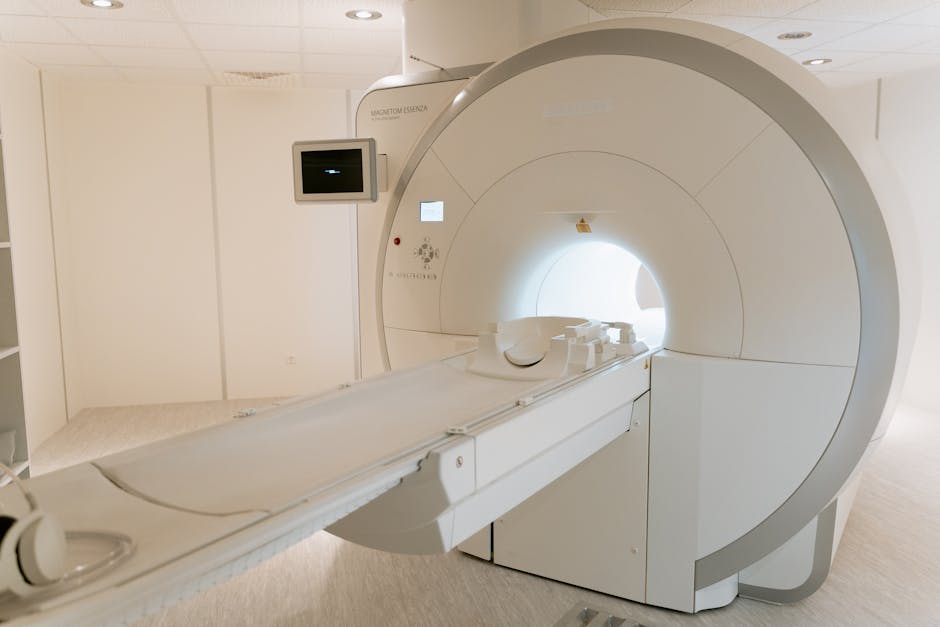
Last week, I was scrolling through my feed when I saw it: Midjourney, the company that gave us those hauntingly beautiful AI-generated images of cat priests and neon-lit dystopias, was now... dunking people in water to scan their bodies?
Yeah, you read that right. The startup that trained its models on internet images to create art on demand has decided its next big thing is a medical ultrasound scanner that looks like a high-end spa treatment crossed with a sci-fi torture device.
According to www.theverge.com, the company announced a "futuristic ultrasound scanner that would dunk users into a vat of water" with the goal of producing "something as powerful as MRI" yet "as casual as a trip to the spa."
From Text Prompts to Body Scans: What the Hell Happened?
Let's be real for a second. Midjourney's pivot is kind of wild when you think about it. This is a company that built its reputation on a Discord bot that could turn a phrase like "a dragon made of jelly beans in the style of Van Gogh" into a convincing image. Now they want to be in the medical device business?
I get it. The AI landscape is brutal. OpenAI keeps dropping bombs, Stability AI is bleeding cash, and everyone's scrambling to find a niche that actually makes money. Medical imaging seems like a natural fit for AI — there's already a ton of research on using machine learning to read X-rays, CT scans, and MRIs. But here's the thing: there's a massive difference between an AI that helps radiologists spot tumors in existing scans and a company that wants to build the hardware to capture those scans from scratch.
Midjourney's approach is... unconventional. They're not trying to improve existing medical imaging technology. They're not partnering with GE Healthcare or Siemens. Instead, they're proposing a water tank that somehow produces images comparable to an MRI.
The Water Tank Promise: MRI Without the Claustrophobia?
Here's how it's supposed to work: you climb into a vat of water, some kind of ultrasound array does its thing, and an AI reconstructs the data into detailed internal images. The company claims this will be as powerful as an MRI — which, for context, uses powerful magnetic fields to create incredibly detailed images of soft tissues — but as relaxing as a spa visit.
Let me stop you right there. I've been in an MRI. It's loud, claustrophobic, and takes 45 minutes. A spa visit involves cucumber water and soft music. These are not comparable experiences, and claiming they are is the kind of marketing fluff that makes tech journalists like me reach for the red pen.
More importantly, ultrasound and MRI are fundamentally different technologies. Ultrasound uses sound waves to create real-time images of structures like fetuses, blood flow, and organs. It's great for certain applications — pregnancy, echocardiograms, gallbladder issues — but it has limitations. It can't see through bone or air-filled structures like lungs. It's operator-dependent, meaning the person holding the wand matters a lot.
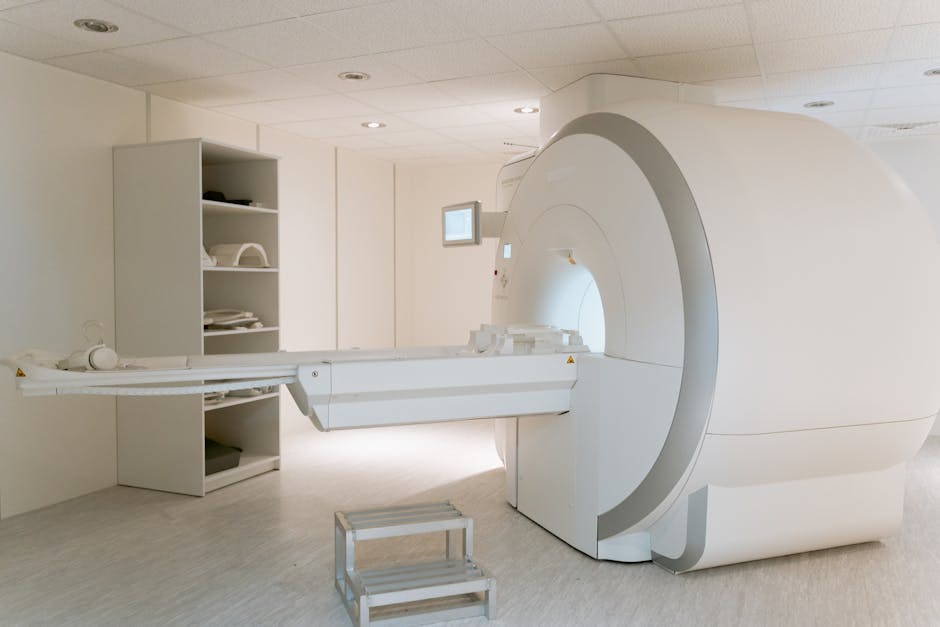
MRI, on the other hand, uses magnetic fields and radio waves to create highly detailed images of soft tissues, including the brain, spinal cord, and joints. It can see things ultrasound can't. The idea that a water-based ultrasound system could match MRI is, to put it charitably, a claim that requires extraordinary evidence.
According to www.theverge.com, "the company announced a futuristic ultrasound scanner that would dunk users into a vat of water and, hopefully, produce 'something as powerful as MRI' yet 'as casual as a trip to the spa.'" Notice the word "hopefully." That's doing a lot of heavy lifting.
The Evidence Problem
Here's where things get uncomfortable. Midjourney hasn't published any peer-reviewed studies. They haven't released technical specifications. They haven't shown working prototypes. They haven't even shared preliminary images from this water-based scanner. What they have shown is a slick render of a person floating in a clear tank with some glowing lights.
I've been covering tech long enough to know that renders are not products. Remember Theranos? They had slick renders too. They promised revolutionary blood testing from a finger prick. They had boards full of famous people. They raised hundreds of millions of dollars. And it was all a lie.
I'm not saying Midjourney is Theranos. But when a company with zero medical device experience announces a product that would fundamentally change how medical imaging works — without any evidence — my skepticism meter goes into the red zone.
Medical devices are heavily regulated for good reason. The FDA requires rigorous testing to prove safety and efficacy. An MRI machine costs millions of dollars and requires specialized infrastructure. A new medical imaging modality would need to go through years of clinical trials, regulatory approvals, and validation studies.
Midjourney seems to think they can skip all that. They're calling this a "hackathon project" and suggesting it might be available to beta testers by next year. That's not how healthcare works.
The AI Hype Cycle Comes for Medicine
Look, I'm not anti-innovation. AI has genuine potential in healthcare. Google's DeepMind has used AI to predict protein structures and detect eye diseases. Researchers at Stanford have trained models to identify skin cancer from photos. The FDA has approved dozens of AI-powered medical devices.
But there's a pattern in tech that I've seen play out again and again. A company with no domain expertise decides they can disrupt a complex, regulated industry with AI magic. They raise money based on a vision. They make grand claims. They ignore the messy reality of regulations, clinical workflows, and human physiology.
Medical imaging isn't just about taking pictures. It's about understanding what those pictures mean in the context of a patient's health. It's about integrating with hospital systems. It's about getting insurance reimbursement. It's about training radiologists to interpret the results.
Midjourney's press materials don't address any of this. They talk about making medical imaging "casual" and "spa-like." They talk about AI that can "reconstruct" images from ultrasound data. But they don't talk about what happens when someone with a suspected tumor climbs into their water tank. Who interprets the results? How accurate is it? What's the false positive rate? What happens when it misses something?
The Spa Experience: A Dangerous Framing
Let's talk about that "spa" framing for a moment, because it bothers me more than it probably should. Medical procedures are not spa treatments. They are serious, often uncomfortable, and sometimes painful. That's okay. The goal of medicine is to diagnose and treat illness, not to make you feel relaxed while doing it.
Framing a medical imaging device as a spa experience trivializes the very real anxiety that comes with medical diagnostics. If you're getting scanned because you might have cancer, no amount of cucumber water is going to make that a "casual" experience.
Moreover, the spa framing feels like a marketing gimmick designed to appeal to a particular demographic: wealthy, wellness-obsessed tech bros who think they can hack their health with gadgets. It's the same crowd that buys $5,000 infrared saunas and $1,000 sleep trackers. It's not the millions of people who actually need affordable, accessible medical imaging.
What Midjourney Should Be Doing Instead
I have opinions. Strong ones, apparently. But I also want to be fair. Midjourney has a talented team of AI researchers. Their image generation model is genuinely impressive. If they want to apply their expertise to healthcare, there are better ways to do it.
They could partner with existing medical device companies to improve ultrasound image processing. They could develop AI tools that help radiologists detect anomalies in existing scans. They could focus on making medical imaging more accessible in low-resource settings, where ultrasound machines exist but trained operators are scarce.
Instead, they're building a water tank and calling it a medical device. It's a classic Silicon Valley move: propose something so audacious that it gets attention, even if it's not grounded in reality.
The Verdict: Wait and See (With Heavy Skepticism)
I'll be the first to admit I could be wrong. Maybe Midjourney has some breakthrough ultrasound technology that no one else has. Maybe their AI can indeed reconstruct MRI-quality images from water-based ultrasound data. Maybe they'll navigate the regulatory maze and bring a product to market that helps people.
But I wouldn't bet on it. Not without evidence. Not without peer review. Not without a clear path to clinical validation.
For now, Midjourney's pivot to body scanners feels like a desperate attempt to find a new market after the AI image generation hype started to cool. It's a company that built a fun toy for the internet and is now trying to convince us it can build medical hardware.
I'm not buying it. Not yet. And you shouldn't either.
What do you think? Are you excited about the idea of a spa-like medical scan? Or does this feel like another tech fantasy that will never materialize? Drop me a line — I genuinely want to hear your take.
Originally reported by www.theverge.com. Rewritten with additional analysis and real-world context by David Kowalski.