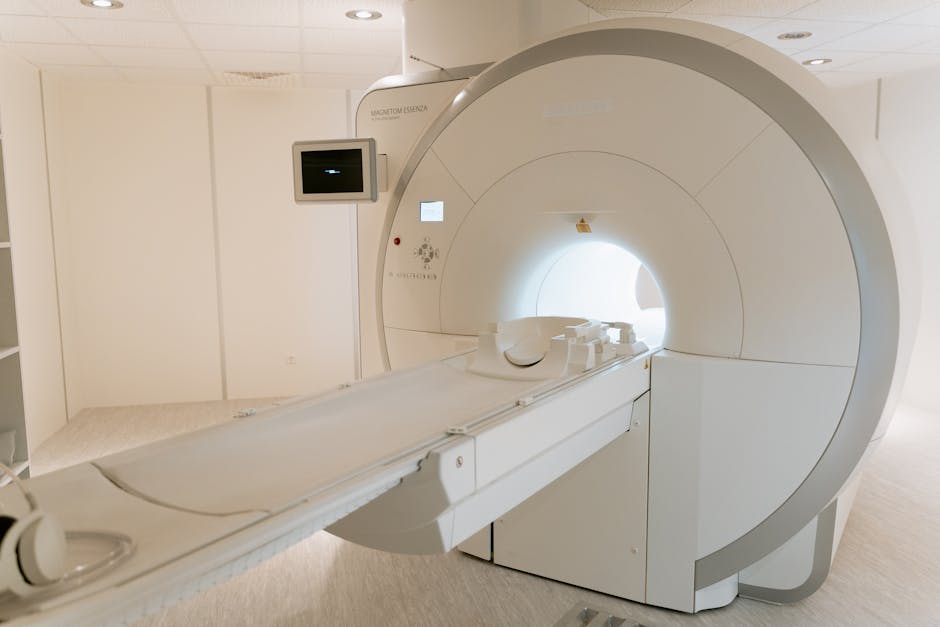
I’ll be blunt: when I first read about Midjourney’s new “body scanner” last week, I thought it was a parody. A company best known for generating surreal, often unsettling AI art — the kind that gives you a cat wearing a top hat in a Renaissance painting — is now claiming it can build a medical device that “dunks users into a vat of water” and produces images “as powerful as MRI” yet “as casual as a trip to the spa.”
Yes, that’s a direct quote from their press materials. And no, I’m not making this up.
According to www.theverge.com, the startup unveiled this pivot without publishing any peer-reviewed studies, without naming a single clinical partner, and without explaining how exactly water immersion plus AI equals diagnostic-grade imaging. The announcement, which landed on June 23, 2026, feels less like a product launch and more like a concept pitch from a sci-fi movie that hasn’t been written yet.
The Setup: From AI Art to Medical Miracles
Midjourney has always been a weird company. It emerged from the generative AI boom with a tool that could turn text prompts into stunning, often bizarre images. It developed a cult following among designers, meme makers, and people who just wanted to see what “a cyberpunk giraffe eating a taco” looked like. The company was private, secretive, and occasionally controversial — especially when artists accused it of training on their work without consent.
But medical imaging? That’s a whole different ballgame. Healthcare is heavily regulated. Medical devices require FDA approval, clinical trials, and years of evidence. You can’t just say “we built an MRI in a bathtub” and expect hospitals to line up.
Yet that’s exactly what Midjourney did. The company’s CEO, in a characteristically vague blog post, described a prototype that uses “advanced ultrasound transducers arranged around a water-filled chamber” and claims that their proprietary AI can reconstruct the data into images rivaling MRI. The post used phrases like “democratizing imaging” and “making preventive care accessible” — the kind of buzzwords that usually signal a company trying to sell a dream, not a device.
The Water Tank Problem
Let’s talk about the water. The concept involves a person sitting in a tub of water while ultrasound sensors capture signals from multiple angles. The idea isn’t entirely new — water is sometimes used in research settings to improve ultrasound coupling. But scaling that to a consumer-friendly device that can scan a whole body? That raises immediate practical questions.
How do you maintain water temperature? How do you ensure patient comfort (and dignity)? What happens if someone has a pacemaker or metal implants? How do you prevent infections between users? Midjourney’s announcement didn’t address any of this. They just showed a render of a sleek, futuristic pod that looks like something from a luxury spa — because, according to them, that’s the vibe they’re going for. “As casual as a trip to the spa,” they said.
I’ve been to a spa. I’ve never had a full-body ultrasound there. And I’m pretty sure the staff wouldn’t know how to interpret the results.
The AI Hype Cycle, Revisited
Here’s the thing: generative AI companies are desperate to prove they’re more than just image generators. The market is saturated. OpenAI, Google, and Adobe all offer similar tools. Midjourney needs to show investors that it has a future beyond making weird art for Twitter. So they grab onto the next big thing — medical imaging — and slap an AI label on it.
But medical AI isn’t new. There are already FDA-approved AI tools that help radiologists analyze X-rays, CT scans, and MRIs. Companies like Aidoc, Zebra Medical Vision, and Arterys have been doing this for years, with real clinical validation. Midjourney is essentially saying, “We can do that, but with a water tank and no evidence.”
According to www.theverge.com, the company’s announcement lacked any mention of regulatory pathway, safety testing, or collaboration with medical institutions. It reads like a startup trying to generate buzz before they have anything substantive — a classic move in the hype-driven world of tech.
The Evidence Gap
Let’s be clear: I’m not saying it’s impossible to build a water-based ultrasound system that produces high-quality images. Researchers have explored this. But the leap from “interesting lab technique” to “clinical tool you can use at a spa” is enormous. It requires rigorous testing, independent validation, and a clear understanding of what the technology can and cannot do.
Midjourney’s blog post included a few sample images: blurry, grayscale shapes that could be anything from a liver to a rock. They boasted that their AI could “enhance resolution” and “remove noise” — things every image processing algorithm claims. But they didn’t show comparisons with actual MRI or CT scans. They didn’t provide sensitivity or specificity data. They didn’t even explain what body parts they were imaging.
This is the kind of evidence that would get laughed out of a radiology conference. But in the tech press, it gets headlines.
The Spa Fantasy
I can’t get past the “spa” angle. The company envisions a future where you pop into a Midjourney-branded wellness center, sit in a warm water pod, and get a full-body scan while calming music plays. Then, presumably, an AI tells you if you have cancer or not. It’s a dystopian vision dressed up in wellness aesthetics.
Real medical imaging is stressful. You lie still in a loud, claustrophobic machine. You get injected with contrast agents. You wait days for results. It’s not pleasant, but it’s necessary — and it’s backed by decades of science. The idea that you can replace that with a relaxing soak is not just naive; it’s dangerous. It suggests that the barriers to good health are merely technological, not institutional or economic.
What Midjourney Should Actually Do
If Midjourney wants to pivot to healthcare, they should start small. Partner with a hospital. Run a clinical trial. Publish results. Get FDA clearance. Show that their technology works for a specific use case, like screening for breast cancer or detecting kidney stones. That’s how you build credibility.
Instead, they’ve jumped straight to a consumer-facing fantasy. It reeks of a company that doesn’t understand the industry they’re entering. Medical imaging isn’t a software problem you can solve with a better algorithm and a nice UI. It’s a system of care, regulation, and trust.
The Verdict
I’ve been writing about tech for 15 years. I’ve seen countless pivots that sounded good on paper but went nowhere. The Segway was supposed to replace cars. Google Glass was supposed to replace smartphones. Theranos was supposed to replace blood draws. Midjourney’s water scanner feels like it belongs in that hall of shame.
I hope I’m wrong. I hope they actually have something revolutionary. But the evidence — or lack thereof — suggests otherwise. The company would be better off sticking to what they do well: generating beautiful, weird art for people who want to explore the boundaries of creativity. Leave the body scans to the professionals.
For now, I’ll be sticking to my annual checkup at the actual clinic. No water required.
Originally reported by www.theverge.com. Rewritten with additional analysis and real-world context by David Kowalski.