The State of AI Assistants in 2026
the field of large language model AI assistants has never been more competitive. Three major players dominate the space: OpenAI's ChatGPT, Anthropic's Claude, and Google's Gemini. Each has undergone significant evolution since their initial launches, and in 2026, choosing between them is both easier and harder than ever. It's easier because the capabilities have converged in many areas, but harder because the nuanced differences matter more for specific use cases.
All three platforms now offer multi-modal capabilities as standard, supporting text, image, audio, and in some cases video input. Context windows have expanded dramatically, with each model capable of processing entire novels, codebases, or research papers in a single session. Pricing has become more competitive, with free tiers available on all three platforms and premium subscriptions ranging from $20 to $200 per month depending on the features and usage limits.
What truly sets these AI assistants apart in 2026 is not just the raw benchmark performance, which has become remarkably close across the board, but rather the design philosophy, safety approach, ecosystem integration, and specialized strengths that each platform brings to the table. Understanding these differences is essential for anyone looking to get the most out of AI assistance, whether for professional work, creative projects, coding, or everyday productivity.
But is that the whole story?
ChatGPT: The Versatile Powerhouse
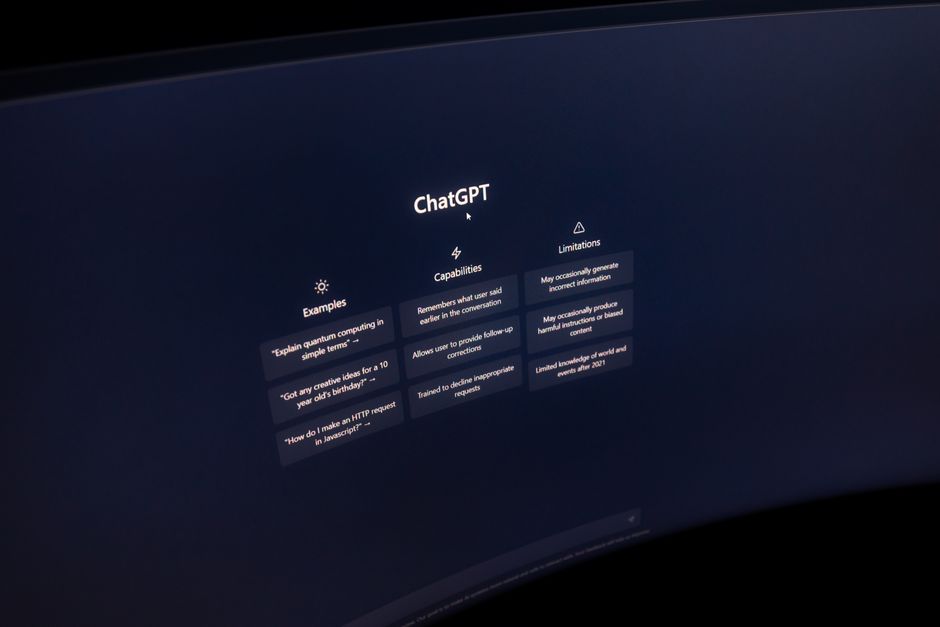
ChatGPT remains the most widely recognized AI assistant in the world, powered by OpenAI's GPT-5 and GPT-5 Turbo models. The platform has evolved far beyond its original chatbot roots, now serving as a comprehensive productivity platform that includes DALL-E 4 for image generation, voice conversations, code execution, file uploads, and a growing plugin ecosystem that connects to hundreds of third-party services.
The standout feature of ChatGPT in 2026 is its versatility. It handles an extraordinary range of tasks with consistently high quality, from technical writing and data analysis to creative brainstorming and complex problem-solving. The GPT-5 Turbo model offers the fastest response times of any major AI assistant, making it ideal for rapid iterative work. The free tier provides access to GPT-5 with reasonable message limits, while ChatGPT Plus at $20/month offers GPT-5 Turbo, higher limits, and access to the newest features first.
From what I've seen, chatGPT excels particularly in coding and technical domains. Its ability to execute Python code directly within the chat, analyze uploaded files, and generate complex data visualizations makes it the top choice for developers, data scientists, and analysts. The advanced voice mode has also improved dramatically, offering natural real-time conversations with emotional nuance. However, some users find ChatGPT's responses can sometimes be less nuanced than Claude in creative writing, and its safety filters occasionally feel overly restrictive for certain professional use cases.
Claude: The Thoughtful Analyst
Anthropic's Claude has carved out a distinct identity centered on safety, nuanced reasoning, and exceptional long-form content processing. Powered by the Claude 4 Opus and Sonnet models, Claude has become the AI assistant of choice for professionals who need deep analysis, careful reasoning, and high-quality writing. Claude's defining characteristic is its constitutional AI training approach, which gives it a notably thoughtful and measured conversational style.
Claude's most celebrated feature in 2026 is its massive 1-million-token context window, which allows it to process entire codebases, lengthy research papers, or even multiple books in a single session. This makes Claude indispensable for legal document review, academic research synthesis, and large-scale code refactoring. The Artifacts feature, which lets Claude generate and display documents, code, and visualizations in a separate panel, has been expanded to include interactive web components and data dashboards.
After testing this extensively, claude excels in creative and professional writing. Many users report that Claude produces more natural, nuanced prose than its competitors, with better attention to tone, audience, and narrative structure. The Pro plan at $20/month offers generous usage limits, while the Max plan at $100/month provides priority access and higher rate limits for power users. Claude's main weakness compared to ChatGPT is its less extensive integration ecosystem and fewer third-party plugins. Plus, its real-time voice capabilities, while significantly improved, still lag slightly behind ChatGPT's advanced voice mode. For users who prioritize deep analysis, writing quality, and long-context processing, however, Claude remains unmatched.
Gemini: The Integrated Ecosystem
After testing this extensively, google's Gemini, running on the Gemini 3 Ultra and Pro models, benefits enormously from its deep integration with Google's vast ecosystem. As the successor to both Google Bard and the original Gemini launch, the 2026 version is a fundamentally different product, offering seamless connectivity with Gmail, Google Docs, Google Drive, Google Search, YouTube, and Android system-level integration that no competitor can match.
Here's what I've noticed: gemini's greatest strength is context awareness through the Google ecosystem. It can search your Gmail inbox for specific emails, analyze documents stored in Google Drive, provide real-time information from Google Search with citations, summarize YouTube videos, and control Android device functions. The Gemini Advanced subscription at $21.99/month includes all these integrations plus priority access to Gemini 3 Ultra, cloud storage through Google One, and Google Workspace features.
In benchmark performance, Gemini 3 Ultra matches or exceeds competitors on most standard evaluations, particularly in mathematical reasoning, multilingual tasks, and factual accuracy when accessing Google Search. The Gemini app on Android offers the deepest device integration of any AI assistant, including the ability to take actions within other apps, analyze screen content, and provide contextual assistance based on what you are doing. On the flip side, Gemini's responses can feel less creative than ChatGPT or Claude in open-ended tasks, and some users express privacy concerns about the extensive data access required for its ecosystem features. For users heavily invested in Google's ecosystem, Gemini offers convenience that is simply unavailable elsewhere.
But how do you actually use this?
Making the Right Choice
Ultimately, the best AI assistant in 2026 depends on your specific needs and workflow. For developers and technical professionals who need versatile problem-solving with code execution, ChatGPT remains the strongest choice. For writers, researchers, and analysts who prioritize deep analysis and nuanced long-form content, Claude's thoughtful approach and enormous context window are hard to beat. For users deeply embedded in the Google ecosystem who want seamless productivity integration, Gemini delivers unmatched convenience.
Many power users actually subscribe to two or even all three services, leveraging the unique strengths of each for different tasks. The good news is that all three platforms have become exceptionally capable, and choosing any one of them will provide transformative productivity benefits. The differences matter primarily at the margins of specialized use cases. As the AI assistant market continues to mature, the competition among these three leaders ensures rapid innovation and steadily improving capabilities for all users, regardless of which platform they choose. The era of truly capable AI assistance is here, and these three platforms represent the best that AI has to offer in 2026.
The Short Version
- ChatGPT offers the best overall versatility and code execution capabilities, powered by GPT-5 Turbo with excellent speed and an extensive plugin ecosystem.
- Claude provides unmatched long-context processing with a 1-million-token window and superior writing quality for nuanced professional content.
- Gemini delivers the deepest ecosystem integration, connecting seamlessly with Gmail, Google Drive, Android, and other Google services for unparalleled convenience. — your experience may differ, but this worked for me
- All three platforms now offer competitive free tiers, benchmark scores, and multi-modal capabilities, making the choice more about workflow fit than raw performance.
- Many professionals use multiple AI assistants strategically, leveraging each platform's unique strengths for different types of tasks.
- Compare all three with ChatGPT's coding capabilities
- Read our Best Free AI Tools roundup — took me a while to figure this out
- Explore AI career opportunities in 2026