The AI Revolution in Medicine
Healthcare is undergoing one of the most profound transformations in its history, driven by the integration of artificial intelligence across every aspect of medical practice, research, and administration. The convergence of powerful AI models, vast datasets from electronic health records and medical imaging, and unprecedented computing resources has created a perfect storm of innovation. In 2026, AI is no longer an experimental add-on in healthcare but a core component of clinical workflows, drug development pipelines, and health management systems.
What makes the current moment particularly significant is the shift from AI as a research curiosity to AI as an approved, regulated, and reimbursed medical tool. Regulatory agencies including the FDA have now approved hundreds of AI-powered medical devices and clinical decision support systems. Major healthcare systems have deployed AI at scale, with tangible improvements in patient outcomes, operational efficiency, and cost reduction. The technology has moved from pilot projects to production systems that affect real patient care every day.
The scope of AI applications in healthcare is breathtaking. From accelerating drug discovery by orders of magnitude to detecting cancers earlier than human radiologists, from personalizing treatment plans based on individual genetic profiles to providing round-the-clock patient monitoring through AI-powered virtual assistants, the technology is touching every corner of medicine. This article explores the most significant breakthroughs and applications reshaping healthcare in 2026.
Drug Discovery and Development
The most dramatic impact of AI in healthcare has arguably been in drug discovery and development, where the technology has fundamentally changed the timeline and cost structure of bringing new medicines to market. Traditional drug development typically takes 10 to 15 years and costs billions of dollars, with a failure rate exceeding 90 percent. AI-driven approaches are compressing these timelines dramatically and improving success rates through better target identification, molecular design, and clinical trial optimization.
I learned this the hard way: deepMind's AlphaFold, now in its third generation, has achieved near-perfect protein structure prediction, enabling researchers to understand disease mechanisms and design drugs with unprecedented precision. This capability has been integrated into pharmaceutical workflows across the industry, with dozens of drugs discovered using AI tools now in clinical trials. Companies like Recursion Pharmaceuticals and Insilico Medicine have used AI to identify novel drug candidates for diseases ranging from fibrosis to cancer, with some advancing to Phase II and Phase III trials in record time.
AI is also transforming the clinical trial process itself. Machine learning models analyze electronic health records to identify suitable trial participants, predict patient outcomes, and optimize trial designs for statistical power and efficiency. Digital twin technology, where AI creates virtual patient models, allows researchers to simulate trial outcomes and refine protocols before enrolling real patients. The result is faster, cheaper, and more effective clinical trials that bring life-saving treatments to patients years earlier than traditional approaches would allow.
Sound familiar?
Medical Imaging and Diagnostics
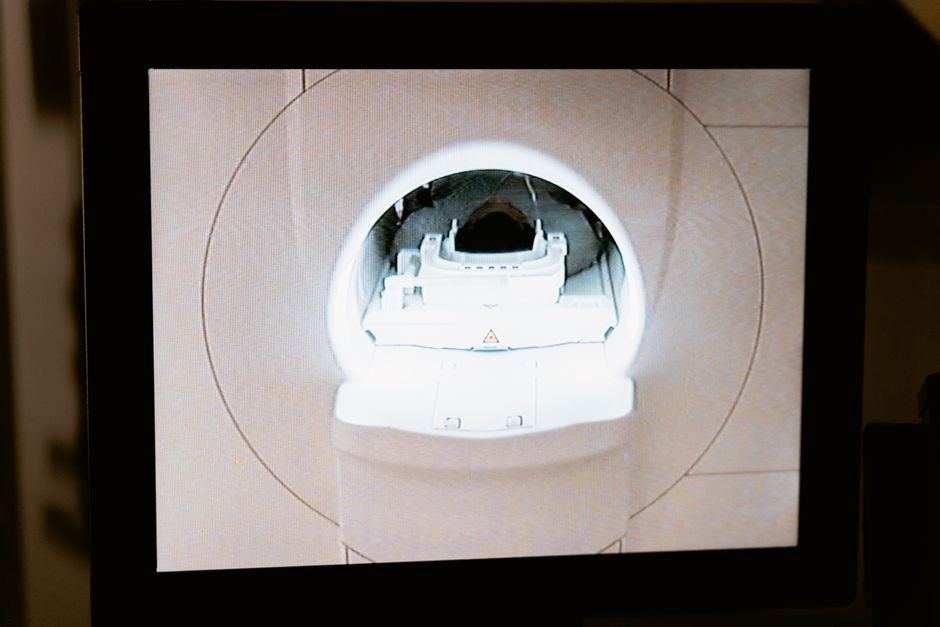
AI's impact on medical imaging has been one of the most visible and widely adopted applications of the technology in healthcare. AI-powered analysis of X-rays, CT scans, MRIs, and pathology slides has reached a level of accuracy that consistently matches or exceeds human radiologists and pathologists for many diagnostic tasks. The technology serves as a force multiplier for healthcare professionals, allowing them to process more cases with higher accuracy and reduced fatigue.
In radiology, AI algorithms can detect subtle abnormalities that human eyes might miss, from tiny lung nodules on CT scans to early signs of breast cancer on mammograms. The latest systems can analyze multiple imaging modalities simultaneously, correlating findings across different types of scans to provide comprehensive diagnostic assessments. Many hospitals now use AI as a triage tool, flagging urgent cases for immediate review and reducing the time to diagnosis for critical conditions like stroke, pulmonary embolism, and traumatic injury.
Let me give you a concrete example. Pathology has been equally transformed. AI-powered digital pathology systems analyze biopsy slides with remarkable accuracy, identifying cancerous cells, grading tumors, and quantifying biomarkers that inform treatment decisions. These systems are particularly valuable for standardizing diagnoses across institutions and reducing the variability that can occur between different human pathologists. In dermatology, AI-powered smartphone apps can now accurately classify skin lesions, including melanomas, with sensitivity comparable to board-certified dermatologists, democratizing access to skin cancer screening.
But how do you actually use this?
Personalized Medicine and Treatment Planning
Trust me on this.
The dream of personalized medicine, tailoring treatments to each individual's unique genetic makeup, lifestyle, and disease characteristics, is becoming a reality thanks to AI. Machine learning models integrate data from genomics, proteomics, medical history, wearable devices, and environmental factors to predict individual disease risk, recommend preventive measures, and optimize treatment strategies with a precision that one-size-fits-all approaches cannot achieve.
In oncology, AI-powered treatment planning systems analyze a patient's tumor genetics, overall health status, and the latest clinical evidence to recommend personalized treatment protocols. These systems can predict which chemotherapy regimens are most likely to be effective for a specific patient's cancer, reducing the trial-and-error approach that has historically characterized cancer treatment. The same technology is being applied to immunotherapy, helping identify which patients are most likely to respond to checkpoint inhibitors and other immunotherapies based on their unique immune profiles.
Beyond cancer, AI is enabling personalized approaches to managing chronic conditions like diabetes, hypertension, and heart disease. Continuous glucose monitors combined with AI algorithms can predict blood glucose fluctuations hours in advance and adjust insulin delivery in real-time. AI-powered cardiac monitoring systems detect arrhythmias and other abnormalities earlier than traditional monitoring, enabling preventive interventions before emergencies occur. This shift toward predictive, personalized, and preventive medicine represents a fundamental change in how healthcare is delivered.
Virtual Health Assistants and Hospital Operations
AI-powered virtual health assistants have become a standard part of healthcare delivery, handling tasks ranging from appointment scheduling and medication reminders to symptom assessment and mental health support. These systems use natural language processing to understand patient concerns, provide evidence-based information, and escalate cases to human providers when necessary, significantly reducing the administrative burden on healthcare professionals.
In hospital settings, AI is optimizing operations with remarkable results. Predictive models forecast patient admissions and emergency department volumes, allowing hospitals to optimize staffing, bed allocation, and resource management. AI systems monitor patients in real-time, alerting nurses and physicians to deteriorating conditions before they become critical. Surgical robots with AI assistance are performing increasingly complex procedures with greater precision, smaller incisions, and faster recovery times.
The impact on healthcare access in underserved areas has been particularly meaningful. AI-powered telehealth platforms connect patients in rural and remote communities with specialist expertise that would otherwise be unavailable. Diagnostic AI systems operate effectively with lower-cost equipment, bringing advanced diagnostic capabilities to clinics and hospitals in resource-limited settings. While challenges remain, including data privacy concerns, regulatory complexity, and the need for careful validation, the trajectory of AI in healthcare is unmistakably toward more accurate, more personalized, and more accessible care for everyone.
If You Only Remember One Thing
- AI-powered drug discovery is compressing development timelines from over a decade to just a few years, with dozens of AI-discovered drugs now in clinical trials.
- Medical imaging AI has reached diagnostic accuracy matching or exceeding human experts for many conditions, serving as a critical force multiplier for radiologists and pathologists.
- Personalized medicine powered by AI is enabling treatment plans tailored to individual genetics and disease characteristics, particularly in oncology and chronic disease management.
- Virtual health assistants and AI-powered hospital operations are reducing administrative burdens, optimizing resource allocation, and expanding healthcare access to underserved populations.
- Regulatory approvals for AI medical devices have accelerated, with hundreds of FDA-authorized systems now in clinical use across the healthcare system.
- Learn about AI security and privacy concerns in healthcare — took me a while to figure this out
- Explore AI career opportunities in healthcare (this one actually surprised me)
- Read about the environmental impact of AI technology