Defining Artificial Intelligence
Artificial Intelligence, commonly abbreviated as AI, refers to the development of computer systems capable of performing tasks that typically require human intelligence. These tasks include learning from experience, understanding natural language, recognizing patterns, solving problems, and making decisions. At its core, AI is about creating machines that can think and act in ways that we consider intelligent.
The term "artificial intelligence" was first coined in 1956 at the Dartmouth Conference, where a group of researchers gathered to explore the possibility of creating machines that could simulate human intelligence. Since then, AI has evolved from theoretical concepts and simple rule-based systems to sophisticated technologies that power everything from smartphone assistants to autonomous vehicles.
It is important to understand that AI is not a single technology but rather a broad field encompassing many different approaches, techniques, and applications. Just as human intelligence manifests in various forms — logical reasoning, creativity, emotional understanding, physical coordination — artificial intelligence spans multiple capabilities, each suited to different types of problems and tasks.
The Different Types of AI
AI systems are commonly categorized into three levels based on their capabilities. Narrow AI, also called Weak AI, is the only type that currently exists. It's designed to perform specific tasks exceptionally well — playing chess, recognizing faces in photos, translating languages, or recommending products. All AI systems in use today, including ChatGPT, self-driving car perception systems, and medical diagnosis tools, fall into this category. They're highly capable within their defined domains but can't generalize their intelligence to unrelated tasks.
General AI, also called Strong AI or AGI (Artificial General Intelligence), refers to hypothetical AI systems that would possess human-level intelligence across virtually any cognitive task. An AGI system could reason, plan, learn, and communicate across any domain, much like a human. While AGI is the ultimate goal of many AI researchers, it does not yet exist, and expert opinions vary widely on when — or if — it will be achieved. Current estimates range from within the next decade to many decades away.
Superintelligent AI represents a theoretical future state where AI surpasses human intelligence in virtually all domains, including creativity, problem-solving, and social intelligence. While this concept features prominently in discussions about AI safety and the long-term future of humanity, it remains firmly in the realm of speculation and philosophy. For practical purposes, understanding and working with narrow AI is what matters most today.

How Modern AI Actually Works
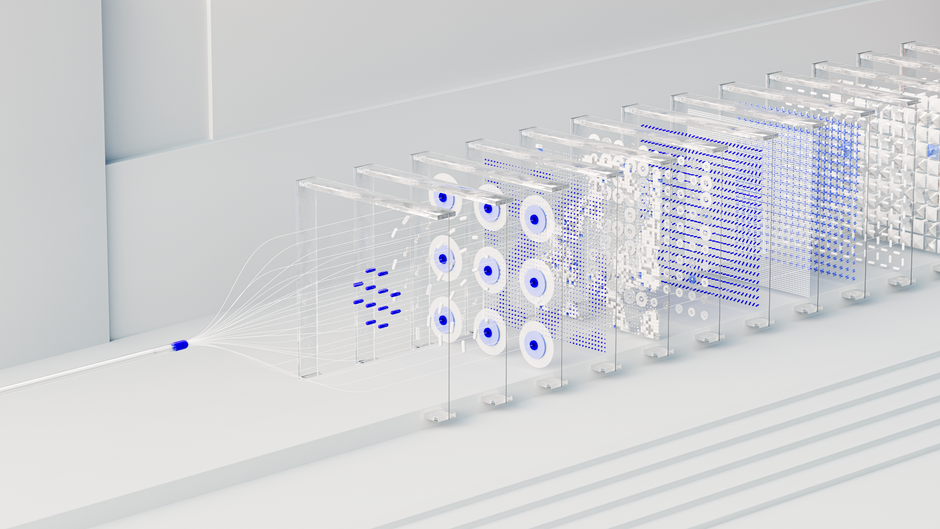
Modern AI systems, particularly the large language models and generative AI tools that have captured public attention, are built on a technology called deep learning. Deep learning uses artificial neural networks — computing systems loosely inspired by the structure of biological brains — to find patterns in vast amounts of data. These networks consist of layers of interconnected nodes (artificial neurons) that process information in increasingly abstract ways.
The training process for a large language model like ChatGPT involves feeding it enormous quantities of text data — books, articles, websites, and other written material — and having it learn to predict the next word in sequences. Through this seemingly simple task repeated billions of times, the model develops a sophisticated understanding of language, facts, reasoning patterns, and even something resembling common sense. The resulting model contains hundreds of billions of parameters — adjustable values that encode what the model has learned.
When you interact with an AI chatbot, your prompt is processed through these neural networks, and the model generates a response by predicting the most appropriate sequence of words based on its training. Importantly, the model isn't retrieving stored answers from a database — iit'sgenerating responses dynamically based on patterns it learned during training. This is why AI can produce novel combinations of ideas and adapt to new situations, but itit'slso why it can sometimes produce incorrect or nonsensical outputs.
Machine Learning vs. Deep Learning vs. AI
Here's why.
These terms are often used interchangeably but refer to different levels of the AI technology stack. Artificial Intelligence is the broadest term, encompassing any technology that enables machines to perform intelligent tasks. Machine Learning is a subset of AI focused on systems that learn from data rather than following explicitly programmed rules. Deep Learning is a subset of machine learning that uses multi-layered neural networks to learn hierarchical representations of data.
The way I see it, traditional machine learning approaches include techniques like decision trees, support vector machines, and random forests. These methods are effective for many business applications — credit scoring, customer segmentation, fraud detection — and are typically easier to understand and interpret than deep learning models. They work well with structured data (spreadsheets, databases) and moderate amounts of training data.
Honestly, deep learning excels at tasks involving unstructured data — images, audio, text, video — where traditional methods struggle. Convolutional neural networks changed computer vision, enabling facial recognition, medical image analysis, and autonomous driving perception. Transformer architectures, introduced in 2017, unlocked the current generation of large language models. Each layer of technological advancement has expanded the range of problems AI can address while also increasing the computational resources required.
AI in Your Daily Life
You encounter AI many times each day, often without realizing it. When you search on Google, AI algorithms determine the most relevant results. When you scroll through social media, AI systems curate your feed to show content you're most likely to engage with. When you use email, AI filters out spam and suggests quick replies. Your smartphone uses AI for facial recognition, voice assistants, photo enhancement, and keyboard predictions.
Streaming services like Netflix and Spotify use AI to recommend content based on your viewing and listening history. Navigation apps like Google Maps and Waze use AI to predict traffic patterns and suggest optimal routes. Online shopping platforms use AI for product recommendations, dynamic pricing, and fraud detection. Banking apps use AI to detect unusual transactions that might indicate fraud. The pervasiveness of AI in everyday technology reflects how seamlessly it has been integrated into products and services.
The Future of AI and What It Means for You
The trajectory of AI development suggests that its capabilities will continue to expand, becoming more integrated into how we work, learn, and live. Rather than viewing AI as a threat to jobs or human relevance, the most productive perspective is to see it as a powerful tool that augments human capabilities. The people who thrive in an AI-enabled world will be those who learn to work effectively with AI, using it to enhance their own skills and productivity.
Developing AI literacy — understanding what AI can and cannot do, how to use AI tools effectively, and the ethical considerations around AI — is becoming as fundamental as computer literacy was in the late 20th century. You do not need to understand the mathematical details of neural networks to benefit from AI, just as you do not need to understand semiconductor physics to use a smartphone. What matters is practical knowledge: knowing which AI tools exist, how to use them effectively, and how to apply them to solve real problems.
What Actually Matters
- AI is the development of computer systems that perform tasks requiring human-like intelligence — your experience may differ, but this worked for me
- All AI today is Narrow AI — specialized for specific tasks rather than general intelligence — your experience may differ, but this worked for me
- Modern AI uses deep learning and neural networks trained on massive datasets
- Machine learning is a subset of AI, and deep learning is a subset of machine learning
- AI is already ubiquitous in daily life through search engines, social media, smartphones, and streaming services — game changer in my workflow
- AI literacy — practical knowledge of AI tools and their effective use — is an essential modern skill
- The future belongs to those who learn to collaborate effectively with AI as an augmentation tool — took me a while to figure this out