Introduction: Two Phases of AI
Every AI model in production has experienced two fundamentally different phases: training and inference. Training (also called model fitting or learning) is the phase where the model learns patterns from data by iteratively adjusting its internal parameters. Inference (also called prediction or serving) is the phase where the trained model applies its learned knowledge to new, unseen data to produce outputs. While both phases involve feeding data through a neural network, they differ dramatically in their computational requirements, hardware needs, latency sensitivity, and optimization priorities.
Understanding the distinction between training and inference is crucial for anyone deploying AI systems. Many of the technical decisions in an AI project — which hardware to provision, how to optimize the model, what infrastructure to build — require different answers for training versus inference. A model that requires days of training on a GPU cluster might serve millions of inference requests per day on much more modest hardware. The costs, latency requirements, and operational patterns are so different that AI infrastructure is typically architected with the two phases explicitly separated. Confusing the requirements of one phase with the other is a common source of both overengineering and underprovisioning in AI systems.
The Training Phase: Learning from Data
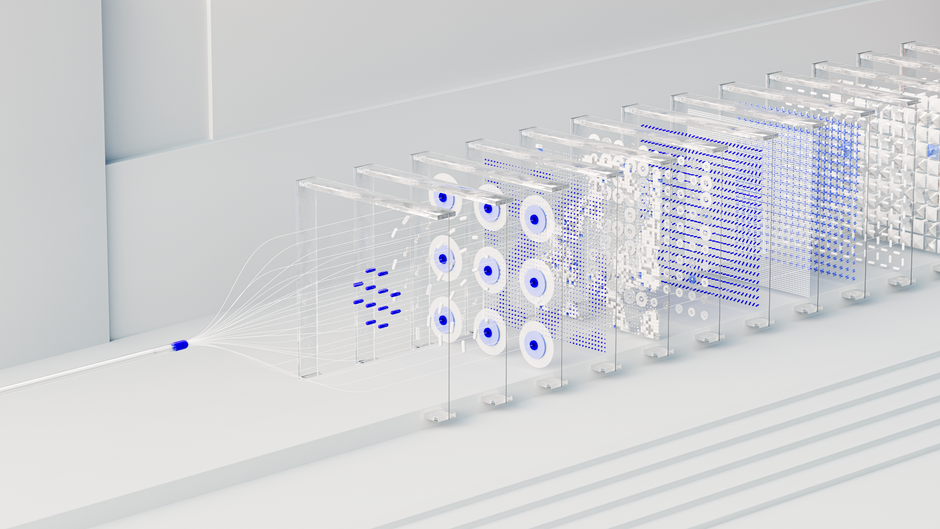
The training phase is where the model learns its parameters (weights and biases) from training data through an iterative optimization process. Each training iteration involves two key steps: the forward pass and the backward pass. During the forward pass, data flows through the network from input to output, with each layer computing its activations based on the current weights. The final output is compared to the ground-truth label using a loss function (like cross-entropy for classification or mean squared error for regression), producing a single scalar value that measures how wrong the model's prediction is.
The backward pass implements backpropagation, the algorithm that makes deep learning feasible. Starting from the loss value, the algorithm computes the gradient of the loss with respect to every parameter in the network using the chain rule of calculus. These gradients indicate the direction and magnitude of adjustment needed for each parameter to reduce the loss. An optimizer (like SGD, Adam, or AdamW) then updates the parameters using these gradients, adjusting them by a small amount determined by the learning rate. This forward-backward-update cycle repeats over the entire training dataset multiple times (epochs), gradually converging to a set of parameters that minimizes the loss. Training requires storing all the intermediate activations from the forward pass for use during backpropagation, which means memory requirements during training are typically 3-4 times higher than during inference for the same model. Training also requires gradients to flow through the entire network, necessitating high numerical precision (FP32 or mixed FP16/FP32) and specialized hardware like GPUs or TPUs optimized for the matrix operations that dominate both forward and backward passes.
The Inference Phase: Applying Learned Knowledge
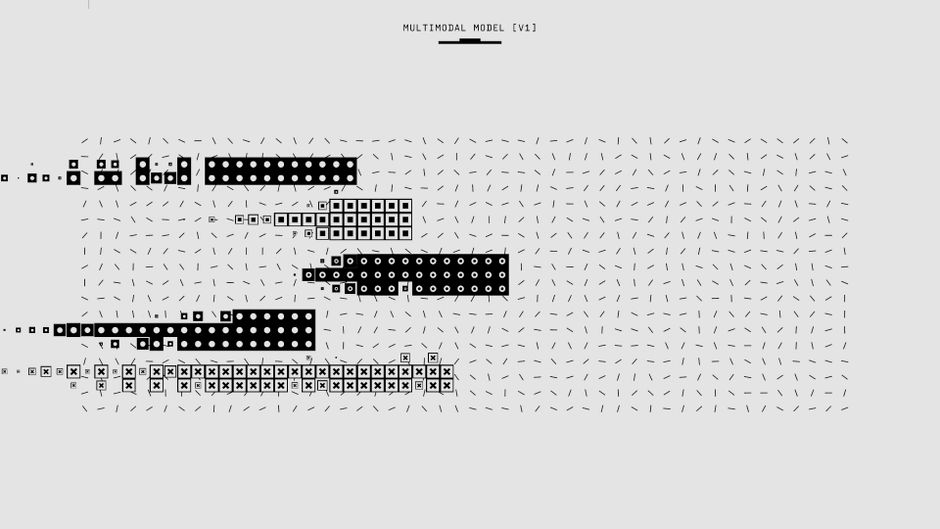
Inference is the phase where the trained model is deployed to make predictions on new data. Unlike training, inference only requires the forward pass — data enters the network and flows through each layer to produce an output, with no backward pass, no gradient computation, and no parameter updates. This makes inference fundamentally simpler and less computationally demanding than training. However, inference has its own unique challenges and constraints that make optimization essential.
The most critical constraint for inference is latency — the time from receiving an input to producing an output. For real-time applications like voice assistants, autonomous driving, or interactive chatbots, latency must be measured in milliseconds. Batch processing applications (like offline document analysis or recommendation system precomputation) are more tolerant of latency but require high throughput — the number of inferences per unit time. Memory bandwidth is often the bottleneck for inference, particularly for large language models where the model weights must be loaded from memory for each token generated. This is why techniques like quantization (reducing weight precision from FP32 to INT8 or INT4) are so effective for inference: they reduce the amount of data that needs to be moved from memory to compute units. KV-caching is a critical optimization for transformer inference: by caching the Key and Value tensors from previous tokens in a sequence, the model avoids recomputing them for each new token, reducing the per-token computation from quadratic to linear in sequence length. For more on model optimization techniques, see our article on AI model compression and optimization.
Hardware Considerations
The hardware requirements for training and inference differ substantially. Training hardware must excel at the parallel matrix computations that dominate both forward and backward passes. High-end GPUs like NVIDIA's H100, A100, and B200, as well as Google's TPUs and AMD's MI300X, are designed specifically for training workloads. These devices excel at high-precision matrix multiplication (FP16/BF16/FP8 tensor cores) and have large high-bandwidth memory (HBM) to store model parameters, optimizer states, and intermediate activations. Training large models often requires distributed training across hundreds or thousands of accelerators, connected by high-speed interconnects like NVIDIA NVLink and InfiniBand.
Here's what I've noticed: Inference hardware has different priorities. While inference can also run on training-grade GPUs, it often runs on more cost-effective hardware. CPUs can handle inference for smaller models efficiently, especially when optimized with quantization and specialized instruction sets (AVX, VNNI). Modern smartphones, laptops, and edge devices include neural processing units (NPUs) specifically designed for efficient inference — Apple's Neural Engine, Qualcomm's Hexagon DSP, and Google's Tensor Processing Unit (in Pixel phones) can run models with minimal power consumption. Inference-specific accelerators like NVIDIA's T4, L4, and the upcoming inference-focused GPUs optimize for throughput per watt rather than raw training throughput. Serverless inference platforms (AWS SageMaker Serverless, Modal, Replicate) abstract away hardware management entirely, automatically scaling inference capacity based on demand. The choice of inference hardware involves trade-offs between latency, throughput, cost, and power consumption that depend on the specific application requirements.
Cost and Resource Profiles
The economic profiles of training and inference are dramatically different. Training costs are dominated by upfront, capital-intensive compute. Training a single large language model can cost tens or hundreds of millions of dollars in GPU compute time. For example, training GPT-4 has been estimated to cost between $100 million and $200 million in compute resources alone. These costs are concentrated in a single (or a few) training runs, after which the model is fixed. The carbon footprint of training is similarly concentrated — training a large transformer can emit hundreds of tons of CO2 equivalent.
Inference costs are recurring and scale with usage. While the per-request cost of inference is small (fractions of a cent for most models), a popular AI application serving millions of users can accumulate inference costs that exceed the initial training cost over time. For large-scale deployments like ChatGPT, inference costs are estimated at several hundred thousand dollars per day. This makes inference optimization — quantization, distillation, batching, and efficient serving infrastructure — a critical economic consideration for production AI systems. The total cost of ownership for an AI system typically shifts from training-dominated to inference-dominated over its lifetime, as the one-time training investment is amortized across continuous inference serving. Efficient training techniques like LoRA (Low-Rank Adaptation) and QLoRA have reduced the cost of fine-tuning models for specific tasks, and efficient inference through techniques like speculative decoding, batching, and caching continues to reduce per-request costs. Learn more about how these models are evaluated for performance in our article on AI benchmarks and evaluation.
Optimization Strategies
Here's a real example from my own use: training and inference require different optimization approaches. Training optimization focuses on reducing the time and cost to reach convergence. Techniques include mixed-precision training (using FP16 or BF16 for most operations while maintaining FP32 for critical accumulations), gradient accumulation (simulating larger batch sizes on limited hardware), gradient checkpointing (trading compute for memory by recomputing activations), and distributed training strategies like data parallelism (splitting the batch across devices), model parallelism (splitting the model across devices), and pipeline parallelism (splitting layers across devices). Learning rate scheduling (warmup, cosine decay, constant) and optimizer choice significantly impact training speed and final model quality.
Inference optimization focuses on reducing latency, increasing throughput, and minimizing resource usage. Batching (processing multiple inference requests together) improves throughput by better utilizing GPU compute units. Continuous batching (adding new requests to the batch as others complete) is essential for efficient LLM serving. Model quantization (INT8, INT4) reduces memory and compute requirements. Speculative decoding accelerates LLM generation by having a small draft model propose tokens that the main model verifies in parallel. Early exit strategies allow the model to produce outputs from intermediate layers for simpler inputs. On-device deployment requires additional optimizations: model conversion to formats like CoreML (Apple), TFLite (Android), or ONNX Runtime; operator fusion; and memory planning. The most effective inference optimizations are those that exploit the specific characteristics of the deployment environment and the application's latency-throughput requirements.
The Short Version
- Training is the learning phase requiring both forward and backward passes, gradient computation, and iterative parameter updates over large datasets. — took me a while to figure this out
- Inference is the deployment phase requiring only the forward pass, with emphasis on latency, throughput, and cost efficiency. — your experience may differ, but this worked for me
- Training hardware prioritizes high-precision parallel matrix operations (H100, TPU), while inference hardware ranges from CPUs to specialized NPUs optimized for efficiency.
- Training costs are upfront and concentrated; inference costs are recurring and scale with usage, often exceeding training costs over a model's lifetime. (this one actually surprised me)
- Training optimization focuses on convergence speed and memory efficiency; inference optimization focuses on latency reduction, throughput maximization, and resource minimization.
- Key inference optimization techniques include quantization, batching (continuous batching), speculative decoding, KV-caching, and hardware-specific model conversion.