How Do Computers "See"?
Human vision is an extraordinary biological achievement. Light enters the eye, is focused by the lens onto the retina, where millions of photoreceptor cells convert it into electrical signals that the brain interprets as visual experience. We recognize faces in an instant, navigate complex environments effortlessly, and understand visual scenes without conscious effort. The apparent ease of human vision masks an immensely complex computational process that took billions of years to evolve.
Computers see very differently from humans. A digital image is simply a grid of numbers — pixels, each with numerical values representing color intensity. A standard 1920x1080 color image contains over 6 million individual values. To a computer, an image is a large matrix of numbers, devoid of any inherent meaning. The challenge of computer vision is transforming these raw numerical matrices into meaningful interpretations — identifying objects, understanding scenes, recognizing faces, and extracting useful information.
I'll be honest: this challenge is far harder than it might seem. The same object can look dramatically different under different lighting conditions, from different angles, at different distances, partially occluded by other objects, or depicted in different styles. A chair is still a chair whether viewed from the front, side, or above; whether in bright sunlight or dim indoor lighting; whether alone in a photo or surrounded by other furniture. Humans handle this variation effortlessly, but teaching computers to achieve what is called invariant recognition — identifying objects regardless of these variations — has been one of the most difficult problems in artificial intelligence.
From Pixels to Features: How Computer Vision Models Work
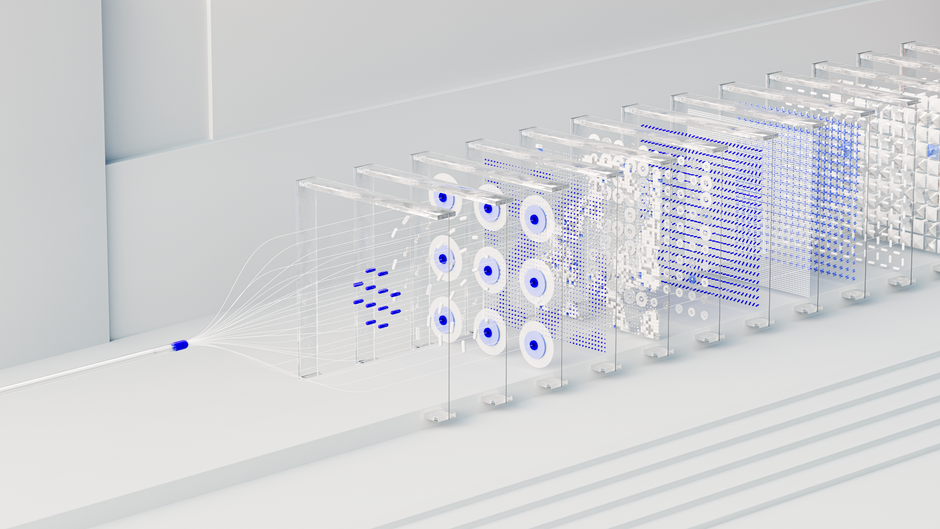
Modern computer vision systems are built on deep learning, specifically using architectures called Convolutional Neural Networks (CNNs). These networks are specially designed to process grid-like data such as images. The key insight of CNNs is that they learn to detect visual features hierarchically, starting from simple patterns and building up to complex concepts.
In the early layers of a CNN, the network learns to detect basic visual patterns — edges at various orientations, color transitions, texture boundaries. These are the building blocks of visual perception, analogous to the simple cells in the primary visual cortex of the brain. Each filter scans across the entire image, producing a feature map that shows where that specific pattern appears. The network might learn dozens or hundreds of different filters in the first layer, each tuned to a different primitive pattern.
As information flows deeper into the network, the features become more complex and abstract. Middle layers combine edges into shapes — corners, curves, circles, stripes. They learn to detect things like "eye-like patterns" or "wheel-like patterns" without yet knowing what eyes or wheels are. Later layers assemble these shape features into recognizable parts — faces, car bodies, building windows, tree branches. The final layers integrate everything to identify complete objects with high confidence — "this is a cat," "this is a car," "this is a stop sign." Every level of this hierarchy is learned automatically from data, not programmed by humans.
But does it actually work that way?
Key Tasks in Computer Vision
It works.
Computer vision encompasses many specific tasks, each addressing a different visual understanding problem. Image classification is the most fundamental task — given an image, assign it a single label from a predefined set of categories. "Is this photo of a dog, a cat, a bird, or a car?" Image classification models can recognize thousands of distinct categories with accuracy that matches or exceeds human performance on many benchmarks.
Here's the thing: object detection goes a step further by not only identifying objects but also locating them within the image. Instead of labeling the entire image, object detection produces bounding boxes around each identified object. This enables systems to answer questions like "How many cars are in this parking lot?" or "Where are the pedestrians in this street scene?" Object detection is essential for autonomous driving, surveillance systems, and visual search applications.
Image segmentation is even more precise. Instead of bounding boxes, segmentation assigns a label to every single pixel in the image. Semantic segmentation identifies regions belonging to specific categories — all pixels belonging to a road, all pixels belonging to a building, all pixels belonging to the sky. Instance segmentation goes further, distinguishing between individual instances of the same category — car number one versus car number two. Segmentation provides the richest understanding of visual scenes and is used in medical imaging, autonomous driving, and augmented reality.
Other important computer vision tasks include facial recognition, which identifies or verifies individuals from images or video; pose estimation, which determines the position and orientation of body parts; optical character recognition (OCR), which extracts text from images; and visual question answering, which accepts an image and a natural language question and produces an answer.
Training Computer Vision Models
Training a computer vision model requires massive datasets of labeled images. ImageNet, one of the most influential datasets in AI history, contains over 14 million labeled images across 20,000 categories. The annual ImageNet challenge drove a decade of rapid progress in computer vision, with error rates dropping from over 28 percent in 2010 to below 3 percent by 2017 — surpassing human-level performance on the benchmark.
After testing this extensively, data augmentation is a crucial technique for training robust vision models. Since collecting and labeling images is expensive and time-consuming, augmentation artificially expands the training dataset by applying random transformations to existing images — rotations, flips, crops, color shifts, brightness adjustments, and noise injection. This exposes the model to a wider variety of visual conditions, improving its ability to generalize to new situations.
Transfer learning has become the standard approach for building practical computer vision systems. Instead of training a massive model from scratch — which requires enormous datasets and computational resources — practitioners start with a pre-trained model that has already learned general visual features from a large dataset like ImageNet. They then fine-tune this model on their specific task with a smaller labeled dataset. This dramatically reduces the data and compute requirements while producing highly accurate models. A model pre-trained to recognize thousands of object categories can be fine-tuned to detect specific manufacturing defects with just a few hundred labeled examples.
Real-World Applications of Computer Vision
Big difference.
My take: computer vision has become one of the most commercially impactful branches of AI. Autonomous vehicles rely on computer vision as their primary sense, using cameras to detect lanes, traffic signs, pedestrians, other vehicles, and obstacles. A self-driving car's vision system must process visual information in real time, making split-second decisions that affect safety. This is one of the most demanding computer vision applications, requiring extreme reliability across all weather conditions, lighting scenarios, and geographic locations.
In healthcare, computer vision is transforming medical imaging. AI systems can analyze X-rays, CT scans, MRIs, and pathology slides to detect tumors, fractures, lesions, and other abnormalities, often with accuracy comparable to or exceeding that of human radiologists. These systems don't replace doctors but rather augment their capabilities — flagging suspicious findings for review, reducing diagnostic errors, and increasing throughput in medical imaging departments.
Manufacturing and quality control have been changed by computer vision. Camera systems inspect products on assembly lines, detecting defects too small or subtle for human inspectors to catch consistently. Retail uses computer vision for inventory management, self-checkout systems, and analyzing customer behavior. Agriculture applies computer vision to monitor crop health, count fruit, detect pests, and guide autonomous harvesting equipment. Security and surveillance systems use facial recognition and anomaly detection for access control and threat detection.
Computer vision is closely related to other AI technologies. To understand how it connects to the broader field, read about deep learning and neural networks and explore how machine learning works.
Is it worth the effort?
What I'd Tell My Past Self
- Computers see images as numerical grids of pixels, and computer vision transforms these numbers into meaningful interpretations
- Convolutional Neural Networks learn hierarchical visual features, from simple edges to complex objects — game changer in my workflow
- Key computer vision tasks include classification, object detection, segmentation, facial recognition, and OCR
- Training vision models requires large labeled datasets; data augmentation and transfer learning reduce these requirements — wish I'd known this six months ago
- Computer vision powers autonomous vehicles, medical imaging, manufacturing inspection, agriculture monitoring, and security systems
- Modern vision systems achieve superhuman performance on many specific benchmarks — wish I'd known this six months ago
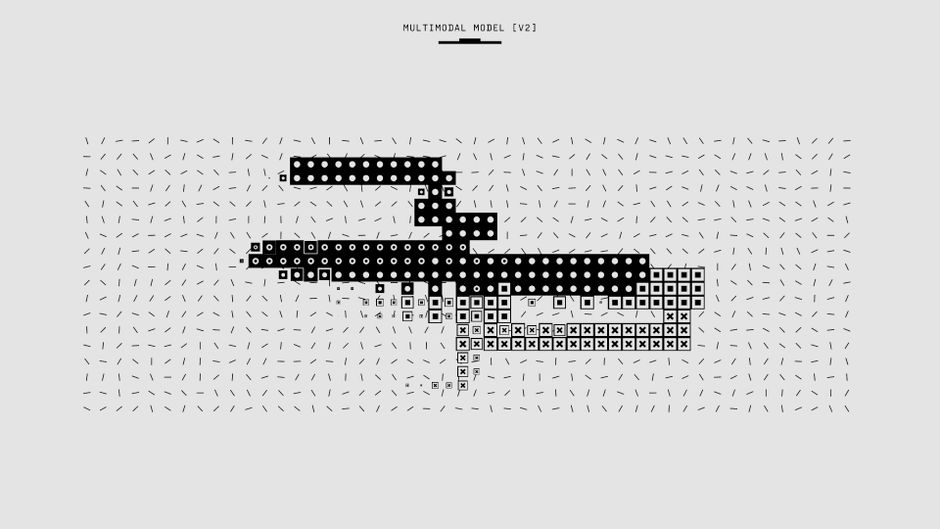
- The field continues to advance rapidly, with multimodal models that combine vision with language understanding opening new capabilities