Introduction
Inventory management sits at the heart of supply chain operations, directly affecting customer service, cash flow, and profitability. Carrying too much inventory ties up capital and increases storage costs, while carrying too little leads to stockouts, lost sales, and damaged customer relationships. Traditional inventory management relies on static reorder points, historical averages, and manual review, approaches that struggle to handle the complexity of modern commerce with its multiple channels, rapid demand shifts, and global supply chains. Artificial intelligence is transforming inventory management by enabling dynamic, predictive, and automated approaches that continuously optimize stock levels across the supply chain. AI-powered inventory systems analyze vast amounts of data to forecast demand with greater accuracy, automate replenishment decisions, identify slow-moving and obsolete stock, and optimize inventory allocation across locations. This guide explores the key capabilities of AI inventory management systems and how organizations can leverage them to reduce costs while improving service levels.
AI-Driven Demand Forecasting for Inventory
Accurate demand forecasting is the foundation of effective inventory management, and AI delivers significant improvements over traditional forecasting methods. Machine learning models analyze historical sales data along with external factors including seasonality, promotions, economic indicators, weather patterns, competitor activity, and social media trends to generate highly accurate demand predictions. Unlike traditional time-series models that assume historical patterns will repeat, AI models detect subtle shifts in demand drivers and adapt forecasts accordingly. AI demand forecasting operates at granular levels, predicting demand by SKU, location, and time period rather than aggregating across dimensions. This granularity enables precise inventory deployment, ensuring that each product is stocked in the right quantity at the right location. Tools like Blue Yonder, E2open, and Lokad provide AI-powered demand forecasting specifically designed for inventory optimization. These systems continuously learn from forecast errors, improving accuracy over time as they incorporate more data and refine their models. During the COVID-19 pandemic, organizations using AI forecasting were able to adapt to demand shifts more quickly than those relying on traditional methods, because AI models incorporating external signals detected changes earlier than historical-data-based approaches. For new products with no sales history, AI uses attribute-based forecasting, analyzing similar products' launch patterns to generate initial demand estimates. This capability is invaluable for retailers and manufacturers introducing new items. Organizations implementing AI demand forecasting typically report 30 to 50 percent reductions in forecast error, translating directly into lower inventory costs and fewer stockouts.
Sound familiar?
Automated Replenishment and Purchase Order Generation
Let me give you a concrete example. Once demand forecasts are established, AI automates the replenishment decisions that inventory managers have traditionally made manually. AI-powered replenishment systems continuously monitor inventory levels, open orders, and incoming supply against predicted demand to determine optimal reorder quantities and timing. These systems consider factors such as lead times, supplier reliability, transportation variability, minimum order quantities, and storage constraints to generate replenishment recommendations. When inventory for a product drops below the dynamically calculated reorder point, the system automatically generates a purchase order or transfer request, adjusted for current conditions. For example, if a key supplier is experiencing production delays, the AI adjusts reorder points upward to maintain safety stock during the extended lead time. If a promotion is expected to spike demand, the AI increases order quantities accordingly. Tools like NetSuite and Zoho Inventory incorporate AI-powered replenishment that goes beyond simple min-max reordering. These systems evaluate trade-offs between stockout risk and carrying cost for each SKU, determining optimal service levels based on product characteristics, margin, and strategic importance. For high-value, slow-moving items, the AI might accept a lower service level to minimize carrying costs, while for high-volume, high-margin items, it might maintain higher safety stock to ensure availability. Multi-echelon inventory optimization extends this logic across the supply chain, determining optimal inventory levels at each node from raw materials through finished goods to distribution centers and retail locations. This holistic optimization prevents the bullwhip effect where small demand fluctuations are amplified upstream in the supply chain. By automating replenishment decisions, AI frees inventory managers to focus on exceptions, supplier relationships, and strategic improvements.
So where does that leave us?
Slow-Mover Detection and Inventory Optimization
Inventory isn't just about ensuring availability of fast-moving products. Equally important is managing slow-moving, obsolete, and excess inventory that ties up capital and incurs carrying costs. AI excels at identifying inventory optimization opportunities that traditional ABC analysis misses. Machine learning models analyze sales velocity, holding costs, obsolescence risk, and demand patterns to classify inventory into dynamic categories that go beyond simple fast-medium-slow classifications. These models detect products that are transitioning from fast-moving to slow-moving, before they become significant problems, for example, identifying that a product's sales velocity has been declining for three consecutive weeks even though overall sales remain healthy. This early warning enables proactive markdowns, promotions, or returns rather than waiting until inventory becomes obsolete. Tools like EazyStock and TradeGecko provide AI-powered inventory optimization that continuously evaluates the full inventory portfolio, recommending specific actions for each SKU. For slow-moving inventory, the AI suggests optimal markdown timing and magnitude based on demand elasticity, remaining shelf life, and carrying costs. For seasonal products, AI models the trade-off between holding inventory for the next season versus liquidating at a discount. AI also identifies inventory that should be transferred between locations, detecting situations where one warehouse has excess stock while another is facing potential stockouts of the same product. This cross-location optimization balances inventory across the network without requiring manual visibility into every location's stock position. By continuously optimizing the entire inventory portfolio, AI helps organizations reduce slow-moving inventory by 20 to 40 percent, freeing up significant working capital.
 AI-powered inventory management platforms provide real-time visibility, demand forecasting, and automated replenishment across the supply chain.
Warehouse Optimization and Inventory Accuracy
Worth every penny.
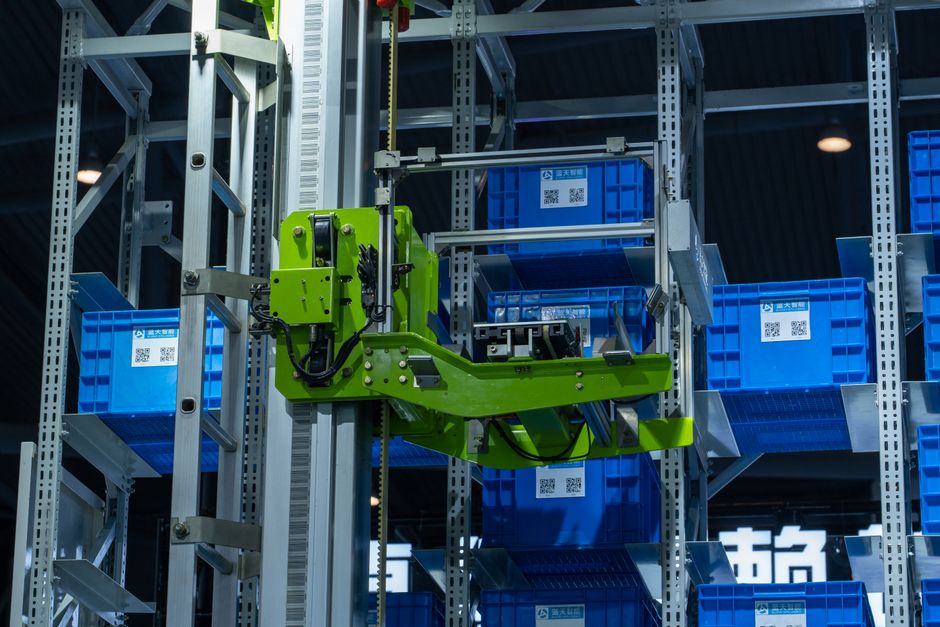
AI also transforms the physical management of inventory within warehouses and distribution centers. AI-powered warehouse management systems optimize inventory placement, picking routes, and storage utilization to improve efficiency and accuracy. When inventory arrives at a warehouse, AI determines optimal storage locations, considering factors such as product velocity, size, weight, and relationships with other frequently co-ordered items. Fast-moving items are placed in easily accessible locations, while slower-moving items are stored in higher or more distant locations. Items frequently ordered together are stored near each other to reduce pick travel time. This dynamic slotting continuously adjusts as product velocity and relationships change, rather than remaining static until a manual review. For picking operations, AI optimizes batch composition and pick paths to minimize travel time while ensuring order accuracy. Computer vision systems verify picks, reducing errors that lead to inventory discrepancies and customer dissatisfaction. Tools like Manhattan Associates and Softeon provide AI-powered warehouse management capabilities. AI also enhances inventory accuracy through automated cycle counting. Instead of annual physical inventories that disrupt operations, AI schedules continuous cycle counts, prioritizing items with higher value, velocity, or discrepancy risk. Computer vision and RFID-based AI systems can automatically verify inventory without human intervention, using drones and fixed scanners to count inventory and reconcile against system records. This continuous verification maintains inventory accuracy above 99 percent, ensuring that system records reflect physical reality. Accurate inventory is essential for reliable replenishment, order fulfillment, and customer promise management.
Multi-Channel Inventory Synchronization
Modern businesses sell through multiple channels including physical stores, e-commerce platforms, marketplaces, and wholesale, each with its own inventory demands and fulfillment requirements. AI synchronizes inventory across these channels, ensuring consistent availability and optimal allocation. Real-time inventory visibility across all locations and channels enables accurate available-to-promise calculations that prevent overselling. When a customer orders online, the AI determines the optimal fulfillment location based on inventory availability, shipping cost, delivery speed, and operational considerations. If a product is out of stock at the primary warehouse but available at a retail store, the AI routes the order for store fulfillment, balancing customer service with operational efficiency. Tools like Skubana and Linnworks provide AI-powered multi-channel inventory management that integrates with major e-commerce platforms, marketplaces, and POS systems. For buy-online-pick-up-in-store and ship-from-store operations, AI manages the complexity of maintaining accurate store inventory while supporting e-commerce fulfillment. The system continuously evaluates the trade-off between using store inventory for local customers versus online fulfillment, dynamically adjusting allocation priorities based on demand patterns and strategic objectives. For marketplace selling on Amazon, eBay, and other platforms, AI manages listing quantities to prevent overselling while maximizing visibility, automatically adjusting as orders are received across channels. AI also detects channel-specific demand patterns, such as different product preferences or price sensitivities across channels, and adjusts inventory allocation accordingly. This multi-channel synchronization ensures that inventory is deployed optimally to serve customers wherever they shop, maximizing sales opportunities while minimizing fulfillment costs.
The Short Version
- AI demand forecasting generates granular, accurate predictions by analyzing historical data and external factors, reducing forecast errors by 30 to 50 percent. — game changer in my workflow
- Automated replenishment systems dynamically calculate optimal reorder points and generate purchase orders, considering lead times, supplier reliability, and demand variability. (this one actually surprised me)
- AI detects slow-moving and obsolete inventory early, recommending optimal markdown, transfer, or liquidation strategies.
- Warehouse optimization AI improves storage utilization, picking efficiency, and inventory accuracy through dynamic slotting and computer vision verification. — game changer in my workflow
- Multi-channel inventory synchronization ensures consistent availability across sales channels with optimized fulfillment routing. — your experience may differ, but this worked for me
- Organizations implementing AI inventory management typically achieve 20 to 40 percent reductions in slow-moving inventory and significant improvements in service levels. (this one actually surprised me)
Complement your inventory management knowledge with our guides on AI for Supply Chain and Logistics and AI Data Analysis Tools for comprehensive supply chain intelligence.