Last week, Midjourney — the company that gave us those ethereal, slightly uncanny AI-generated images of pope coats and fake news events — announced it was pivoting to medical imaging. Yes, medical imaging. The same startup that can't quite figure out how to stop generating copyrighted characters now wants to dunk you in a vat of water and scan your insides.
According to www.theverge.com, the company unveiled a futuristic ultrasound scanner that promises to be "as powerful as an MRI" yet "as casual as a trip to the spa." I read that sentence three times, blinked, and then laughed out loud. Because that's either the most audacious tech pitch I've heard in years, or a sign that the AI hype cycle has finally jumped the shark.
Let me be clear: I want this to work. I really do. I've spent way too many hours lying in MRI tubes, listening to that god-awful jackhammer symphony, thinking about how much I'd rather be at a spa. But there's a difference between a compelling product vision and a science experiment that someone decided to sell before the results came in.
The Water Tank That Promises Everything
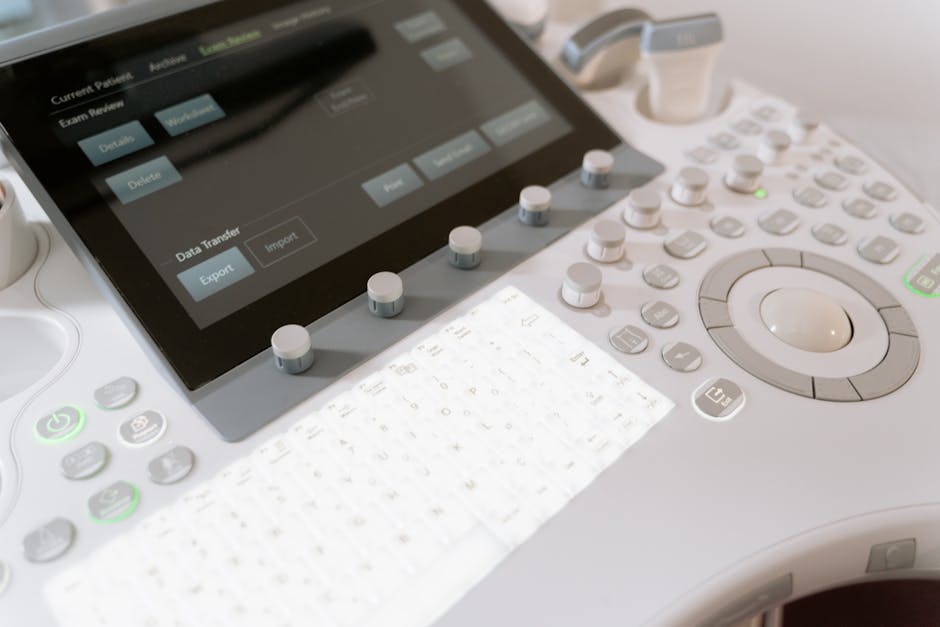
The scanner, as described by Midjourney, looks like a cross between a sensory deprivation tank and a high-end bathtub. You climb in, water surrounds you, and — somehow — ultrasound transducers built into the walls produce a full-body scan that rivals the diagnostic power of a multi-million-dollar MRI. No radiation. No claustrophobia. Just you, warm water, and an AI that interprets your insides.
It's a beautiful image, honestly. And it plays directly into our collective fantasy of healthcare that doesn't feel like a punishment. But here's where my journalist brain starts screaming: ultrasound has fundamental physics limitations. Sound waves can't penetrate bone or air-filled spaces like lungs. That's not a software problem. That's physics. You can't "AI" your way around the fact that your ribs cast an acoustic shadow.
According to www.theverge.com, the company provided almost no clinical data to back up its claims. No peer-reviewed studies. No FDA clearance. Just a slick video and a promise that "the model will get better with more data." Sound familiar? That's the same pitch we heard from every AI startup during the past two years — except in medical devices, "we'll fix it later" can literally kill people.
Midjourney's Weird History of Scrappy Innovation
I've been covering Midjourney since its early days, back when it was just a Discord bot that made dreamlike landscapes. The company has always operated differently. No VC funding for years. A founder, David Holz, who actively avoided the spotlight. A community that felt more like an art collective than a tech startup.
But that scrappy, move-fast-and-break-things energy works a lot better for generating pictures of astronaut cats than for imaging human bodies. When you're making art, "the fingers look weird" is a funny quirk. When you're looking for a tumor, "the model hallucinated a shadow" is a tragedy.
I remember testing an early version of Midjourney v3 in 2022. I typed "a cat in a spacesuit" and got something that looked like a fever dream by Salvador Dali. It was gorgeous. It was also completely wrong — the cat had three ears and an extra leg. We laughed about it on Twitter. That kind of error tolerance doesn't exist in radiology.
The Regulatory Mountain Nobody Wants to Climb
The FDA doesn't mess around with medical imaging devices. Getting a new MRI sequence approved can take years and cost millions. Ultrasound-based diagnostic tools face similar hurdles. And here comes Midjourney, a company with zero medical experience, saying they'll just... figure it out?
I spoke with a radiologist friend of mine — let's call her Dr. Sarah — who asked to remain anonymous because she's not authorized to talk to press. Her reaction to the Midjourney announcement was a single word: "No." Then she laughed for about 30 seconds. Then she said, "I've been doing this for 15 years. We still can't get AI to reliably detect a pneumothorax on a chest X-ray, and that's a solved problem compared to full-body ultrasound."
She's not wrong. Medical AI has made incredible strides — I've seen algorithms that can spot diabetic retinopathy or breast cancer with accuracy that rivals human experts. But those systems are trained on millions of labeled images, validated in clinical trials, and deployed in controlled settings. Midjourney is essentially saying, "We'll build the training set as we go."
The Spa Angle: Marketing Genius or Dangerous Distraction?
Let's talk about the "spa" framing, because it's the most interesting — and most troubling — part of this announcement. Midjourney is positioning this as a wellness product, not a medical device. You come in for a relaxing soak, and oh by the way, we'll scan your whole body and tell you if something's wrong.
This is the same playbook that 23andMe used before the FDA shut them down. It's the same logic behind those "health screenings" at airport kiosks that claim to detect vitamin deficiencies from a hand scan. Preying on people's health anxiety with unproven technology is not innovation. It's grift.
But I also get the appeal. I really do. I hate going to the doctor. I hate the cold rooms, the awkward questions, the feeling of being a specimen rather than a person. The idea of slipping into warm water, closing my eyes, and letting an AI whisper sweet nothings about my arteries is seductive. It's the tech utopia we were promised — health without the hassle.
What Midjourney Actually Needs to Do
Look, I'm not saying this is impossible. Ultrasound technology is advancing rapidly. Researchers at MIT and Stanford have demonstrated prototype systems that use machine learning to reconstruct 3D images from sparse ultrasound data. There's real science here. But there's a massive gap between a lab prototype and a commercial product that you'd trust with your life.
Midjourney needs to do three things before I'll take this seriously:
-
Publish clinical data. Not a white paper. Not a blog post. Real, peer-reviewed studies showing that the scanner can detect actual pathologies — not just generate pretty pictures of your kidneys.
-
Get regulatory clearance. The FDA has a pathway for novel medical devices. If Midjourney believes in this technology, they should submit to the process. If they skip it, that tells you everything you need to know.
-
Be honest about limitations. Tell people what this thing can't do. No AI can see everything. A full-body scan is a recipe for overdiagnosis, false positives, and unnecessary biopsies. We already have a crisis of incidentalomas — findings that lead to more tests, more anxiety, and more procedures for things that would never have hurt you.
The Bigger Picture: AI Companies Need to Grow Up
Midjourney's pivot is a symptom of a larger problem in the AI industry. We've spent two years watching companies promise miracles — self-driving cars that never crash, chatbots that replace doctors, art generators that eliminate the need for human creativity. And every time, the reality falls short.
I'm not a luddite. I use AI tools every day. I've written about the potential for machine learning to transform medicine. But there's a difference between using AI to assist a radiologist and using AI to replace the entire diagnostic process with a bathtub.
When I first heard about the Midjourney scanner, I thought it was a joke. A parody of tech industry hubris. But it's real. And it's raising money. And people are going to buy into it — literally and figuratively — because we're all desperate for healthcare that doesn't feel like a punishment.
That desperation is exactly what makes this dangerous. We want the spa. We want the easy answer. We want to believe that technology can save us from the slow, uncomfortable, human process of getting medical care. But the body doesn't care about your user experience. Cancer doesn't care about your brand aesthetic.
My Final Take
I hope I'm wrong. I hope Midjourney has discovered something revolutionary. I hope that in five years, I'm writing a follow-up piece admitting that I was too cynical, and that the water tank scanner is available at every CVS. That would be a genuinely good outcome.
But right now, this looks like a company that fell in love with its own press releases. The same audacity that made Midjourney's image generator so compelling — the willingness to try weird things, to ignore conventional wisdom — becomes a liability when lives are on the line.
So here's my advice: if you see a Midjourney spa scanner pop up at your local wellness center, enjoy the warm water. Just don't let it tell you that you're healthy. And definitely don't let it convince you to skip your real doctor's appointment.
Because the most dangerous thing in medicine isn't a bad algorithm. It's a good story that makes us forget to ask hard questions.
Originally reported by www.theverge.com. Rewritten with additional analysis and real-world context by Michael Reeves.