Feeding a Growing World with Intelligent Technology
The global agricultural sector faces an unprecedented challenge: how to produce enough food for a projected population of 9.7 billion by 2050 while dealing with shrinking arable land, water scarcity, climate change impacts, and labor shortages. In 2026, artificial intelligence has emerged as the most powerful tool in the agricultural transformation toolkit, enabling farmers to produce more food with fewer resources while improving sustainability and profitability. AI technologies are being deployed across the entire agricultural value chain, from seed selection and soil preparation through planting, crop management, harvesting, and distribution. The impact is already measurable: farms using AI-powered precision agriculture techniques report average yield increases of 15-25%, reductions in water usage of 30-40%, and decreases in chemical inputs of 20-50%. Beyond primary production, AI is transforming food processing, quality control, logistics, and retail, creating a smarter, more efficient, and more sustainable food system from farm to fork. This comprehensive overview examines the key application areas where AI is making the most significant impact in agriculture and food production, explores the technologies and platforms enabling this transformation, and provides insights into the future of intelligent food production. Whether you are a farmer, agribusiness professional, food industry executive, or simply someone interested in the future of food, understanding these developments is essential.
Precision Farming and Crop Management
Game changer.
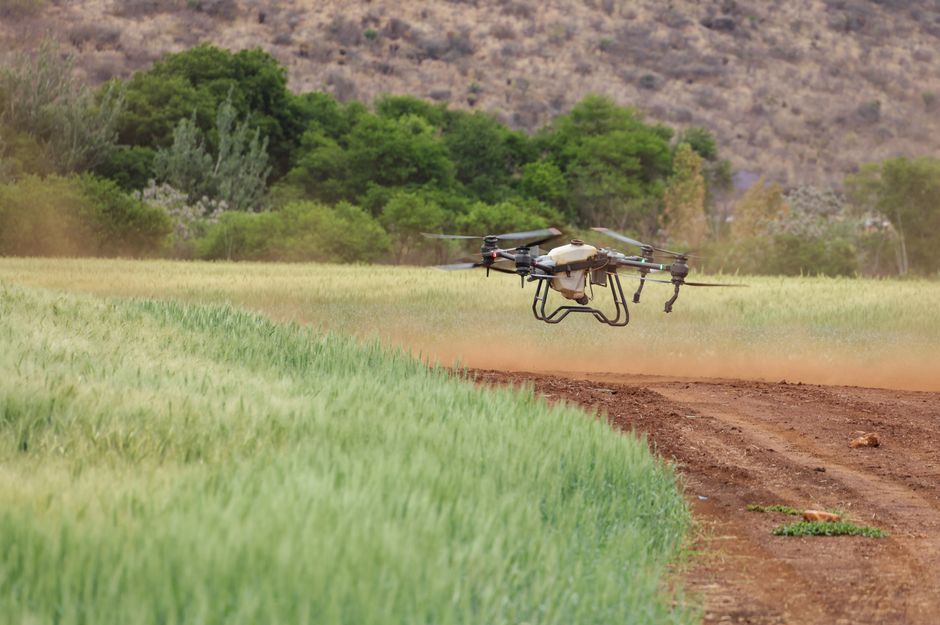
Precision farming represents the most mature and widely adopted application of AI in agriculture. At its core, precision farming uses AI to analyze data from multiple sources—satellite imagery, drone surveys, ground sensors, weather stations, and soil samples—to provide farmers with actionable insights about every square meter of their fields. Machine learning models process this data to generate precise recommendations for planting density, irrigation scheduling, fertilizer application, and pest management tailored to specific field zones rather than applying uniform treatments across entire fields. This site-specific management approach has profound implications for both productivity and sustainability. AI-powered variable rate technology (VRT) enables equipment to automatically adjust seed planting rates, fertilizer amounts, and pesticide applications in real time as it moves across a field, responding to soil conditions, crop health indicators, and pest pressure detected by onboard sensors. Major agricultural equipment manufacturers including John Deere, Case New Holland, and AGCO have integrated AI directly into their latest machinery, creating intelligent equipment that can make autonomous decisions about field operations. John Deere's See and Spray technology uses computer vision and AI to distinguish between crops and weeds, targeting herbicide application only where needed, reducing chemical usage by up to 90% compared to broadcast spraying. Beyond equipment-level AI, farm management platforms like Climate FieldView, Granular, and Farmers Edge use machine learning to integrate data across multiple seasons and fields, helping farmers make strategic decisions about crop selection, rotation planning, and resource allocation. These platforms can predict crop yields with impressive accuracy, enabling better marketing and logistics planning. The AI models improve over time as they are exposed to more data from specific farms, creating a virtuous cycle of increasing precision and value.
Agricultural Robotics and Automation
Really well, actually.
Labor shortages have become a critical challenge for agriculture worldwide, particularly for labor-intensive operations like fruit and vegetable harvesting. AI-powered agricultural robots are stepping in to fill this gap in 2026, performing tasks that were once thought impossible to automate due to the complexity and variability of agricultural environments. Harvesting robots use computer vision and AI to identify ripe produce, navigate uneven terrain, and handle delicate fruits and vegetables without damage. Advanced grippers powered by AI can assess the firmness and ripeness of each piece of produce and adjust their grip accordingly, achieving picking speeds and care levels competitive with human workers. Companies like Aigen, FarmWise, and Verdant Robotics have deployed autonomous weeding robots that roam fields identifying and removing weeds mechanically or with micro-doses of herbicides, dramatically reducing chemical use while maintaining weed control effectiveness. These robots can operate 24 hours a day, navigate using GPS and computer vision, and continuously improve their weed identification accuracy through machine learning. Autonomous tractors and implements have moved beyond the experimental phase, with several manufacturers offering Level 4 autonomous systems that can perform tillage, planting, spraying, and harvesting operations without human operators. These machines use AI for navigation, obstacle avoidance, and operational optimization, and can be monitored and controlled remotely through smartphone applications. The economic case for agricultural robotics is increasingly compelling, with falling sensor costs, improving AI capabilities, and rising labor costs combining to create favorable returns on investment for many operations. Major agribusiness companies and technology firms are investing heavily in this space, with the agricultural robotics market projected to exceed $35 billion by 2028.
Crop Health Monitoring and Disease Detection
I've been using this for a while now, and early detection of crop diseases, pest infestations, and nutrient deficiencies can mean the difference between a bountiful harvest and significant crop losses. AI-powered crop monitoring systems have transformed this critical aspect of farm management in 2026. Computer vision models trained on millions of labeled plant images can identify diseases, pests, and nutrient disorders from photographs taken with smartphones or drones, often before symptoms are visible to the human eye. These systems can differentiate between diseases with similar visual presentations, identify specific pest species, and quantify the severity of infestations or deficiencies. Companies like Plantix and Taranis have developed AI-powered plant health platforms that allow farmers to diagnose crop problems by simply taking a photo with their smartphone. The AI provides instant identification, treatment recommendations, and even connects farmers with local agricultural extension resources. These platforms have been particularly transformative for smallholder farmers in developing countries who often lack access to professional agronomic advice. At scale, drone-based multispectral and hyperspectral imaging combined with AI analysis enables continuous monitoring of entire farms. These systems detect stress in crops before it becomes visible, analyzing reflectance patterns that indicate water stress, nitrogen deficiency, pest pressure, or disease infection. The AI can generate prescription maps that guide targeted interventions, applying treatments only where needed rather than across entire fields. Satellite-based monitoring services from companies like Descartes Labs and Planet Labs provide even broader coverage, analyzing field conditions across entire regions to predict pest outbreaks, monitor drought conditions, and forecast regional crop production. These large-scale analytics are invaluable for commodity traders, food processors, and government agricultural agencies.
Food Processing, Supply Chain, and Sustainability
Let me explain.
The impact of AI extends well beyond the farm into food processing, supply chain management, and sustainability initiatives. In food processing facilities, AI computer vision systems inspect products for quality and safety at speeds far exceeding human capabilities, detecting contaminants, grading products based on quality attributes, and ensuring consistency in processed foods. AI-powered sorting systems in facilities handling fresh produce, nuts, grains, and proteins can evaluate thousands of items per second, sorting by size, color, shape, and internal quality characteristics measured through spectral analysis. Supply chain optimization powered by AI is reducing food waste—one of the most pressing challenges in the global food system, where approximately one-third of all food produced is lost or wasted. Machine learning models optimize storage conditions, predict shelf life, and route products to appropriate markets based on freshness and demand. AI systems can dynamically adjust pricing and distribution as products age, ensuring that food reaches consumers before it spoils. In cold chain management, AI monitors temperature conditions throughout transit and predicts potential failures before they occur. Sustainability applications of AI in agriculture are equally significant. AI models optimize water usage through smart irrigation systems that incorporate weather forecasts, soil moisture data, and crop water requirements to deliver precise amounts of water at optimal times. These systems can reduce water consumption by 30-50% while maintaining or improving yields. AI also enables precision application of fertilizers and pesticides, reducing nutrient runoff and environmental impact. Carbon sequestration measurement and verification, essential for carbon credit markets in agriculture, is increasingly performed using AI analysis of soil samples, satellite imagery, and management practice data. Platforms like Indigo Ag and Corteva's digital agriculture division are using AI to help farmers implement and document sustainable practices while maintaining profitability.
If You Only Remember One Thing
- Precision farming powered by AI delivers yield increases of 15-25% while reducing water usage by 30-40% and chemical inputs by 20-50%.
- AI-powered agricultural robots are addressing critical labor shortages, with autonomous harvesters, weeders, and tractors now commercially deployed at scale. — wish I'd known this six months ago
- Computer vision AI enables disease and pest detection from smartphone photos, often identifying problems before symptoms are visible to the human eye. — wish I'd known this six months ago
- AI supply chain optimization is reducing food waste by improving inventory management, shelf-life prediction, and dynamic routing. — game changer in my workflow
- Sustainability benefits include dramatic reductions in water, chemical, and energy usage through precision application and smart resource management.
- The agricultural AI market is projected to grow substantially, with falling technology costs making these tools increasingly accessible to farms of all sizes. — game changer in my workflow
- For more on AI in industrial contexts, see AI in Manufacturing and Industry 4.0.
- Explore how AI Regulations and Government Policies affect agricultural technology deployment.
- The integration of AI across the entire food value chain—from precision farming to smart distribution—offers the most promising path toward a sustainable, food-secure future.
But does it actually work that way?