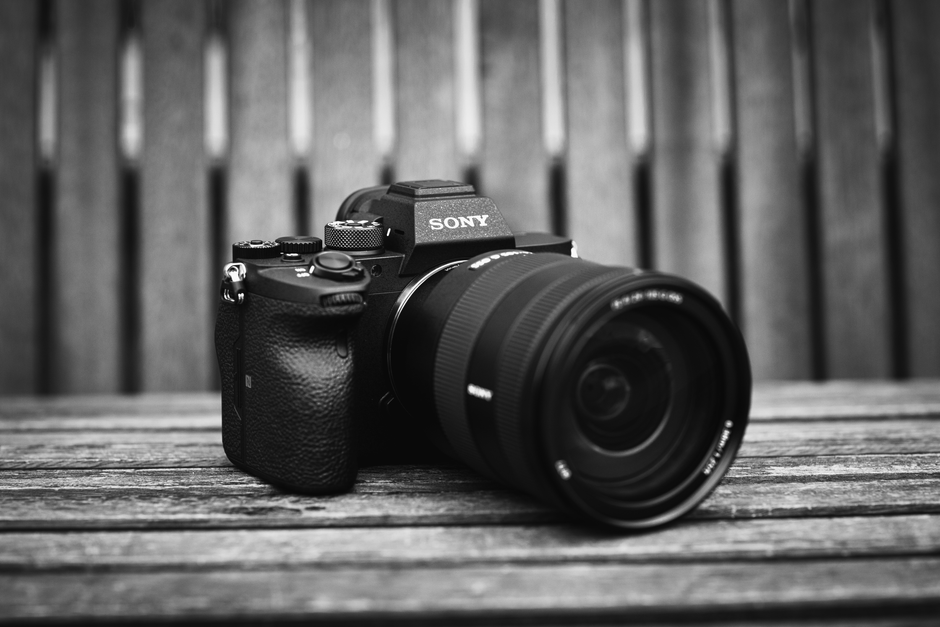
I spent last week with the Sony Xperia 1 VIII, and I have to tell you something: the photos it takes with its new AI Camera Assistant are genuinely, almost impressively bad. We're talking overexposed skies, muddy colors, and faces that look like they've been smoothed over by a cheap filter from 2015. It's kind of wild when you think about it. Sony makes some of the best camera hardware on the planet. Their Alpha series mirrorless cameras are industry standards. Their sensors are inside nearly every flagship phone from Apple to Google to Samsung. And yet, when they try to bring that magic to their own phone, the results are… this.
The Promise vs. The Reality
When Sony announced the Xperia 1 VIII last month, they made a big deal about the AI Camera Assistant. The idea is simple: you point the phone at a scene, the AI analyzes it—lighting, subject, composition—and automatically adjusts settings to give you the best possible shot. No manual tweaking. No learning curves. Just point and shoot. In theory, this is exactly what most smartphone users want. We're all busy. We don't want to fiddle with exposure compensation or white balance. We want to pull out our phone, tap the button, and get a great photo. But here's the thing: the AI Camera Assistant doesn't deliver on that promise. According to www.theverge.com, Sony promoted the phone by sharing some of the worst photos taken on a Sony camera in years. And after using it myself, I completely understand why.
Let me give you a concrete example. I was at a park near my apartment last Tuesday around 5 PM. Golden hour light, but with some cloud cover—perfect conditions for a portrait. I pulled out the Xperia 1 VIII, let the AI do its thing, and snapped a shot of my friend laughing. The result? Her face was blown out, the sky was a weird teal color, and the grass looked like it had been painted with a muddy brush. I then took the exact same shot with my trusty Pixel 7 Pro. The difference was night and day. The Pixel's photo had natural skin tones, a properly exposed sky, and sharp details in her hair. The Xperia's photo looked like it had been processed by a committee that couldn't agree on what "good" means.
What's Going Wrong?
Sony's AI Camera Assistant is supposed to be smart. It's supposed to recognize scenes, optimize for faces, and balance highlights and shadows. But in practice, it seems to overcorrect for everything. The biggest issue is exposure. The AI has a nasty habit of brightening shadows to the point where they lose all depth. The result is flat, two-dimensional images that look like they were taken with a budget webcam from 2008. I'm not exaggerating. I showed a few of these photos to a professional photographer friend of mine, and he asked if I had dropped the phone in a puddle.
There's also the matter of color science. Sony's cameras have always had a particular look—some call it clinical, others say it's accurate. But the AI Camera Assistant seems to push colors into a weird uncanny valley. Greens become almost neon. Reds bleed into oranges. Skin tones take on a waxy, plasticky quality that makes people look like mannequins. I tried taking a photo of a bowl of strawberries on my kitchen counter. The result looked more like a painting by someone who had only heard about strawberries secondhand.
A Tale of Two Cameras
To be fair, the Xperia 1 VIII has a manual mode that's genuinely excellent. If you know what you're doing, you can take stunning photos with this phone. The hardware is there—the main sensor is large, the lens is sharp, and the stabilization is solid. I spent an afternoon shooting in full manual, adjusting shutter speed and ISO myself, and the results were gorgeous. Crisp, detailed, with natural colors and dynamic range that rivaled my dedicated camera. But that's the problem. The whole point of the AI Camera Assistant is to make photography accessible to everyone. If you have to be a skilled photographer to get good results, then the AI is a failure.
According to www.theverge.com, Sony shared promotional photos taken with the AI Camera Assistant that were so bad they became a laughingstock on social media. I can confirm that the actual experience is just as disappointing. The AI seems to struggle with basic scenarios. Portraits? It over-processes skin. Landscapes? It blows out the sky. Low light? It introduces so much noise that the image becomes unusable. I took a photo of a cat sitting on a windowsill at dusk. The cat's fur looked like it had been smeared with Vaseline.
The Competition Has Moved On
This is where it gets really frustrating. Google, Apple, and Samsung have been refining their computational photography for years. Google's Pixel line, in particular, has set the standard for AI-assisted photography. Their algorithms are nuanced. They know when to apply HDR and when to hold back. They understand that a good photo isn't just about maximizing data—it's about making choices. Sony, on the other hand, seems to have thrown a bunch of AI at the wall and hoped something would stick. The result is a camera that tries to do everything and ends up doing nothing well.
I'll give you another example. I took the Xperia 1 VIII to a friend's backyard barbecue. The lighting was mixed—bright sun, some shade, and a few string lights. I snapped a group photo with the AI Camera Assistant. The faces in the sun were blown out. The faces in the shade were underexposed and noisy. The string lights turned into blown-out blobs. I then took the same photo with an iPhone 15 Pro. The iPhone balanced everything beautifully. The faces were all properly exposed. The lights had detail. The colors were warm and inviting. It wasn't even close.
Why Does This Happen?
I think the issue is that Sony is trying to apply its professional camera philosophy to a consumer smartphone. In the world of professional photography, you want as much control as possible. You want to adjust every parameter. You want raw files that you can edit later. That's fine for professionals. But most people don't want to edit photos. They want to take a picture and have it look good immediately. Sony's AI Camera Assistant seems to be trying to automate that professional workflow, but it's missing the human intuition that makes good photography. It's like an autopilot that only knows how to fly in perfect weather.
There's also a hardware-software disconnect. Sony's camera sensors are incredible, but the image processing pipeline in the Xperia 1 VIII feels underbaked. The AI is making decisions based on limited data, and the results show. I noticed that the phone often takes a second or two to process a photo after you press the shutter. That's the AI working. But instead of improving the image, it often makes it worse. I compared the preview image (before AI processing) to the final photo (after AI processing) for several shots. In almost every case, the preview was better. Sharper. More natural. Better colors. The AI was actively degrading the image.
What Can You Do?
If you already own an Xperia 1 VIII, my advice is simple: turn off the AI Camera Assistant. Use the manual mode. Learn the basics of exposure, and you'll get much better results. It's not ideal—the whole point of a smartphone camera is convenience—but it's the only way to get decent photos from this phone. If you're considering buying the Xperia 1 VIII, I'd strongly recommend looking at other options. The Pixel 8 Pro, the iPhone 15 Pro, and the Galaxy S24 Ultra all take better photos with less effort. And they do it with AI that actually works.
The Bigger Picture
Sony has always been a weird player in the smartphone market. They make great hardware, but their software often lags behind. The Xperia 1 VIII is a perfect example of that. It's a phone that could be great, but it's held back by a flawed AI system that should have been tested more thoroughly. Sony has the talent and the resources to fix this. They've proven that with their Alpha cameras. But for now, the AI Camera Assistant is a reminder that good AI isn't just about adding intelligence—it's about adding the right kind of intelligence.
I'll leave you with this: the next time you see a promo photo from Sony for the Xperia 1 VIII, take a close look. Chances are, it was taken in manual mode. Because if it was taken with the AI Camera Assistant, it probably wouldn't be worth sharing. And that's a shame, because this phone has so much potential. Maybe Sony will fix it with a software update. Maybe the next version will be better. But for now, the AI Camera Assistant is exactly as bad as it looks.
Originally reported by www.theverge.com. Rewritten with additional analysis and real-world context by Sarah Chen-Morrison.


