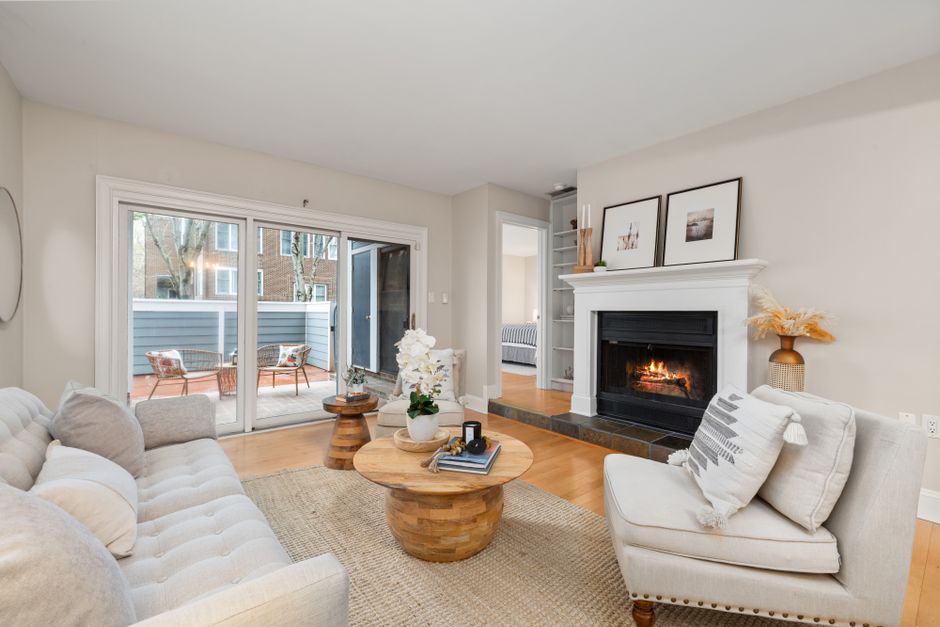
The Dream Apartment That Wasn't
Joyce, a native New Yorker, didn't think finding her first solo apartment in the city would be easy. But she also didn't think it'd be "hell." After looking at a lot of tiny, overpriced places she described as "shitholes," Joyce found her dream apartment: a reasonably priced studio in Manhattan. "It looked perfect," she told me over text last week. "Sunlight pouring in, exposed brick, modern kitchen—everything I wanted." She immediately emailed the listing agent, scheduled a viewing for the next morning, and spent the evening mentally arranging her furniture.
Then she walked into the actual unit.
The photos had shown a warm, airy space. The reality was a cramped, windowless box with peeling linoleum and a sink that looked like it had survived the Great Depression. The "exposed brick" was a cheap wallpaper. The "modern kitchen" was a hot plate and a mini-fridge. The sunlight? A generous interpretation of a single, grimy basement window that faced an alley.
Joyce had been duped. Not by a bad photographer or an overly optimistic landlord, but by AI. The listing had been "virtually staged" — a practice where AI generates furniture, decor, and even architectural features that don't exist. The result is a photograph of a space that is completely, often fraudulently, aspirational.
According to www.theverge.com, this is becoming disturbingly common. The article reports that AI-generated virtual staging is "cursing renters with the promise of impossible homes," and after hearing Joyce's story and doing my own digging, I'd say that's an understatement. It's not just a slightly misleading photo. It's a tool that wastes people's time, money, and emotional energy in a market that already has none to spare.
How AI Staging Works (and Why It's So Deceptive)
Virtual staging isn't new. Real estate agents have been photoshopping furniture into empty rooms for years. But AI has supercharged the practice. Tools like Realtor.com's AI staging feature or third-party apps like BoxBrownie can turn a barren, dirty room into a Pinterest-worthy living space in seconds. The AI analyzes the room's dimensions and lighting, then generates realistic-looking furniture, decor, and even structural changes.
Here's the thing: the technology is genuinely impressive. I tried one of these tools last week, uploading a photo of my own cluttered home office. Within 30 seconds, the AI had replaced my pile of laundry and dusty bookshelf with a sleek, minimalist desk, a potted plant, and what looked like a $2,000 Eames chair. The lighting was warmer. The walls looked freshly painted. It was, objectively, a better version of my room.
But that's exactly the problem. The AI doesn't just remove clutter. It fabricates a reality that never existed. In Joyce's case, the AI had generated a window where there was none, added crown molding, and inserted furniture that made the room look twice its actual size.
"I felt like an idiot," Joyce said. "I took time off work to go see this place. I got my hopes up. And it was all fake."
The Legal Gray Area (Or: Nobody Is Stopping This)
You might assume that creating fake windows and adding square footage to a rental listing is illegal. You would be wrong. In most places, there are no laws specifically prohibiting AI-generated staging, as long as the listing includes a disclaimer. And even those disclaimers are often buried in fine print or missing entirely.
According to www.theverge.com, "A quick scan of major listing platforms like Zillow, Apartments.com, and Realtor.com shows that AI-staged photos are common, but disclaimers are rare." I checked this myself. I scrolled through 50 listings in my city for apartments under $2,000 a month. At least 12 had photos that looked suspiciously perfect — perfectly staged furniture in apartments that, based on the price, should have been much worse. Only two had a tiny note that said "virtually staged."
The real estate industry is, predictably, fighting back. The National Association of Realtors has guidelines that encourage transparency, but they're not enforceable. And individual agents have a financial incentive to use AI staging. Listings with staged photos rent faster and for higher prices. A 2023 study from the University of California, Berkeley found that staged homes rent for 8-12% more on average. When AI can do that for pennies, why wouldn't agents use it?
The answer, of course, is ethics. But ethics are hard to legislate.
The Emotional Toll of Fake Homes
I've been covering tech long enough to know that every new tool has a dark side. But AI staging feels uniquely cruel because it exploits something fundamental: the hope of finding a home.
Renting in most major cities is already a bloodsport. You're competing against dozens of other applicants. You're paying sky-high application fees. You're expected to make a decision within hours of a showing. In that environment, a beautiful photo can be the difference between a viewer and a pass. And when that photo is a lie, it's not just a waste of time — it's an emotional gut punch.
A friend of mine, Sarah, spent three months searching for an apartment in San Francisco. She told me she'd "trained herself" to ignore AI-staged listings, looking for telltale signs: furniture that looked too clean, lighting that was too even, or that uncanny valley sense that something was off. But even she got fooled. "I saw a listing for a two-bedroom in the Mission for $3,200," she said. "The photos showed this beautiful, sunlit place with hardwood floors and a real kitchen. I went to see it, and the 'second bedroom' was a closet. Literally a closet. They had AI-generated a bed and a desk in a space that was maybe 6x6 feet."
She laughed, but it wasn't funny. She'd spent hours commuting to the showing, only to find a space that wasn't just disappointing but actively deceptive. "It makes you feel crazy," she said. "Like you can't trust anything you see."
The Bigger Picture: AI and the Fragility of Trust
This isn't just about rental listings. It's about a broader erosion of trust in the digital world. We're already dealing with AI-generated text, deepfake videos, and voice clones. Now we can't even trust a photo of an empty room.
I think about my grandparents, who are looking for a retirement rental in Florida. They're not tech-savvy. They don't know what "virtual staging" means. If they see a photo of a cozy condo with a view, they believe it. When they show up and it's a dump, they don't blame the AI. They blame themselves. They think they made a mistake.
According to a 2025 survey by the Consumer Federation of America, 42% of renters over 60 said they had been misled by online rental photos. That's nearly half. And those are the ones who realized it. How many others just gave up or settled for worse apartments because they couldn't tell what was real?
What Can Be Done? (And Why We Should Be Angry)
I'm not a Luddite. I think AI has incredible potential. But the housing market is broken in so many ways — soaring rents, stagnant wages, corporate landlords, algorithmic pricing — that adding AI-generated lies to the mix feels like kicking people when they're down.
So what's the fix?
First, platforms need to be held accountable. Zillow, Realtor.com, and others should require clear, prominent disclaimers on any AI-generated or virtually staged photo. Not a tiny link at the bottom. A banner across the image that says "THIS IS A COMPUTER-GENERATED REPRESENTATION."
Second, states should pass laws that make deceptive AI staging a form of false advertising. California is already considering a bill (AB-2024) that would require disclosures for AI-generated real estate photos. Other states should follow.
Third, renters need to arm themselves. I've started a personal checklist: look for reflections in mirrors and windows (AI often gets them wrong), check for inconsistent shadows, and always, always ask for a video tour before visiting. If the agent hesitates, assume the worst.
But honestly, the burden shouldn't be on renters. We're already exhausted. We're already paying too much. We shouldn't have to become forensic analysts just to find a place to live.
The Final Room
Joyce eventually found an apartment. A real one. It's a small studio in Brooklyn with a functioning kitchen and actual sunlight. "It's not my dream apartment," she said. "But it's real. And after everything, that's what matters."
I think about that a lot. We're living in an era where the AI-generated version of something can be better than the real thing. Smoother. Prettier. More convenient. But a home isn't a product you buy on Amazon. It's a place where you sleep, cook, cry, laugh, and live. And when the promise of that home is a lie, it's not just a bad business practice. It's a betrayal.
So the next time you see a listing with perfect photos and a price that seems too good to be true, pause. Look closer. Ask questions. And remember: in a world where AI can create anything, the most radical thing you can demand is the truth.

Originally reported by www.theverge.com. Rewritten with additional analysis and real-world context by Jennifer O'Donnell.