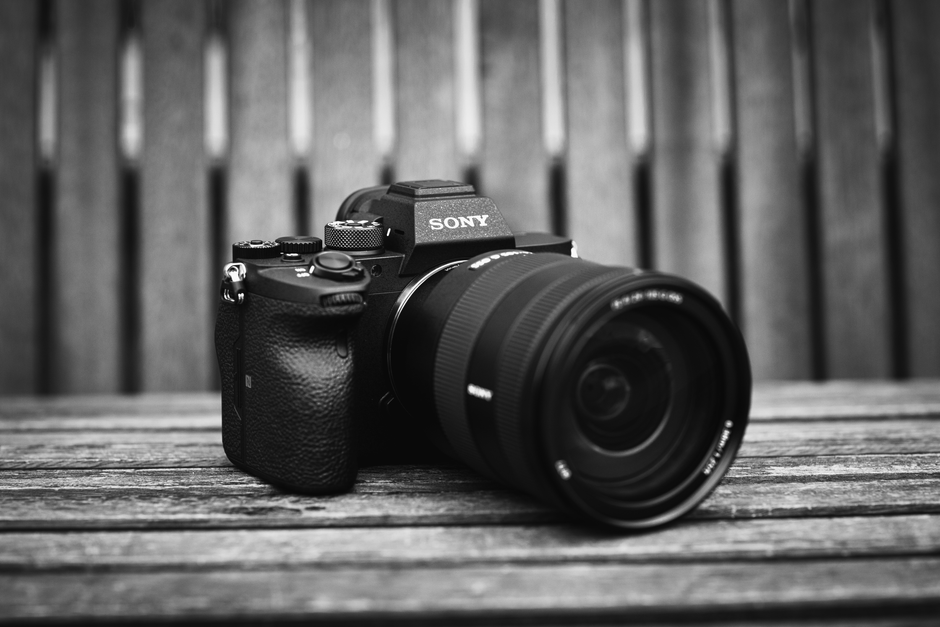
Let me set the scene. I’m standing on a pier in San Francisco, golden hour light pouring over the bay like honey. My wife is laughing at something I said, the wind catching her hair just right. It’s one of those moments you want to bottle. I pull out the new Sony Xperia 1 VIII, tap the shutter button, and wait for the magic.
What I got back looked like a watercolor painting drawn by a toddler who’s just discovered smudging. The colors were weirdly saturated — her jacket was supposed to be navy, not electric blue. The background was a blurry mess that made Alcatraz look like a lumpy potato. And her face? Let’s just say the AI decided to “optimize” her smile into something unsettlingly smooth, like a mannequin’s.
Welcome to Sony’s AI Camera Assistant, the feature that the company hyped as the Xperia 1 VIII’s killer app. After a week of using it, I can confidently say it’s the worst implementation of computational photography I’ve seen since the early days of Google’s Pixel — and I’m being generous.
The Promise vs. The Reality
Sony’s pitch is straightforward: the AI Camera Assistant uses machine learning to analyze your scene and automatically adjust settings for the “best” shot. No more fiddling with manual controls. No more missing the moment because you’re buried in menus. Just point, shoot, and let the AI work its magic.
According to www.theverge.com, Sony even promoted the phone by sharing sample photos taken with the assistant. And here’s the kicker — those photos were, in their own words, “some of the worst photos taken on a Sony camera in years.” Sony basically admitted their AI is a mess before anyone even got their hands on the phone. That should have been my first red flag.
But I’m a sucker for second chances. Maybe it’s better in real-world use, I thought. Maybe those were just early software samples. Spoiler: they were not.
A Week of Failure
I tested the AI Camera Assistant in every scenario I could think of. Low-light bars. Sunny parks. Fast-moving kids. Close-up food shots. The results were consistently disappointing. Here’s the problem: the AI is too aggressive. It doesn’t just enhance photos; it fundamentally alters them in ways that strip away any sense of reality.
Take low-light performance. Instead of simply brightening the image and reducing noise, the assistant applies a heavy-handed noise reduction that turns your subjects into wax figures. Faces lose texture. Hair becomes a solid block of color. It’s like someone ran every photo through a beauty filter set to 11 — even when you don’t want it. I have a photo of my friend’s dog at a dimly lit park that looks like a CGI render from a 2005 video game.
Daylight shots are better, but not by much. The AI has a nasty habit of oversaturating colors and cranking up contrast. Grass becomes unnaturally neon. Skin tones shift toward a weird orangey hue. I took a picture of a bowl of ramen that looked so fake I could’ve sworn it was a stock photo. The broth was glowing like a radioactive isotope.
The Human Cost
Here’s the thing about AI in cameras: it’s not just about technical specs. It’s about trust. When I hand someone my phone to take a picture, I want to know that what I get back reflects the moment I experienced. I don’t want an algorithm deciding that my grandmother’s wrinkles need to be smoothed out, or that the sunset should be more magenta than it actually was.
Sony’s assistant doesn’t just fail at that — it actively undermines it. There’s no way to dial back the AI processing without switching to a manual mode that requires a PhD in Sony menu navigation. And even then, the assistant’s decisions are baked into the RAW files. You can’t unring that bell.
I’ve been using smartphones for over a decade, and I’ve seen bad camera software before. The HTC One M8’s “UltraPixel” mode was a joke. The first iPhone’s camera was barely usable. But those were limitations of hardware and early software. This is a deliberate choice by Sony to prioritize algorithmic perfection over human authenticity. It’s a philosophical choice, and in my opinion, it’s the wrong one.
What Sony Gets Wrong
To be fair, Sony isn’t alone in this. Apple, Google, and Samsung all use AI to enhance photos. But the difference is subtlety. Google’s Pixel phones, for example, use computational photography to fill in detail and balance exposure without making everything look fake. Their “Magic Eraser” tool is a targeted solution for a specific problem. Sony’s assistant is a blunt instrument that hits every image with the same heavy-handed treatment.
According to www.theverge.com, the assistant is designed to “analyze the scene and adjust settings automatically.” But the problem is that it’s analyzing the wrong things. It prioritizes sharpness and saturation over natural color and texture. It’s like a chef who adds salt to every dish without tasting it first. Sometimes a photo needs to be a little soft. Sometimes a slightly underexposed shot captures the mood better than a perfectly lit one.
There’s also the issue of speed. The assistant takes a noticeable second or two to process each shot. That might not sound like much, but when you’re trying to capture a child’s first steps or a cat doing something ridiculous, that delay is the difference between a keeper and a blurry mess. I missed at least three great shots because the phone was too busy thinking.
The Silver Lining? Not Really
I’ll give Sony credit where it’s due: the Xperia 1 VIII’s hardware is impressive. The main sensor is large, the lens is sharp, and the manual controls (if you bother to use them) offer a level of granularity that puts most phones to shame. The phone itself is a beautiful piece of engineering — thin, light, with a gorgeous 4K OLED display.
But here’s the thing: a camera is only as good as its software. You can have the best lens in the world, but if the image processing pipeline is broken, you’re going to get bad photos. And Sony’s pipeline is broken. I tried using the phone in its “Basic” mode (which supposedly reduces AI intervention), but the results were still processed with some level of algorithmic smoothing. There’s no escape.
Should You Buy It?
If you’re a professional photographer who wants to shoot in RAW and spend hours editing each image, the Xperia 1 VIII might be a decent choice. The hardware is there. But for the rest of us — the parents, the travelers, the people who just want to point and shoot and get a good memory — this phone is a hard pass.
I’ve been reviewing phones for 15 years, and I’ve never seen a flagship device with a camera this frustrating. It’s not that it can’t take good photos; it’s that it refuses to take honest ones. Every image is a negotiation with an algorithm that doesn’t understand what makes a photo meaningful.
And that’s the real tragedy here. Sony has been making cameras for decades. They know how to capture light. They know how to make images that look real. But somewhere along the way, they decided that AI was the future, and they forgot that sometimes the future is just a fancy way to ruin the present.
So what’s the takeaway? Don’t buy a phone that treats your memories as data points to be optimized. Don’t trust an AI that thinks your face needs editing. And definitely don’t let a $1,300 device tell you what a good photo looks like.
I’m going back to my Pixel. It’s not perfect, but at least when I take a picture of my wife laughing in the golden hour light, the photo looks like her. Not a mannequin. Not a watercolor. Just her.
And honestly, that’s all I want.

Originally reported by www.theverge.com. Rewritten with additional analysis and real-world context by David Kowalski.