I spent last Saturday tromping through three boroughs, looking at apartments that looked nothing like their online photos. This is not a new complaint—renters have been getting catfished by real estate listings since the dawn of DSLR cameras. But something has changed. The lies are getting better. Much better.
Joyce, a native New Yorker, didn't think finding her first solo apartment in the city would be easy. But she also didn't think it'd be "hell." After looking at a lot of tiny, overpriced places she described as "shitholes," Joyce found her dream apartment: a reasonably priced studio in Manhattan. According to www.theverge.com, the listing photos showed a space that was "bright, airy, with what looked like real hardwood floors and an actual kitchen." She scheduled a viewing immediately.
You can probably guess what happened next. The real apartment was a windowless box with laminate flooring peeling at the seams and a "kitchen" that was basically a hot plate on a mini-fridge. The photos had been generated by AI.
The New Lie: Virtual Staging on Steroids
Virtual staging isn't new. Real estate agents have been digitally adding furniture to empty rooms for years. But the old version was obvious. You'd see a floating couch with no shadows, or a potted plant that looked like it was photoshopped by someone who had never actually seen a plant. It was a white lie: "Imagine your furniture here."
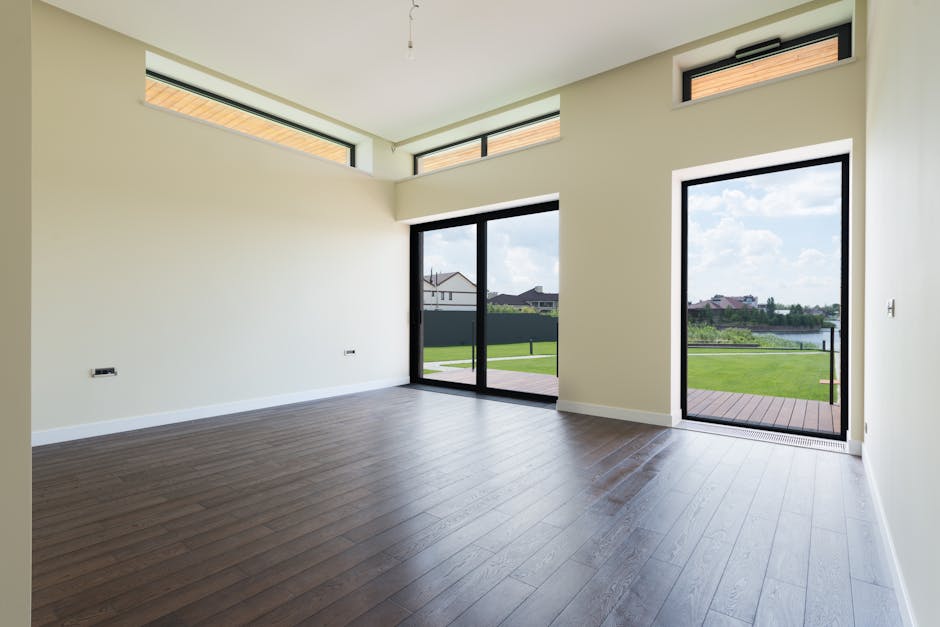
What's happening now is different. Generative AI doesn't just add furniture. It creates entire rooms from scratch. It turns a cramped, windowless studio into a sun-drenched loft with exposed brick. It adds crown molding, changes the wall color, and even alters the view out the window. The technology is so good that even trained eyes can be fooled.
Here's the thing: AI doesn't understand what an apartment is. It understands patterns in training data—thousands of professionally staged, well-lit, expensive apartments. So when you feed it a photo of a dark, narrow room and ask it to "make this look nice," it doesn't try to accurately represent the space. It generates the platonic ideal of a nice apartment, regardless of physical reality.
According to www.theverge.com, Joyce's listing used AI to generate not just the furniture but the actual architectural features. The hardwood floors? AI. The window letting in all that light? AI. The sense that you could live there without developing a vitamin D deficiency? All hallucination.
The Economics of Desperation
I've been writing about tech for 15 years, and I've watched this pattern play out across multiple industries. A new tool appears, it solves a genuine problem (empty apartments are hard to sell), and then it gets abused until the entire system breaks.
The rental market in major cities is already a nightmare. In New York, the median rent for a studio hit $3,200 in 2025. In San Francisco, you're lucky to find anything under $2,800. Landlords and brokers are desperate to make their units stand out. AI virtual staging costs pennies per image. A professional photographer with actual staging furniture? That's thousands of dollars.
The math is simple. The ethics are not.
I talked to a broker in Brooklyn who asked to remain anonymous because, honestly, his company is doing the same thing. "Everyone's doing it," he told me. "If I don't use AI staging, my listings look like crap compared to everyone else's. The tenants don't even know what real staging looks like anymore."
He's not wrong. But he's also not right. The problem is that AI staging doesn't just misrepresent the aesthetic—it misrepresents the fundamental reality of the space. That studio Joyce saw online had a separate kitchen area. The real apartment had a countertop in the corner. That's not a matter of taste. That's fraud.
The Regulatory Vacuum
You might be thinking, "Surely there are laws against this." And you'd be partially correct. The Federal Trade Commission has rules about deceptive advertising. The National Association of Realtors has guidelines about photo accuracy. But those rules were written for a world where you could tell when a photo was faked.
AI-generated images have crossed the uncanny valley. They don't look fake anymore. They look better than real. Which means the old enforcement mechanisms don't work.
Some states are starting to catch up. California passed a law in 2024 requiring disclosure when AI-generated images are used in real estate listings. New York is considering similar legislation. But enforcement is laughable. Who's going to audit every listing on StreetEasy? The city's Department of Housing Preservation and Development? They're already understaffed and overwhelmed.
Meanwhile, the platforms themselves are doing very little. Zillow, Redfin, and StreetEasy all allow virtual staging, though they require a disclosure label. But that label is easy to miss—a tiny line of text that says "Virtually Staged" in a font size designed to be ignored. And it doesn't tell you what was staged. Was it just the furniture? Or did they add a second bedroom that doesn't exist?
The Human Cost
Let's get personal for a second. I've been through the rental wringer. I once flew to Austin for a job, rented an apartment sight-unseen based on photos, and arrived to find the "updated kitchen" was a 1980s relic with a microwave balanced on a chair. That was before AI. I can't imagine what it's like now.
Joyce spent two months looking for an apartment. She took time off work for viewings. She paid for subway fare, for Ubers when the trains were down, for the emotional labor of getting excited and disappointed over and over. The AI listing wasn't just a waste of her time—it was a punch in the gut. She found a place eventually, a tiny studio in Astoria that looked nothing like the photos but was at least real. "I don't trust any listing now," she told me. "If it looks too good, I assume it's AI."
That's the real tragedy. The technology is eroding trust in an already broken system. When every listing could be a fantasy, renters stop believing anything. They stop clicking on nice-looking apartments because they assume they're fake. They start looking only at the worst photos, assuming those are the most honest.
What Can You Do?
I wish I had a neat solution. But I don't. The cat is out of the bag, and it's a very photogenic cat that doesn't actually exist.
Here's what I do: I reverse image search listing photos. If the same image appears on multiple listings, or if it looks suspiciously like a hotel room from a stock photo site, that's a red flag. I also look for inconsistencies—shadows that don't match, reflections that don't make sense, furniture that seems to float slightly above the floor. These are the tells of AI generation.
But honestly? The best defense is cynicism. Assume every listing is exaggerated. Demand video tours. If a broker refuses to show you the apartment in person before you apply, walk away. It's not worth the risk.
The Bigger Picture
This isn't just about apartments. It's about what happens when we outsource reality to machines that don't have any stake in it. AI doesn't care if you waste your Saturday. It doesn't care if you sign a lease for a place that makes you miserable. It was trained on data, not empathy.
The real estate industry is going to have to figure this out. Either platforms crack down on deceptive AI use, or regulators step in, or renters just learn to live with the lies. My bet is on a combination of all three—a slow, painful adjustment that leaves a lot of people frustrated along the way.
In the meantime, if you're looking for an apartment, I'm sorry. It's going to be harder than it should be. And if you see a listing that looks too good to be true? It probably is. Trust your gut. And maybe bring a friend who can spot a floating couch from a mile away.
Originally reported by www.theverge.com. Rewritten with additional analysis and real-world context by Thomas Blackwell.