
I've spent the last few days with the Google Home Speaker sitting on my kitchen counter, and honestly, it's been a weirdly emotional experience. One moment, I'm marveling at how this little fabric-wrapped orb can hear me whisper "Hey, Google" over the roar of a blender. The next, I'm standing in my living room, repeating myself like a broken record while it stubbornly plays the wrong playlist.
Right out of the box, the Google Home Speaker passed a couple of important tests. Even with the volume at 100 percent and music blaring out of the speaker, it quickly ducked the audio and listened every time I said "Hey, Google." According to www.theverge.com, the speaker's three microphones have a lot to do with this — they're positioned to pick up your voice from any direction, even in noisy environments. And I'll give credit where it's due: this thing hears you. I tried shouting from the next room, mumbling with a mouthful of toast, and even whispering while standing directly over it. It caught every single one. That's genuinely impressive for a $129 speaker.
The Sound: Better Than You'd Expect (But Not a Party Animal)
Let's talk about the audio, because that's what you're paying for beyond the smart assistant. The Google Home Speaker doesn't try to blow your socks off with bass or fill a stadium with sound. Instead, it's aiming for something more subtle: clear, balanced audio that works for everyday listening. I threw a bunch of genres at it — from the thumping bass of Daft Punk's "Get Lucky" to the delicate strings of Yo-Yo Ma — and it handled them all with surprising composure. Vocals are crisp, mids are warm, and the highs don't get harsh even at top volume.
But here's the thing: it's not loud. At max volume, it's comfortable for a medium-sized room, but if you're hosting a party or trying to fill an open-plan living space, you'll want something beefier. I found myself wishing for just a bit more oomph during my morning cleaning sessions, where I like to blast music while vacuuming. The speaker's design also means it projects sound upward and outward, which creates a nice ambient feel but lacks the directional punch you get from traditional speakers. It's fine for podcasts, news, and background music. It's not for critical listening.
The Smart Stuff: Where It Shines (And Where It Stumbles)
The real magic of the Google Home Speaker is, obviously, the Google Assistant. Setting it up is a breeze — plug it in, open the Google Home app, and you're guided through the process in about five minutes. Once it's connected to your Wi-Fi and linked to your accounts (Google, Spotify, Netflix, and a growing list of smart home devices), you can start bossing it around. I asked it to set timers for my pasta, add milk to my shopping list, and tell me the weather forecast for the weekend. It handled all of that flawlessly, with a natural-sounding voice that's far less robotic than Alexa's.
Where it gets finicky is when you try to do something slightly outside its comfort zone. For example, I asked it to "play some relaxing music for reading" and it launched a random ambient playlist that had whale sounds. Not what I had in mind. I tried correcting it: "No, Google, play something with acoustic guitar." It paused, then started playing a song by an indie band I'd never heard of. It took three more attempts before I got it to play the actual playlist I wanted. According to www.theverge.com, this is a common complaint with voice assistants — they're great at simple commands but struggle with nuance and context. The Google Home Speaker is no exception.
Another frustration: multi-room audio. If you have multiple Google Home devices, you can group them and play music throughout your house. In theory, that's awesome. In practice, I spent an entire evening trying to get my Home Speaker to sync with a friend's Google Home Mini. The app kept losing the connection, and the speakers would randomly drop out mid-song. It's a beta-level experience that feels half-baked, especially compared to Sonos's rock-solid multi-room system. Google needs to fix this, because it's a dealbreaker for anyone who wants whole-home audio.
Design: Looks Great, Lives in the Kitchen
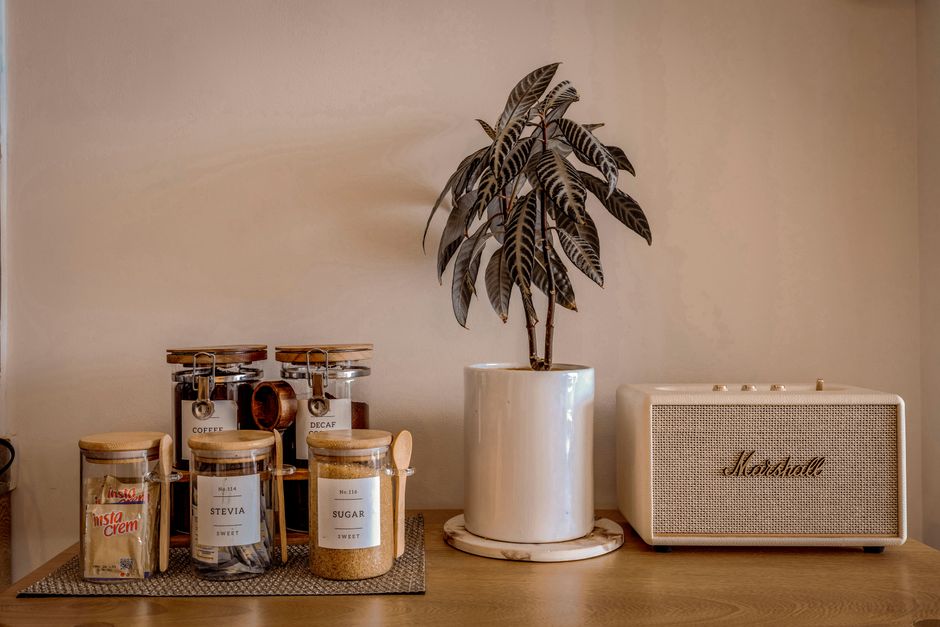
Let's be honest: the Google Home Speaker is a looker. It's a small, rounded cylinder wrapped in breathable fabric (available in gray, white, or coral) with a glowing LED strip on the bottom that pulses when it's listening. It's designed to blend into your home rather than scream for attention, and it succeeds. I've got mine on a shelf next to a potted plant, and it looks like it belongs there. The base is weighted, so it doesn't tip over easily, and the touch controls on top (play/pause, volume) are intuitive.
But here's my one design gripe: the power cable is permanently attached. That means you can't replace it if it gets damaged, and you're stuck with a white cable that might clash with your decor. It also limits where you can place the speaker, since you're tethered to an outlet. I would have loved a detachable cable or even a built-in battery for portability. As it is, the Google Home Speaker is destined for a counter, shelf, or nightstand — not a picnic table or backyard patio.
Daily Life Integration: Is It Worth It?
After a week of living with the Google Home Speaker, I'm still not sure if it's a necessity or a luxury. For people who are already deep in the Google ecosystem (Gmail, Google Calendar, YouTube Music, Android phones), it's a no-brainer. It syncs seamlessly with your existing accounts, and the ability to ask about your schedule, send texts, or control your Nest thermostat with your voice is genuinely convenient. I found myself using it most often for hands-free tasks: setting timers while cooking, checking the weather while getting dressed, and playing podcasts while doing dishes.
But for everyone else? The value proposition is murkier. The Google Assistant is powerful, but it's only as good as its integrations. If you use Spotify or Apple Music, you're fine. If you use Amazon Music or Tidal, you might hit some compatibility walls. And if you're hoping for a smart home hub that works with everything, you'll be disappointed. The Google Home Speaker supports a growing list of devices, but it's not as universal as Amazon's Alexa. I had to return a smart plug I bought because it wasn't compatible — a frustrating experience that's all too common.
There's also the privacy question. Like all smart speakers, the Google Home Speaker is always listening for its wake word, which means it's streaming audio to Google's servers whenever it thinks you've said "Hey, Google." Google says it only sends recordings after the wake word is detected, but I've had a few false triggers where it started listening because a TV character said something that sounded like "Google." It's not a dealbreaker for me, but it's something to consider if you're privacy-conscious.
The Verdict: A Promising Start, But Room to Grow
The Google Home Speaker is a solid first attempt at a smart speaker from Google. It looks beautiful, sounds good for its size, and the voice recognition is best-in-class. But it's also clearly a version 1.0 product. The finicky multi-room audio, limited smart home compatibility, and sometimes-confusing responses make it feel more like a beta than a polished consumer device. I'm rooting for Google to iterate on this, because the foundation is strong. With software updates and more integrations, it could truly become the smart home hub we've been waiting for.
Right now, though, it's a gadget for early adopters and Google fans. If you're willing to put up with some quirks for the promise of a smarter home, go for it. If you want something that just works out of the box without frustration, I'd wait for the next generation — or look at Amazon's Echo, which is more mature and has a wider ecosystem. The Google Home Speaker is a glimpse of a future that's almost here. Almost.
Originally reported by www.theverge.com. Rewritten with additional analysis and real-world context by Jennifer O'Donnell.

