Introduction
That's the short version.
Public speaking consistently ranks as one of the most common fears worldwide, often ranking higher than the fear of death. Yet effective communication is essential for career success, leadership, and personal relationships. Artificial intelligence is emerging as a powerful tool for developing communication skills, offering affordable, accessible, and personalized coaching that was previously available only through expensive professional training programs. The AI coaching market is expanding rapidly, with tools that can analyze speech patterns, provide real-time feedback during practice presentations, and track improvement over time. From helping executives prepare for high-stakes presentations to assisting non-native speakers with pronunciation and fluency, AI communication coaches are making it easier for anyone to become a more confident and effective speaker. This article explores how AI is transforming public speaking training and communication skill development.
Real-Time Speech Analysis and Feedback
The most immediate way AI helps speakers improve is through real-time analysis of speech patterns. Tools like Yoodli, Orai, and Speeko use natural language processing and speech recognition to analyze a speaker's delivery as they practice. The AI tracks dozens of metrics simultaneously: speaking pace (words per minute), volume variation, pitch range, filler word frequency ("um," "uh," "like," "you know"), pauses, and articulation clarity. During or immediately after a practice session, the AI provides detailed feedback that helps speakers identify specific areas for improvement.
What makes real-time AI feedback powerful is its objectivity and consistency. A speaker might not realize they say "um" every 15 seconds, or that their pace accelerates noticeably when discussing technical topics, or that their voice drops to a near-whisper at the end of sentences. The AI detects these patterns with precision and presents them in clear, actionable form. Some tools provide live feedback during practice sessions—a subtle visual indicator speeds up when you're talking too fast, or a gentle tone sounds when you use a filler word. This immediate feedback helps speakers develop awareness and self-correction skills that transfer to real presentations. Over repeated sessions, the AI tracks progress across all metrics, showing speakers exactly how they're improving and where they still need work.
Content Structure and Message Clarity Analysis
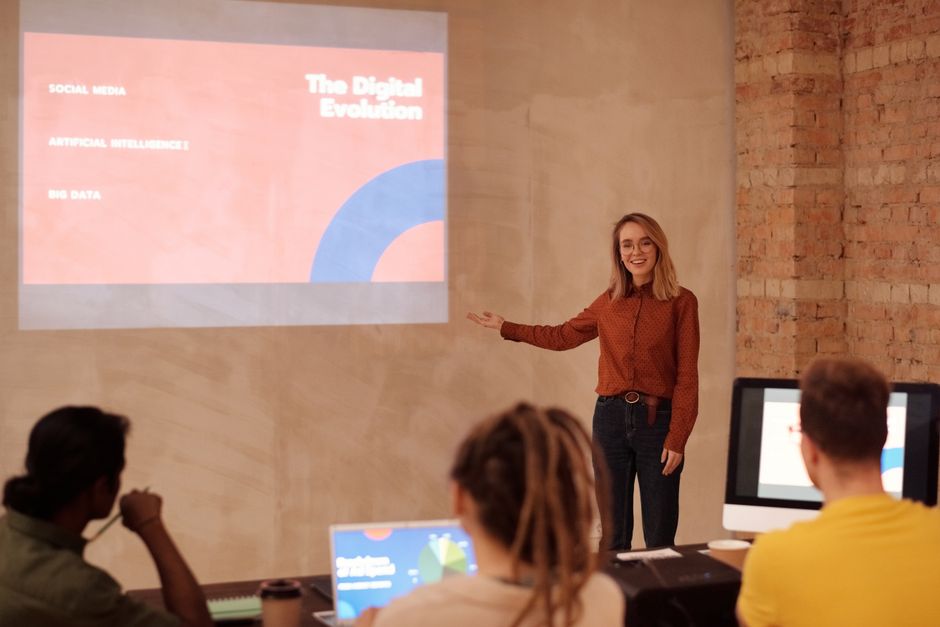
Beyond delivery mechanics, AI coaching tools analyze the content and structure of presentations. Advanced AI can evaluate whether a speech has a clear opening, logical flow, compelling arguments, and a memorable conclusion. Tools integrated with large language models can analyze the transcript of a practice presentation and provide feedback on clarity, conciseness, persuasiveness, and audience engagement. The AI might suggest that a technical explanation could be simplified with a better analogy, that a key point is buried in the middle of a paragraph rather than stated clearly, or that the presentation could benefit from a more powerful opening hook.
AI content analysis can also evaluate whether the presentation language is appropriate for the intended audience. It can flag jargon that might confuse a general audience, identify assumptions the speaker is making about audience knowledge, and suggest ways to make complex ideas more accessible. For persuasive presentations, AI can analyze the logical structure of arguments, identifying potential weaknesses in reasoning or places where additional evidence would strengthen the case. Some tools can even generate alternative phrasings for specific sentences or transitions, offering the speaker a choice of ways to express key points more effectively. This content-focused coaching complements delivery feedback to provide a comprehensive approach to presentation improvement.
What's the catch?
Body Language and Non-Verbal Communication
Big difference.
Communication is far more than words and voice—body language, facial expressions, and eye contact play crucial roles in how a message is received. AI-powered camera analysis is now bringing non-verbal communication coaching to digital practice tools. Using computer vision technology, AI coaches can analyze a speaker's posture, gestures, facial expressions, and eye contact during practice presentations. The system can detect when a speaker is reading from notes or slides rather than engaging with the audience, when their arms are crossed in a closed-off posture, or when their facial expressions don't match the emotional content of their words.
Advanced AI systems can track eye contact specifically, determining how much time the speaker spends looking at the camera (simulating audience eye contact) versus looking at notes, slides, or around the room. They can identify repetitive or distracting gestures—nervous hand movements, rocking, playing with a pen—that might undermine a speaker's authority. Some tools provide a "body language score" alongside vocal and content scores, giving speakers a holistic assessment of their presentation effectiveness. For virtual presentations and video calls, AI can analyze on-camera presence, including lighting, framing, and background considerations, helping remote professionals present more effectively in the increasingly common virtual meeting environment.
Personalized Training Programs and Progress Tracking
The most valuable AI communication coaches are those that provide structured, long-term training programs rather than one-off feedback. Platforms like VirtualSpeech, Speeko, and AI-powered features in Toastmasters' digital tools offer progressive training curricula that guide users through increasingly challenging speaking scenarios. A typical program might start with short impromptu speaking exercises, progress to prepared presentations, and eventually include advanced skills like persuasive speaking, storytelling, and handling difficult questions.
These personalized programs adapt to each user's specific needs and pace. A user who excels at vocal delivery but struggles with speech structure will receive different coaching priorities than someone whose content is strong but who speaks too quietly. The AI tracks thousands of data points across every practice session, building a detailed profile of the user's communication strengths and weaknesses. It can identify subtle patterns—perhaps the user's speech quality declines significantly after the first five minutes, suggesting a need for better pacing and energy management. Progress reports show improvement across specific metrics, providing motivation and clear direction for continued development. Some platforms integrate with professional development goals, allowing users to prepare for specific high-stakes communication events like job interviews, conference presentations, or client pitches with targeted coaching.
The Short Version
- AI speech analysis tools track pace, filler word frequency, volume variation, and articulation with precision, providing objective feedback on delivery mechanics.
- Content analysis using language models evaluates speech structure, clarity, audience appropriateness, and argument strength.
- Computer vision AI analyzes body language, facial expressions, and eye contact, providing feedback on non-verbal communication. (this one actually surprised me)
- Personalized training programs adapt to each user's specific strengths and weaknesses, offering progressive curricula for long-term improvement.
- Real-time feedback during practice sessions helps speakers develop self-correction awareness that transfers to actual presentations. (this one actually surprised me)
Here's a real example from my own use: continue developing your skills with AI Resume and Job Search Tools and AI for Creative Writing and Storytelling.
So where does that leave us?