Introduction
Genealogy—the pursuit of family history—has experienced a remarkable surge in popularity, driven by the accessibility of online records and at-home DNA testing kits. However, traditional genealogy research remains immensely time-consuming, requiring hours of manual record searching, document transcription, and cross-referencing across multiple databases. Artificial intelligence is revolutionizing this field, automating the most tedious aspects of research while uncovering connections that human researchers might miss. The global genealogy market is valued at over $4 billion, with major platforms like Ancestry, MyHeritage, and FamilySearch investing heavily in AI technologies. From handwriting recognition that reads century-old census records to DNA analysis that identifies previously unknown relatives, AI is making family history research faster, more accurate, and more accessible to everyone. This article explores how AI is transforming genealogy and helping people discover their roots.
Automated Record Matching and Hint Generation
The most significant contribution of AI to genealogy is automated record matching. Traditionally, building a family tree required manually searching through billions of historical records—census documents, birth and death certificates, marriage licenses, immigration records, military service files—and manually linking each record to the correct person in the tree. AI-powered platforms like Ancestry's ThruLines, MyHeritage's Record Detective, and FamilySearch's AI-powered record hints automate this process at an unprecedented scale. When a user builds even a partial family tree, the AI searches across millions of records to find documents that are likely to match people in the tree, presenting these as "hints" that the user can confirm or reject.
What makes modern AI record matching so powerful is its ability to handle the ambiguity inherent in historical records. Names were frequently misspelled, ages recorded inaccurately, and locations listed inconsistently. Traditional exact-match search algorithms would miss a record simply because "John Smith" was recorded as "Jno. Smyth" in an 1880 census. AI systems use fuzzy matching algorithms that understand historical name variations, phonetic similarities (like Soundex and Metaphone algorithms), and typical recording errors. They consider multiple data points simultaneously—name, age, location, spouse name, children's names—to calculate a confidence score for each potential match. The AI can identify a great-great-grandmother in a 1900 census even though her surname (from a second marriage) is different from what the researcher expected, because all other identifying details align with the family profile.
Handwriting Recognition and Document Transcription
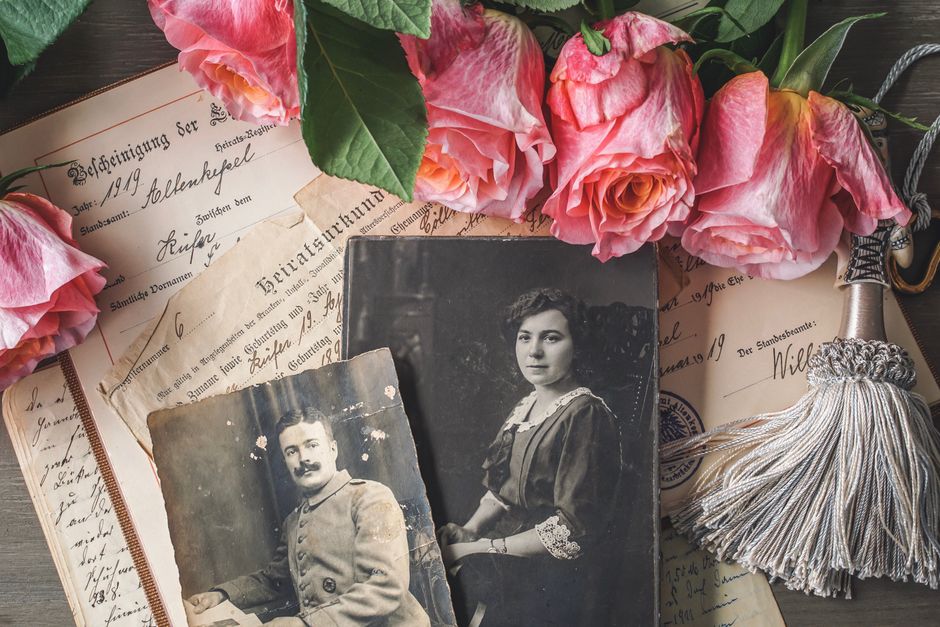
Historical records present a significant challenge: most were handwritten, often in cursive scripts that can be difficult even for trained human eyes to read. AI-powered handwriting recognition, powered by computer vision and machine learning, is transforming how these documents are accessed and searched. Advanced optical character recognition (OCR) systems trained specifically on historical handwriting can now transcribe cursive documents with remarkable accuracy, converting handwritten census records, wills, letters, and diaries into searchable digital text.
MyHeritage's AI Photo and Document tools and Ancestry's handwriting recognition capabilities are opening access to records that were previously only available to researchers willing to manually page through microfilm. An AI might scan a 200-year-old marriage record, extract the names of the bride and groom, their parents, witnesses, and the officiant, and automatically add these details to the relevant family tree records. For documents like old family letters and diaries, AI transcription makes the content searchable, allowing descendants to find references to specific events, places, or relatives without reading every page. Some platforms are now using AI to not only transcribe but also analyze the content of historical documents, identifying relationships, dates, and events mentioned in narrative text and adding them to the family tree automatically.
DNA Analysis and Genetic Genealogy
The integration of AI with genetic genealogy has been one of the most transformative developments in family history research. When users submit DNA samples to services like AncestryDNA, 23andMe, MyHeritage DNA, or FamilyTreeDNA, AI algorithms analyze the genetic data to identify relatives, estimate ethnic breakdowns, and even predict relationships. The AI compares millions of DNA markers across the entire database of users, identifying shared segments of DNA that indicate common ancestry. This analysis can identify cousins who share a common ancestor several generations back, even when the users have no paper trail connecting them.
What makes AI essential for this analysis is the sheer complexity of genetic relationships. The AI must distinguish between different types of matching segments, account for the fact that DNA inheritance is random (full siblings share about 50 percent of DNA, while first cousins share about 12.5 percent, but these are averages with significant variation), and estimate the most likely relationship based on the amount and pattern of shared DNA. Advanced AI systems can now suggest the specific ancestor through whom a DNA match is related, using a technique called "chromosome mapping" that identifies which segments of DNA came from which ancestral line. Some platforms use AI to cluster DNA matches into groups corresponding to different branches of the family tree, helping users identify which side of the family a match belongs to even when no common ancestors are immediately apparent.
Photo Enhancement and Colorization
Family photographs are among the most treasured of genealogical artifacts, but old photos are often damaged, faded, or low-quality. AI-powered photo restoration tools are bringing these images back to life with remarkable results. MyHeritage's Photo Enhancer and Ancestry's photo tools use deep learning algorithms trained on millions of images to enhance facial details, reduce noise, correct color casts, and even reconstruct damaged areas of photographs. An AI can take a blurry, 100-year-old photo of a great-grandparent and produce a clear, detailed image that reveals facial features that were previously indistinguishable.
Colorization is another AI capability that brings family history to life. AI colorization tools use deep learning models trained on millions of color photographs to predict the most likely colors for black-and-white images. The AI analyzes each element in the photo—skin tones, clothing fabrics, foliage, sky, architectural materials—and applies historically appropriate and visually plausible colors. While the colors aren't guaranteed to be historically accurate (the AI doesn't know if great-grandma's dress was actually blue or green), they follow statistical probabilities based on what similar materials typically looked like at the time. These AI-enhanced and colorized photographs create a powerful emotional connection to ancestors, transforming them from distant historical figures into recognizable individuals and often inspiring deeper genealogical research.
What Actually Matters
- AI automated record matching uses fuzzy algorithms and name variation analysis to connect family tree entries with billions of historical records, dramatically accelerating research. — game changer in my workflow
- AI handwriting recognition transcribes cursive historical documents into searchable digital text, opening access to records that were previously difficult to use.
- Genetic genealogy AI analyzes DNA matches, estimates relationships, and clusters genetic relatives by family branch, identifying connections invisible in paper records.
- AI photo enhancement restores damaged historical photographs, revealing facial details and correcting age-related degradation. (this one actually surprised me)
- AI colorization brings black-and-white family photos to life with historically informed color predictions, creating emotional connections to ancestors. — game changer in my workflow
For more AI tools that uncover hidden knowledge, explore AI News Aggregation and Personalization and AI for Creative Writing and Storytelling.