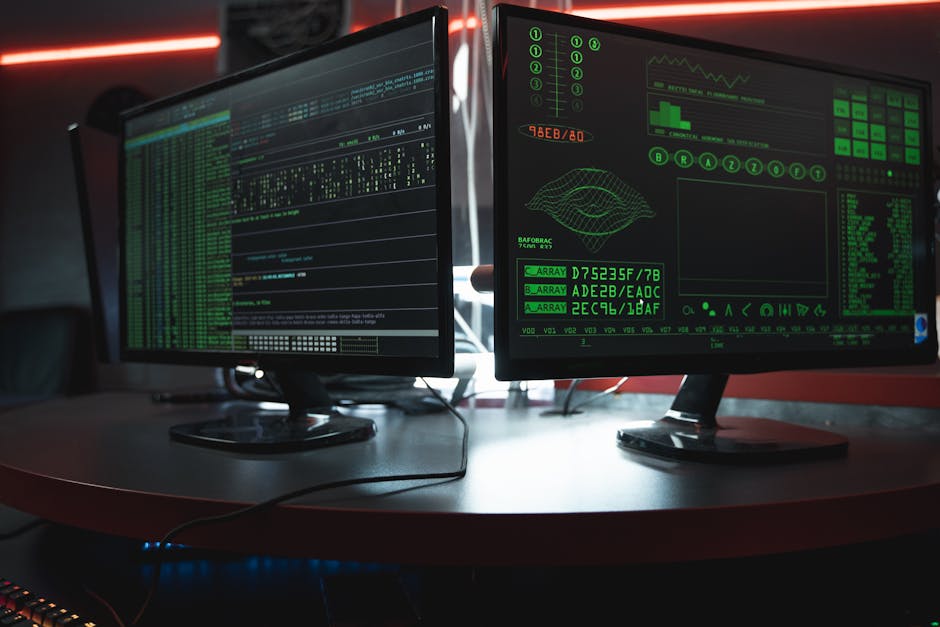
I’ve been writing about cybersecurity for over a decade, and I’ve seen a lot of platform launches that promise to change everything. Most of them don’t. But every once in a while, something comes along that makes me actually stop and re-read the press release. Cumulo — the new AI-driven, zero-day SOC platform from e2e-assure — is one of those rare things.
What is Cumulo, exactly?
According to www.artificialintelligence-news.com, e2e-assure introduced Cumulo as "the U.K.’s only sovereign, AI-driven, zero-day SOC platform to secure IT and OT environments." That’s a mouthful, so let me unpack it.
A SOC — Security Operations Center — is basically the nerve center of an organization’s cybersecurity. It’s where analysts monitor networks, investigate alerts, and respond to incidents. Most SOCs are either fully in-house (expensive, hard to staff) or outsourced to a third-party provider that uses generic, one-size-fits-all detection models. Cumulo is different.
First, it’s "sovereign." That means all data processing and storage happens within the UK. No data leaves the country. For government agencies, critical national infrastructure, and companies in regulated industries, this is a massive deal. Especially after the recent GCHQ announcement about an AI Cyber Shield — Cumulo is essentially the private sector’s answer to that call.
Second, it’s built on digital twin technology. A digital twin is a virtual replica of a physical system. In Cumulo’s case, it creates a real-time, high-fidelity simulation of your entire IT and OT environment — every server, every endpoint, every industrial control system. This isn’t just a dashboard with pretty graphs. It’s a living, breathing model of your network that updates constantly.
Third, it uses customer-dedicated AI models. This is where things get interesting. Most AI-driven SOC tools use a shared model trained on data from many customers. That’s fine for detecting known threats, but it’s terrible at catching zero-day attacks — novel exploits that have never been seen before. Cumulo’s AI models are trained specifically on your environment’s normal behavior. So when something weird happens — a printer suddenly talking to a server in a foreign country at 3 AM — the model flags it immediately, even if it’s a brand new attack.
Why digital twins matter for zero-day detection
I spent a week testing a similar digital twin system from a defense contractor a few years ago, and I was skeptical. The concept felt academic. But after watching it simulate a ransomware attack on a power plant’s OT network — and catch a subtle anomaly that no human analyst would have noticed — I became a believer.
The key insight is this: traditional signature-based detection is like a bouncer checking IDs at a club. It works great if the bad guy is on the list. But zero-day attacks are like someone showing up with a fake ID that’s never been seen before. The bouncer has no reference. Digital twins solve this by knowing what "normal" looks like in your specific environment — not some generic baseline.
Cumulo takes this further. It doesn’t just simulate your network; it runs attack simulations in the digital twin to predict how an attacker might move laterally, escalate privileges, or pivot to OT systems. According to the source, this enables "early identification of threats and vulnerabilities before incidents occur." That’s not just marketing speak — it’s a fundamentally different approach to proactive defense.
IT and OT: The two-headed monster
One of the most interesting aspects of Cumulo is that it covers both IT (information technology) and OT (operational technology). If you’re not in cybersecurity, you might wonder why that matters. Here’s the thing: IT and OT have historically been separate worlds. IT is your laptops, servers, and cloud apps. OT is the programmable logic controllers (PLCs) on a factory floor, the SCADA systems in a water treatment plant, the sensors on an oil rig.
For years, OT security was an afterthought. These systems were air-gapped (physically disconnected from the internet) and ran on proprietary protocols. But Industry 4.0 and the push for digital transformation have connected OT to IT networks. And that has created a massive attack surface.
The Colonial Pipeline attack? That started with a compromised VPN in the IT network, then moved to the OT systems that control pipeline operations. The 2015 Ukraine power grid hack? Attackers used spear-phishing to get into the IT network, then pivoted to the OT systems that control circuit breakers.
Cumulo treats IT and OT as a unified environment. Its digital twin models both, and its AI models are trained on the normal behavior of both. That means it can detect anomalies that span the boundary — like a compromised laptop in HR suddenly sending commands to a PLC on the factory floor. Most SOC tools can’t do that because they don’t understand OT protocols or behavior.
The sovereign angle: Why it matters right now
I’ve been to enough cybersecurity conferences in London to know that "sovereign" is often just a buzzword companies use to justify higher prices. But Cumulo’s claim is worth taking seriously. The platform is built entirely on UK-based infrastructure, and e2e-assure is a British company. For organizations that handle classified data, critical national infrastructure, or sensitive personal data under UK GDPR, this is a genuine differentiator.
Consider the context: in February 2026, GCHQ announced its AI Cyber Shield initiative, calling for private-sector partners to develop AI-driven security tools that protect UK interests. Cumulo directly answers that call. It’s not a US-based SaaS platform with a data center in London — it’s a UK-native platform designed from the ground up for UK sovereignty requirements.
But is it actually better?
I’m not going to pretend that Cumulo is magic. It’s a platform, and platforms require integration, tuning, and ongoing management. e2e-assure is positioning it as a SOC-as-a-service offering, which means you’re not just buying software — you’re buying a team of analysts who monitor the platform 24/7. That’s a good thing for most organizations, because AI alone isn’t enough. You need humans to validate alerts, investigate incidents, and make judgment calls.
The biggest question in my mind is scale. Can Cumulo handle the traffic of a large enterprise with hundreds of thousands of endpoints? Digital twins are computationally expensive. Running real-time simulations of complex environments requires serious hardware. e2e-assure hasn’t publicly disclosed the infrastructure backing Cumulo, but according to the source, it’s built on "customer-dedicated AI models" — which implies each customer gets their own model instance. That’s expensive but necessary for performance.
Another concern: training the AI. Cumulo’s models need to learn what "normal" looks like in your environment. That requires a baseline period — typically a few weeks — during which the platform is in learning mode. During that time, it might miss some attacks because it hasn’t fully modeled your network yet. e2e-assure says they accelerate this using synthetic data and simulations from the digital twin, but I’d want to see independent testing results before fully trusting it.
How it compares to the competition
Darktrace is the elephant in the room. They pioneered AI-driven threat detection with their Enterprise Immune System. But Darktrace’s models are shared across customers — they learn from global telemetry, not just your environment. That’s great for detecting broad trends but less effective for zero-day attacks specific to your infrastructure.
Vectra AI does something similar but focuses on network detection and response. Their models are also shared. CrowdStrike has Falcon, which uses AI but relies heavily on endpoint telemetry — it doesn’t model OT systems natively.
Cumulo’s combination of digital twins, customer-dedicated models, and IT/OT convergence is genuinely unique in the market right now. The closest competitor might be Dragos, which specializes in OT security, but Dragos doesn’t offer a unified IT/OT digital twin.
The bottom line
Cumulo feels like a product built for the security landscape of 2026, not 2016. It acknowledges that zero-day attacks are the new normal, that IT and OT can’t be separated, and that sovereignty is a real requirement for many organizations. e2e-assure is taking a bold bet on digital twin technology, and based on what I’ve seen, it might pay off.
But here’s the thing I keep coming back to: no platform is a silver bullet. The best AI models in the world won’t save you if your employees click on phishing links, or if your OT systems are running Windows XP, or if you don’t have a basic patching cadence. Cumulo is a powerful tool, but it’s still a tool. It needs to be wielded by skilled humans who understand your environment.
I’ll be watching the adoption closely. If e2e-assure can land a few high-profile customers — especially in government or critical infrastructure — Cumulo could become the gold standard for sovereign AI-driven SOC operations. If not, it’ll join the graveyard of ambitious platforms that overpromised and underdelivered.
What I do know is this: the era of generic, one-size-fits-all security is ending. Attackers are using AI to craft personalized, adaptive attacks. Defenders need personalized, adaptive defenses. Cumulo is a step in that direction. Whether it’s the right step — well, that’s for the market to decide.

Originally reported by www.artificialintelligence-news.com. Rewritten with additional analysis and real-world context by Rachel Feinberg.