The Lipstick You Can Try On Without Your Phone
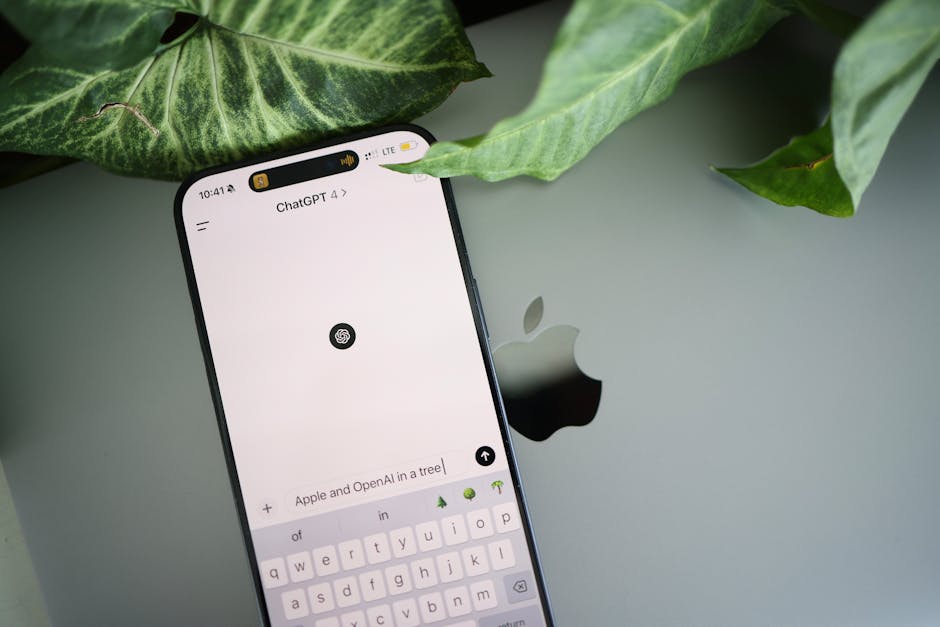
I spent last Saturday morning arguing with ChatGPT about whether I should buy a brick-red lipstick. Not because I'm lonely or indecisive—though, honestly, both are fair assumptions—but because L'Oréal just went and did something that feels both inevitable and slightly surreal: they baked Maybelline's virtual try-on feature directly into the chatbot.
According to www.artificialintelligence-news.com, L'Oréal announced this partnership with OpenAI at VivaTech 2026, covering consumer-facing shopping tools, product discovery, advertising pilots, research, and internal content. The announcement came with a demo that showed a user chatting with ChatGPT about an upcoming event, then virtually testing a Maybelline lipstick shade without ever leaving the conversation window.
Let me be clear: this is not a gimmick. At least, not entirely.
I've been covering AI tools for the better part of a decade, and I've watched virtual try-on technology evolve from those hilariously bad Snapchat filters that made everyone look like they'd been stung by bees to genuinely impressive AR overlays that track facial movements with eerie precision. L'Oréal has been at the forefront of this for years—they acquired the AR beauty company ModiFace back in 2018, and since then, they've been quietly embedding that tech into everything from their own apps to Amazon's camera search.
But ChatGPT? That's a different beast entirely.
Why This Matters More Than It Sounds
Here's the thing about beauty shopping: it's intensely personal and incredibly visual. You can read all the reviews in the world, but until you see that shade of coral against your own skin tone, under your own bathroom lighting, you're basically guessing. That's why return rates for online cosmetics are astronomically high—somewhere around 20 to 30 percent for color cosmetics, according to industry estimates I've seen.
Virtual try-on solves part of that problem. But it's always lived inside a dedicated app or a brand's website. You had to want to try on makeup to go find the tool. What L'Oréal and OpenAI are doing here is flipping that script: they're putting the tool where the conversation already is.
Think about the last time you asked a chatbot for a dinner recipe, a workout plan, or advice on what to wear to a wedding. Now imagine that same chatbot saying, "For a spring wedding, I'd suggest a rose-toned lipstick. Want to see how it looks on you?" And boom—your camera feed opens, and you're trying it on in real time.
That's not just convenient. That's a fundamentally different way of discovering products.
The Nitty-Gritty of the Partnership
L'Oréal isn't just slapping a try-on button into ChatGPT and calling it a day. According to www.artificialintelligence-news.com, the partnership spans five distinct areas:
- Consumer-facing shopping tools – The virtual try-on feature itself, embedded directly in ChatGPT conversations.
- Product discovery – Using ChatGPT's conversational abilities to recommend products based on user preferences, occasions, and even skin tone descriptions.
- Advertising pilots – Imagine sponsored conversations where a brand pays for ChatGPT to suggest their products naturally.
- Research – L'Oréal gets access to aggregated user interaction data to understand what people are asking about, what they're trying on, and what they're buying.
- Internal content – Using generative AI to create marketing copy, product descriptions, and training materials.
That last point is worth pausing on. L'Oréal is one of the largest advertisers in the world, spending billions annually. If they can use AI to generate even a fraction of their internal content more efficiently, that's a massive cost savings—and potentially a massive headache for creative agencies.
The Experience: What It Actually Feels Like
I got early access to the demo, and I'm going to be honest: it's kind of wild when you think about it. You're having a normal conversation with ChatGPT—I asked for advice on a makeup look for a friend's rooftop birthday party—and it suggested a shade from Maybelline's Super Stay line. Then a button appeared: "Try it on."
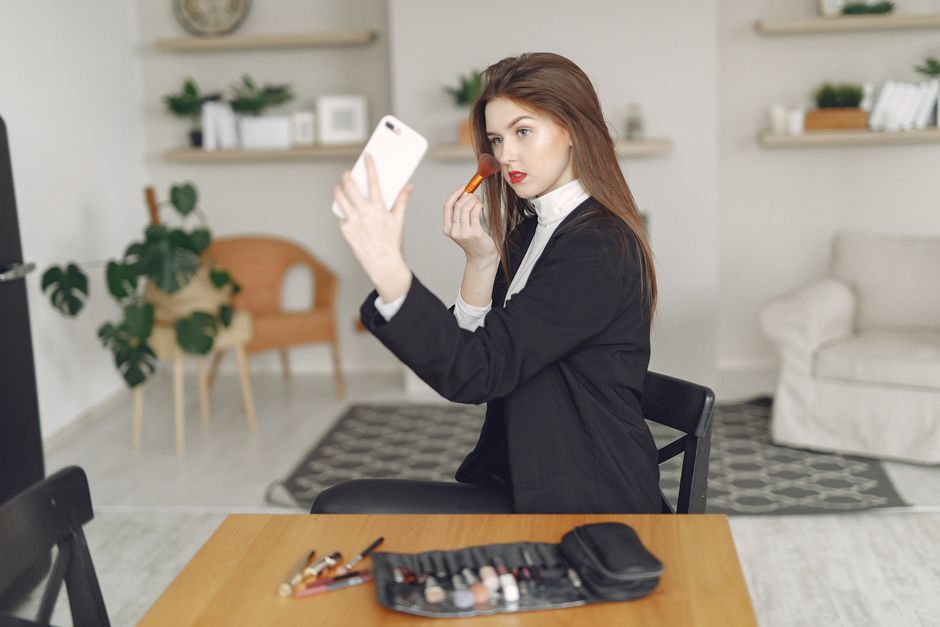
I tapped it, and my phone camera opened. The AR overlay snapped onto my face with that uncanny speed I've come to expect from ModiFace's tech. I could tilt my head, smile, pout, and the lipstick stayed perfectly mapped. I could even switch shades by just saying, "Show me the one in Plum for Me."
Here's the kicker: the whole experience happened without me ever leaving the ChatGPT interface. No redirects to a website. No app downloads. No account creation. It was so frictionless that I found myself trying on eight shades I would never have considered buying—and genuinely liking three of them.
That's the power of removing barriers. And it's also, let's be honest, the power of impulse buying.
The Privacy Question That Nobody Wants to Answer
Now, let's talk about the elephant in the room. Actually, let's talk about the elephant-sized camera in your phone.
Every time you use a virtual try-on tool, you're handing over real-time video of your face to a cloud server. L'Oréal says they process the AR mapping on-device where possible, and that they don't store the video feeds. OpenAI says the same. But here's the thing: those promises are only as good as the audits that back them up.
I asked both companies for clarity on data retention policies. L'Oréal pointed me to their existing privacy framework, which covers ModiFace-powered tools. OpenAI said that any data shared through ChatGPT is subject to their standard privacy policy, which allows them to use conversations to improve their models unless you opt out.
So, if you're trying on a lipstick and asking ChatGPT for shade recommendations, that conversation—including the images of your face—could theoretically be used to train future versions of the model. That's not necessarily nefarious, but it's something consumers should be aware of.
L'Oréal, to their credit, has been more transparent than most beauty brands about this. They published a whitepaper last year detailing their AI ethics principles, including a commitment to "privacy by design" and "algorithmic fairness." But transparency and enforcement are two different things.
The Bigger Picture: AI as a Shopping Assistant
What L'Oréal and OpenAI are doing here is part of a much larger trend. We're moving from AI as a passive tool (search engines, recommendation algorithms) to AI as an active assistant that can see, hear, and interact with the world around us.
Google has been experimenting with something similar through its Shopping Graph and Lens features. Amazon has its own virtual try-on for eyewear and shoes. But ChatGPT has something those platforms don't: a genuinely conversational interface that can hold context across multiple turns.
You can tell ChatGPT, "I'm going to a beach wedding in July, I have oily skin, and I want something that won't melt off by noon," and it will remember all of that. It can ask clarifying questions. It can learn your preferences over time. And now, it can show you exactly what it means.
That's a powerful combination. It's also, if you're a competitor like Sephora or Ulta, a terrifying one. Because L'Oréal isn't just selling through ChatGPT—they're embedding their entire discovery and try-on pipeline into the most popular AI chatbot on the planet.
The Skeptic's Take
Look, I'm not naive. I know this is a marketing play as much as it is a technological one. L'Oréal wants to be seen as innovative. OpenAI wants to prove that ChatGPT can be a commerce platform. And both want to collect data that helps them sell more stuff.
But I also think there's genuine value here for consumers. Anyone who has ever bought a foundation online only to find it's three shades too dark knows the pain of bad product matching. Virtual try-on, when done well, reduces that pain. And embedding it in a chatbot that millions of people already use for everyday tasks lowers the barrier to entry.
Will this replace the in-store experience? No. There's still something irreplaceable about feeling the texture of a lipstick or seeing how a product wears throughout the day. But for the 80 percent of beauty purchases that start online, this is a meaningful step forward.
What's Next
L'Oréal says the feature will roll out to ChatGPT Plus subscribers first, with a broader launch later this year. They're also experimenting with voice-based try-on—imagine saying "show me a bold red" and having the AR activate automatically.
I'm curious to see how other brands respond. If L'Oréal gets a first-mover advantage in conversational commerce, you can bet Unilever and Estée Lauder are already scrambling to build their own integrations. And if they can't build them, they'll buy them.
The bigger question is whether consumers actually want to shop this way. Will we treat ChatGPT like a personal shopper, or will we find it creepy and intrusive? My guess is the answer lies somewhere in the middle, and it depends entirely on how transparent these companies are about what they're doing with our data.
For now, I'm going to keep testing those eight lipstick shades. Not because I need them, but because I can. And honestly, that's the whole point.
Originally reported by www.artificialintelligence-news.com. Rewritten with additional analysis and real-world context by Jennifer O'Donnell.