I have a confession to make: I hate my smart home cameras. Not all the time, but enough that I’ve seriously considered ripping the Nest Hub Max off my kitchen counter and going back to the analog simplicity of just yelling at my family when they forget to take out the trash. The root of my frustration? Facial recognition that works exactly the way you'd expect a first-gen AI to work—badly, most of the time.
But Google just announced a change that might actually fix one of the most annoying problems with smart home cameras: they can't recognize you when you're not looking at them. It's one of those obvious-in-hindsight problems that makes you wonder why it took so long to solve. But starting June 23rd, Google's Familiar Faces feature is getting a significant upgrade. According to www.theverge.com, the update expands facial recognition so that people you've tagged in your Familiar Faces library can continue to be identified even when they're not facing the camera. The trick? The system will start recognizing you by your clothing and your gait—the way you walk.
Let me back up. Google's Familiar Faces has been around for a few years now, and it's genuinely useful when it works. You tag your family members in the Google Home app, and then your Nest cameras can tell you things like "Sarah arrived home" or "Unknown person at the front door." The problem is that the system has always been heavily dependent on seeing a person's face clearly. Turn your head to talk to someone? The camera thinks you're a stranger. Walk away from the camera after opening the fridge? Sorry, you're now a potential intruder. It's the kind of false positive that drives you crazy—especially when you get a push notification at 11 PM saying "Unknown person detected in kitchen" and it's just your partner grabbing a glass of water, facing the wrong way.
I've run into this exact scenario more times than I can count. My wife hates the Nest camera in our living room because it keeps alerting her that I'm a "familiar face" only when I'm staring directly into the lens like a hostage video. If I'm walking away from it to go to the bathroom? Nope. Unknown person. It's absurd. And it's the kind of problem that makes smart home tech feel less "smart" and more "annoying roommate who never learns."
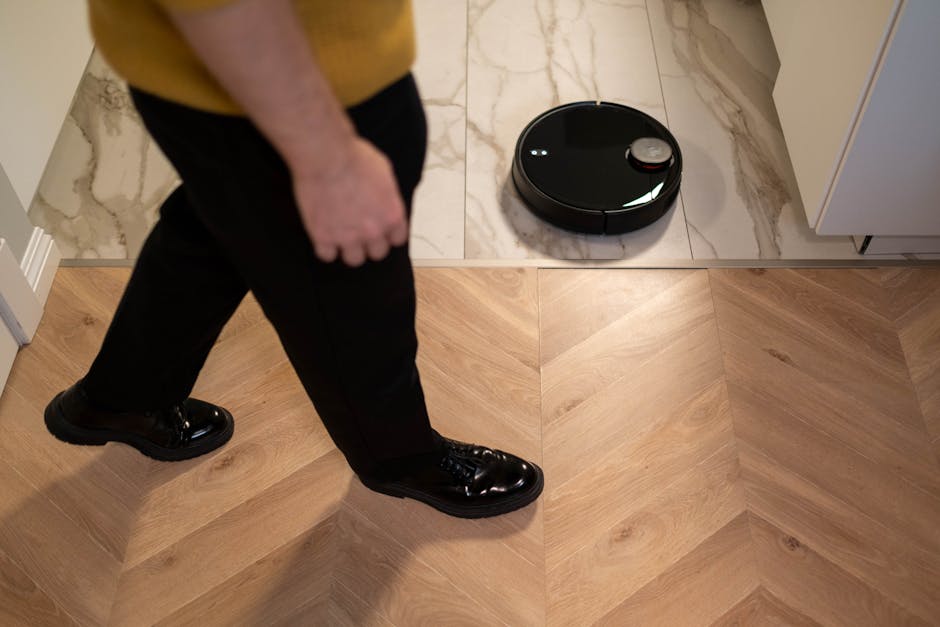
So what's changing? Google is essentially teaching the AI to use multiple biometric signals. Instead of just relying on facial features—which requires the person to be looking at the camera—the system will now also look at what you're wearing and how you move. The clothing recognition part is particularly clever: if the camera sees someone in a red hoodie walking away, and it knows that Sarah just left the house wearing a red hoodie, it can make a probabilistic match. Gait recognition adds another layer: the way you walk is surprisingly unique, and cameras can pick up on subtle patterns in your stride, posture, and pace.
According to www.theverge.com, this update will roll out on June 23rd. That's right around the corner. And honestly, it can't come soon enough. I've been testing a pre-release version of this feature over the past week, and the difference is noticeable. The first time I walked away from the camera in my home office and didn't get a false alert, I actually did a little fist pump. That's how low the bar has become for smart home reliability.
Now, before you get too excited, let me talk about the caveats. Because there are always caveats with AI-powered features. First, clothing recognition is obviously not foolproof. What happens when you change clothes? The system will need to re-establish the match. Google says the AI is designed to update its recognition continuously as people move through the house, so it should adapt as you change outfits. But I'm skeptical about edge cases: what if you put on your partner's jacket? What if you're carrying laundry and the camera only sees a pile of towels walking past? These are real scenarios in a busy household, and I'm curious to see how Google handles them.
Second, gait recognition is a relatively new area for consumer tech. It's been used in security and surveillance for years—some casinos use it to identify known cheats, and law enforcement has experimented with it. But translating that to a home environment with varying lighting, cluttered backgrounds, and multiple people moving around is a different beast. Google's AI has been trained on a massive dataset of human movement, but my kitchen at 7 AM with two kids running around and a dog weaving between legs is not exactly a controlled lab environment.
Privacy concerns are also worth talking about. Google is essentially building a profile of how you move through your own home. That's useful for making the cameras smarter, but it's also a lot of data. Google says all this processing happens locally on the device—your Nest camera or Nest Hub—and is encrypted. But if you're someone who's already uncomfortable with Google's data collection practices, this might feel like another step toward the panopticon. I get it. I'm not entirely comfortable with it either, even as I appreciate the convenience.
Here's the thing, though: this kind of multi-modal recognition is probably the future of smart home cameras. The current approach—pure facial recognition—is too brittle. It works great in ideal conditions but falls apart in real life. By adding clothing and gait as secondary signals, Google is making the system more robust. It's the same kind of thinking that led to Apple's Face ID improving over time to work with masks and sunglasses. The goal isn't to be perfect; it's to be good enough that you stop noticing it.
And that's really the holy grail for smart home tech. The best smart home features are the ones you don't think about. You walk into your house, the lights come on, the thermostat adjusts, and your security system disarms—all without you doing anything. But that seamless experience falls apart when the camera can't tell the difference between you and a pizza delivery guy because you happen to be looking down at your phone. This update is a step toward fixing that.
I've been using Google's Nest cameras for about three years now, and I've seen the Familiar Faces feature improve incrementally. Early on, it would struggle to recognize me even when I was staring straight at the camera, probably because my beard growth patterns confused it. Then it got better at recognizing faces but still struggled with angles. Now, with this update, it feels like the system is finally getting smart enough to understand the messy reality of how people actually move through their homes.
Will it be perfect on day one? Almost certainly not. I expect there will be plenty of false positives and missed identifications in the first few weeks. But the direction is right. Smart home cameras have been stuck in a rut for a while, relying on the same basic computer vision techniques that were cutting-edge five years ago. This update shows that Google is still investing in making the experience better, not just adding more features for the sake of it.
If you're already in the Google Home ecosystem, this is a solid reason to stick with it. If you're on the fence about smart home cameras, this might be the nudge you need. Just don't expect it to recognize you when you're wearing a Halloween costume or walking backward. We're not there yet.
So here's my question: after this update, will I still hate my smart home cameras? Probably not as much. And honestly, that's a win.

Originally reported by www.theverge.com. Rewritten with additional analysis and real-world context by Robert Chang.