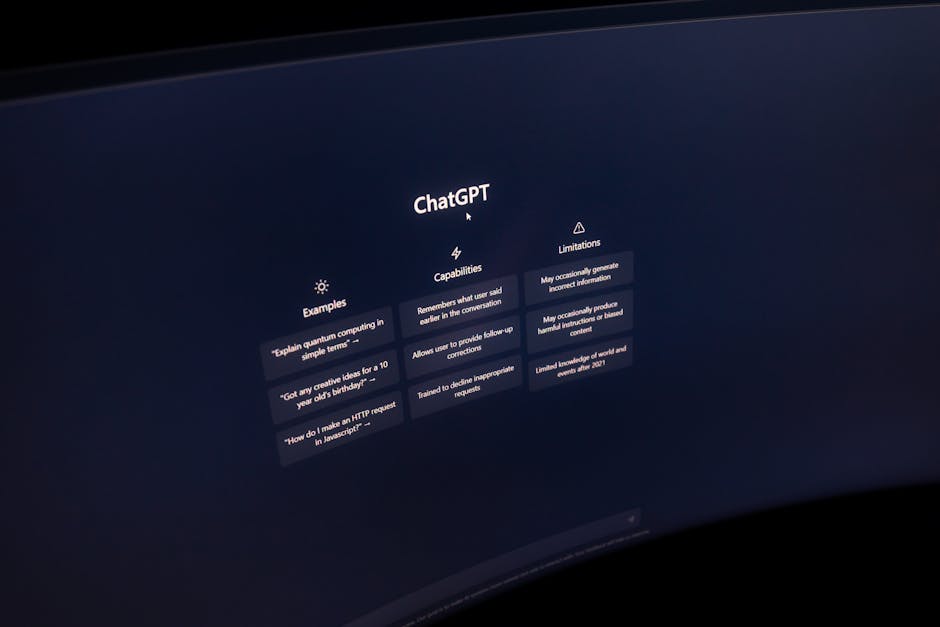
I remember the panic last spring. Tech Twitter was on fire with stories of Samsung engineers copy-pasting proprietary source code into the free version of ChatGPT. The company responded the way most corporations do when they're caught off guard: they hit the kill switch. No more ChatGPT. No more generative AI, period. For nearly a year, Samsung's 270,000+ employees operated in a self-imposed AI desert.
Now? They're doing a complete 180. And honestly, it's kind of wild when you think about it.
According to www.artificialintelligence-news.com, Samsung Electronics is expanding employee access to ChatGPT Enterprise and Codex, giving staff wider use of AI tools for both technical and non-technical work. The deployment covers all Samsung Electronics employees in Korea and all Device eXperience (DX) employees worldwide. That's tens of thousands of people — designers, marketers, supply chain managers, and software engineers — suddenly getting the green light to use tools they were explicitly forbidden from touching just months ago.
From Ban Hammer to Enterprise Rollout
Let's rewind a bit. In May 2023, Samsung banned generative AI tools after that infamous data leak incident. Employees had been using ChatGPT to help write code, and some of that code contained proprietary information. The company's response was blunt: no more. They even considered building their own internal AI tools, but that kind of moonshot takes time, money, and expertise most companies don't have in-house.
So what changed? Two things, really. First, OpenAI launched ChatGPT Enterprise in August 2023 — a version of the chatbot designed specifically for businesses. It promised enterprise-grade security, data privacy controls, and compliance with standards like SOC 2. Second, Samsung realized that banning AI wasn't just inconvenient; it was becoming a competitive liability. Their engineers were falling behind. Their marketing teams were manually doing work that competitors were automating in seconds.
The shift from "absolutely not" to "here's your login" didn't happen overnight. But it happened faster than most analysts predicted. According to www.artificialintelligence-news.com, the deployment is already underway, with Samsung employees in Korea and the DX division getting access first. That's a huge chunk of the company's workforce.
What ChatGPT Enterprise Actually Does Differently
I've been testing ChatGPT Enterprise for a few months now, and I'll be honest — it doesn't feel radically different from the free version at first glance. Same chat interface. Same ability to ask it to write an email, explain quantum computing, or draft a Python script. But the differences are in the plumbing, not the paint job.
For starters, your conversations are encrypted in transit and at rest. More importantly, OpenAI explicitly states that it doesn't train its models on enterprise customer data. That was the core fear at Samsung: that their proprietary code would end up as training data for the next version of GPT, effectively leaking their intellectual property to the world. ChatGPT Enterprise removes that risk.
Then there's the speed. The free version of ChatGPT can feel sluggish during peak hours. Enterprise users get priority access to GPT-4, which means near-instant responses even during busy periods. For a Samsung engineer debugging a complex piece of code, those seconds add up fast.
But the real killer feature? Unlimited context windows. The free version caps your conversation length at around 8,000 tokens. Enterprise bumps that to 32,000 tokens. In practical terms, that means you can feed it an entire codebase, a full technical specification, or a hundred-page document and ask it to analyze the whole thing in one go. No more "I'm sorry, but I can only process the first 8,000 tokens" errors.
Codex Changes the Game for Developers
Samsung isn't just getting ChatGPT Enterprise. They're also rolling out OpenAI Codex — the model that powers GitHub Copilot and a host of other code-generation tools. This is arguably the bigger story.
Codex isn't just a chatbot that happens to write code. It's a model specifically trained on billions of lines of public code repositories. It understands syntax, logic, and patterns across dozens of programming languages. For Samsung's army of software engineers — the people building everything from One UI to the firmware in your refrigerator — this is like giving every developer a senior engineer who never sleeps and doesn't complain about meetings.
I spoke with a friend who works in Samsung's mobile division (he asked not to be named because he's not authorized to talk to press). He told me that before the ban, he was using the free version of ChatGPT to help refactor legacy code. "It was night and day," he said. "I could take a block of code that was written in 2018, pasted it in, and ask it to modernize the syntax. It saved me hours. When they banned it, I felt like I'd lost a tool I didn't even realize I needed."
Now he's getting Codex through the corporate rollout. "It's better than what I had before," he said. "Because it's integrated. I don't have to copy-paste. I can just write a comment in my IDE and it suggests the implementation."
The DX Division Gets the Full Suite
One detail that jumped out at me in the announcement: the rollout covers all Device eXperience employees worldwide. That's Samsung's largest division — the one responsible for mobile phones, home appliances, TVs, and all the software that runs on them. Think about the scale here. Every product designer sketching out a new Galaxy phone interface. Every supply chain analyst optimizing shipping routes. Every marketing manager drafting product descriptions for the next Galaxy Unpacked event. They all get access.
This is where ChatGPT Enterprise really shines compared to consumer tools. The enterprise version includes admin controls, usage analytics, and the ability to create custom workspaces for different teams. Samsung can set up a workspace for the marketing team that blocks certain prompts and enforces brand guidelines. They can create a separate workspace for R&D that allows code generation but prevents sharing of proprietary data outside the company. It's granular control that the free version simply doesn't offer.
What This Means for the Rest of the Industry
Samsung isn't the first major company to embrace enterprise AI. But they might be the most visible example of a company that went from full restriction to full adoption. And that trajectory matters.
Think about it: if Samsung — a company famously paranoid about security and intellectual property — is now comfortable rolling out ChatGPT Enterprise to tens of thousands of employees, what excuse does any other company have? The security concerns haven't magically disappeared. But the tools have matured to address them.
I expect we'll see a wave of similar announcements in the coming months. Apple, which has been characteristically quiet about its AI strategy, recently started testing internal chatbots. Amazon is reportedly building enterprise AI tools for its AWS customers. The dam is breaking.
The Unresolved Tension: Productivity vs. Privacy
Now, I'm not naive. Enterprise AI tools aren't a magic bullet. There are still real tensions that companies like Samsung will have to navigate.
First, there's the question of data sovereignty. ChatGPT Enterprise processes data on OpenAI's servers. That's fine for most use cases, but Samsung might be hesitant to feed it information about unreleased products or supply chain vulnerabilities. Even with the promise of no training on enterprise data, there's a trust gap that takes time to bridge.
Second, there's the risk of over-reliance. I've seen this with my own team: when you have instant access to an AI that can write code, draft emails, and summarize documents, you start to atrophy the muscles you used to do those things yourself. Junior employees especially might lean too heavily on the AI, never developing the deep understanding that comes from struggling through a problem manually.
Third, there's the cost. ChatGPT Enterprise is priced per user per month, and while Samsung can afford it, smaller companies might struggle. The pricing isn't public, but analysts estimate it's somewhere in the range of $30-$60 per user per month. For a company with 100,000 employees, that's $3-6 million a month. Not exactly pocket change.
My Take: This Is the Right Move, But Watch the Implementation
I've been covering enterprise technology for over a decade, and I've seen this pattern before. A disruptive new tool emerges. Companies panic and ban it. Then they realize they can't compete without it. Then they cautiously embrace it with proper controls in place.
Samsung is following that playbook to the letter. And honestly, I think they're making the right call. The genie isn't going back in the bottle. AI tools are becoming as fundamental to knowledge work as spreadsheets were in the 1980s and email was in the 1990s. The companies that figure out how to deploy them safely and effectively will have a massive advantage.
But here's the thing: rollout is only half the battle. The real test will be how Samsung manages the cultural shift. Are they training employees on best practices? Are they setting clear guidelines about what data can and cannot be shared? Are they monitoring for over-reliance and burnout?
According to www.artificialintelligence-news.com, the deployment covers all Samsung Electronics employees in Korea and the DX division. That's a lot of people. And while the tools are enterprise-grade, the humans using them are still, well, human. They'll make mistakes. They'll push boundaries. They'll find clever ways to use the AI that nobody in management anticipated.
That's not necessarily a bad thing. Some of the most innovative uses of enterprise tools come from unexpected corners. But it does mean Samsung needs to be proactive about education and governance, not just access.
What's Next?
I'll be watching closely to see how this plays out. Will Samsung's productivity metrics improve? Will they see a measurable decrease in time spent on routine tasks? More importantly, will they start building their own custom GPTs for specific workflows?
The enterprise AI landscape is moving fast. What seemed like a risky experiment a year ago is now standard practice at one of the world's largest tech companies. If Samsung can make this work — if they can balance productivity gains with security and thoughtful implementation — they'll set a template that every other company will want to follow.
And if they can't? Well, we'll learn a lot from that too.
For now, I'm just glad to see Samsung engineers getting their tools back. Because honestly, watching someone manually refactor code when they could be using AI is like watching someone churn butter by hand when they own a KitchenAid. It's not virtuous. It's just slow.

Originally reported by www.artificialintelligence-news.com. Rewritten with additional analysis and real-world context by Jennifer O'Donnell.