DeepSeek AI has rapidly established itself as one of the most significant forces in artificial intelligence, challenging established players like OpenAI and Anthropic with models that deliver cutting-edge performance while remaining accessible through aggressive pricing and open-source availability. Developed by the Chinese AI company DeepSeek (深度求索), the platform gained worldwide attention with the release of DeepSeek V3 in late 2024, which demonstrated performance competitive with GPT-4 at a fraction of the training cost. The subsequent release of DeepSeek R1, a reasoning model that rivals OpenAI's o1 in complex problem-solving, cemented DeepSeek's position as a major player in the AI landscape. This comprehensive tutorial covers everything you need to know about using DeepSeek AI in 2026.
Understanding DeepSeek's Model Family
DeepSeek has released several distinct models, each optimized for different use cases. DeepSeek V3 is the company's flagship general-purpose language model, designed for a broad range of tasks including conversation, content creation, analysis, and coding. V3 is a mixture-of-experts (MoE) architecture with 671 billion total parameters, of which 37 billion are activated for any given token. This architecture allows the model to maintain vast knowledge while being computationally efficient during inference. DeepSeek V3 was trained on 14.8 trillion tokens and achieved performance on benchmarks that rivals or exceeds GPT-4 and Claude 3.5 on many standard evaluations, particularly in mathematics, coding, and Chinese-language tasks. DeepSeek R1 is the reasoning-focused model that brought DeepSeek global attention. R1 uses chain-of-thought reasoning to work through complex problems step by step, "thinking" before responding. When you ask R1 a difficult question, it generates an internal reasoning trace -- a sequence of logical steps, hypotheses, and self-corrections -- before producing its final answer. This approach dramatically improves performance on complex reasoning tasks like advanced mathematics, scientific problem-solving, multi-step logic puzzles, and competitive programming challenges. R1 achieves performance on par with OpenAI's o1 on many reasoning benchmarks while being significantly more cost-effective. DeepSeek Coder is a specialized model fine-tuned for programming tasks. It supports most major programming languages and has demonstrated strong performance on coding benchmarks. The Coder model is particularly effective for code generation, debugging, code review, and explaining complex codebases. DeepSeek has also released distilled versions of R1 in smaller sizes (1.5B, 7B, 8B, 14B, 32B, and 70B parameters), which are compact enough to run on consumer hardware while retaining much of R1's reasoning capability. These distilled models are open-source and available on Hugging Face, making advanced AI reasoning accessible for local deployment. The primary way most users interact with DeepSeek is through the official chat interface at chat.deepseek.com or through the mobile app (available for iOS and Android). The chat interface is clean and straightforward, similar to ChatGPT, with support for file uploads, web search, and voice input. DeepSeek also provides an API for developers, with pricing approximately 90-95% cheaper than OpenAI's equivalent models, making it one of the most cost-effective AI API options available.
Using the DeepSeek Chat Interface
Worth every penny.
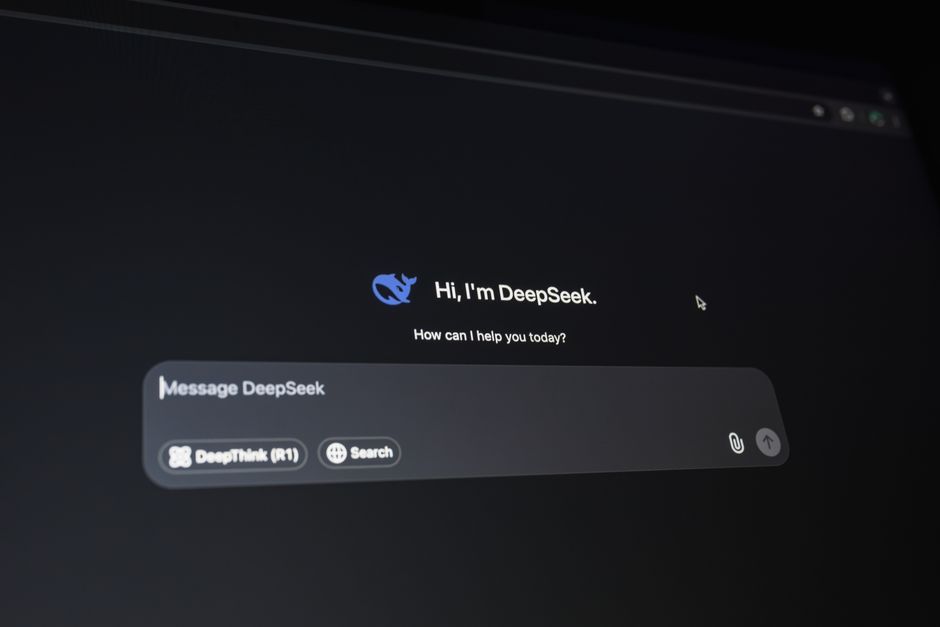
The DeepSeek chat interface is designed to be familiar to anyone who has used ChatGPT or Claude, while offering some unique features. The main text input area at the bottom of the screen accepts your messages, and you can attach files (images, PDFs, Word documents, Excel spreadsheets, PowerPoint files, and text files) by clicking the attachment icon. DeepSeek can read and analyze text from these files, making it useful for document analysis, data extraction from spreadsheets, and summarization of long documents. A key feature is the model selector, which lets you choose between "DeepSeek V3" (the general-purpose model, faster responses) and "DeepSeek R1" (the reasoning model, slower but more thorough for complex problems). For simple questions, quick information retrieval, or creative tasks, V3 is the better choice. For mathematics, logic puzzles, complex coding problems, scientific analysis, or any task requiring deep reasoning, R1 provides significantly better results. When using R1, you can optionally view the model's "thinking process" by clicking a toggle that reveals the internal reasoning chain. This is both fascinating and practical -- you can see how the model approaches problems, where it considers alternative paths, and how it verifies its own conclusions. The thinking process also helps you refine your prompts when the model goes off track, as you can identify where its reasoning diverged from the correct path. DeepSeek's context window supports up to 128K tokens for V3 and 64K tokens for R1, allowing you to process substantial documents or maintain long conversations. The platform also supports "Deep Search," which is a web search integration that allows DeepSeek to access current information from the internet. When you enable Deep Search, the model can search the web for up-to-date information, read web pages, and incorporate findings into its responses. This is particularly useful for queries about recent events, current prices, or any topic where the model's training data (which has a cutoff date) might be outdated. DeepSeek also offers a "Voice Input" feature on mobile and desktop, supporting multiple languages with accurate speech recognition. The platform is available in multiple languages, with particularly strong performance in English and Chinese, as the model was trained extensively in both languages. Users can switch between languages seamlessly within the same conversation.
DeepSeek API: Integration and Cost-Effective AI
It works.
For developers and businesses, DeepSeek's API offers one of the most cost-effective options in the AI market. The API endpoints support both V3 and R1 models, with pricing that is dramatically lower than equivalent models from US-based providers. DeepSeek V3 API pricing is approximately $0.27 per million input tokens and $1.10 per million output tokens, compared to GPT-4 which is roughly $10-30 per million tokens depending on the variant. DeepSeek R1 is priced at approximately $0.55 per million input tokens and $2.19 per million output tokens -- still a fraction of the cost of OpenAI's o1 reasoning model. This pricing makes DeepSeek particularly attractive for applications with high volume demands or cost-sensitive use cases. The API is compatible with the OpenAI API format, meaning you can use existing OpenAI SDKs and libraries with minimal modification by simply changing the base URL and API key. This compatibility extends to popular AI frameworks like LangChain, LlamaIndex, and the Vercel AI SDK, making integration into existing applications straightforward. The API supports both streaming and non-streaming responses, function calling (for tool use and structured outputs), and multi-turn conversations. For production deployments, DeepSeek API offers rate limits appropriate for most use cases, with higher limits available on request for enterprise customers. The API documentation is comprehensive and available in English and Chinese. DeepSeek also provides client libraries for Python, JavaScript/TypeScript, and Go, with community-maintained libraries for other languages. For organizations with strict data sovereignty requirements, DeepSeek offers deployment options through Chinese cloud providers (Alibaba Cloud, Tencent Cloud, Huawei Cloud) for data residency in China, and through select partners in other regions. The company is also expanding its availability through platforms like Amazon Bedrock and Microsoft Azure for customers who prefer Western cloud providers.
DeepSeek for Coding and Development
DeepSeek has demonstrated exceptional performance in programming and software development tasks, often rivaling or exceeding specialized coding models like GitHub Copilot and Code Llama. In the chat interface, you can ask DeepSeek to write code from scratch, debug existing code, explain complex codebases, suggest optimizations, or convert code between programming languages. DeepSeek supports all major programming languages including Python, JavaScript, TypeScript, Java, C++, C#, Go, Rust, Swift, Kotlin, Ruby, PHP, and many others. For IDE integration, DeepSeek offers extensions for VS Code and JetBrains IDEs. The VS Code extension, "DeepSeek Coder," provides AI-assisted coding features including inline code completions (as you type, DeepSeek suggests completions), code generation from comments (write a comment describing what you want and DeepSeek generates the code), code explanation (select code and ask for an explanation), code refactoring (suggest improvements and optimizations), and bug detection (identify potential bugs and security vulnerabilities). The extension is free and works with any programming language the model supports. For automated testing, DeepSeek can generate unit tests, integration tests, and test data based on your code. The R1 model is particularly effective at reasoning about edge cases and generating comprehensive test coverage. For code review, you can paste a code diff or an entire file and ask DeepSeek to review it for bugs, style issues, security vulnerabilities, and performance problems. The model provides specific, actionable feedback with line numbers and suggested fixes. For documentation, DeepSeek can generate README files, API documentation, inline code comments, and technical blog posts from code. The model's strong multilingual capabilities mean it can generate documentation in both English and Chinese, which is valuable for projects targeting both markets. DeepSeek has also been used as the basis for custom coding tools and agents. The model's strong reasoning capabilities make it an excellent backend for AI coding agents that need to plan, execute, and debug multi-step programming tasks. Developers have built autonomous coding agents using DeepSeek R1 that can accept high-level feature requests, design the implementation approach, write the code, test it, and iterate based on errors -- all without human intervention at each step.
So what does this mean in practice?
Prompt Engineering for DeepSeek Models
I'm not exaggerating.
Getting optimal results from DeepSeek models requires understanding their specific strengths and prompt engineering techniques. For general-purpose tasks with DeepSeek V3, follow standard prompt engineering best practices: be specific and clear about what you want, provide context and examples when needed, specify the format for responses, and break complex requests into steps. V3 responds well to structured prompts with clear instructions and examples. For DeepSeek R1, the approach is different because of the model's reasoning architecture. R1 is designed to "think" before responding, and it performs best when given complex problems that benefit from step-by-step reasoning. Prompts that are too simple or that constrain the reasoning process can actually reduce R1's effectiveness. For R1, use open-ended questions that require analysis: "Explain the implications of quantum computing on current encryption standards, considering both the mathematical foundations and practical deployment timelines." Prefacing complex requests with phrases like "Think through this step by step" or "Let's reason through this" can help activate R1's full reasoning capabilities. For coding tasks with R1, describe the problem thoroughly including constraints, edge cases, and performance requirements. R1 excels at understanding complex requirements and generating well-structured, efficient code. For multi-step problems, R1 significantly outperforms V3 by working through intermediate steps, checking its work at each stage, and correcting errors before producing the final answer. For creative tasks like writing and content creation, V3 is often the better choice as it generates more fluid, natural text without the analytical overhead of the R1 reasoning process. R1's responses can feel overly analytical for creative work, with excessive qualification and explanation. For technical documentation and analysis, R1's thoroughness is an advantage. A practical workflow is to use V3 for initial drafts and brainstorming, then switch to R1 for verification, debugging, and deep analysis. DeepSeek also supports system prompts, which allow you to set the model's behavior and constraints at the conversation level. For R1, effective system prompts include "you're a thorough analyst who considers multiple perspectives before concluding" or "You verify each step of your reasoning before proceeding to the next." DeepSeek models are particularly strong at following complex instructions with multiple constraints, making them suitable for tasks that require precise output formatting or adherence to specific guidelines.
What's the catch?
Bottom Line
- DeepSeek offers a family of AI models including V3 (general-purpose), R1 (advanced reasoning), and Coder (programming), with R1 matching OpenAI o1 in complex problem-solving at a fraction of the cost.
- The chat interface at chat.deepseek.com provides access to both V3 and R1 models, with file upload support, web search (Deep Search), voice input, and a 128K token context window.
- DeepSeek API is 90-95% cheaper than equivalent OpenAI models and uses an OpenAI-compatible format, making integration into existing applications straightforward with minimal code changes. (this one actually surprised me)
- For coding, DeepSeek offers VS Code and JetBrains extensions with inline completions, code generation, debugging, testing, and code review capabilities. — game changer in my workflow
- Effective prompt engineering differs between V3 (clear instructions, examples, structured format) and R1 (open-ended reasoning questions, complex problems, step-by-step analysis).
- Distilled R1 models (1.5B to 70B parameters) are open-source and available for local deployment on consumer hardware, democratizing access to advanced AI reasoning.
Honestly, for comparisons with other AI platforms, see our ChatGPT Complete Guide 2026 and Claude AI Complete Guide. For AI agent workflows, read How to Use AutoGPT and AI Agents.
Is it worth the effort?