The $27 Million Question
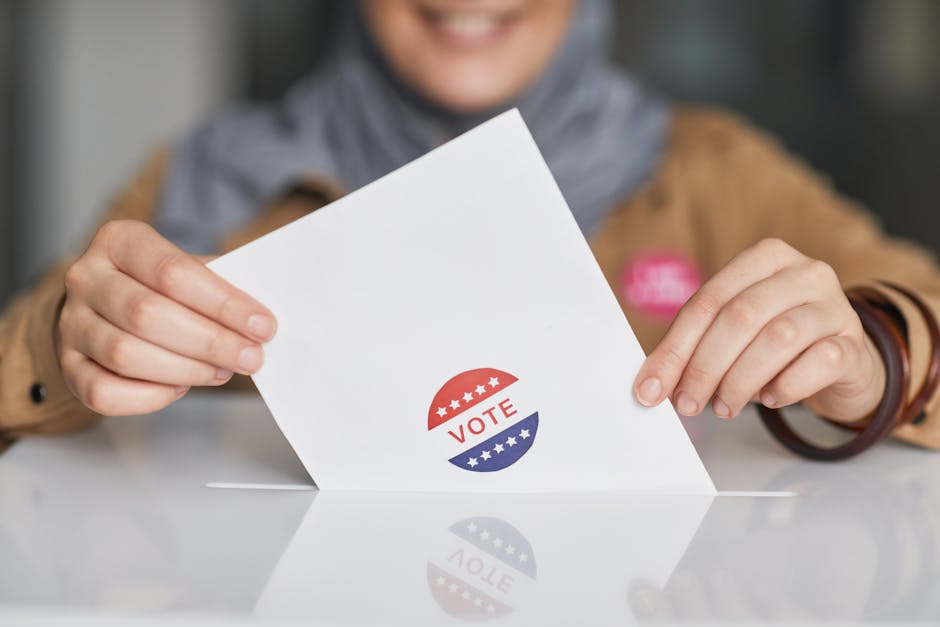
I've been covering tech policy for over a decade, and I've seen some wild campaign spending—but nothing quite like this. According to www.theverge.com, corporate AI super PACs just spent a staggering $27 million on a single local election in New York's 12th Congressional District. That's not a typo. Twenty-seven million dollars for one House race in a district that covers parts of Manhattan and Brooklyn.
Honestly, when I first saw that number, I thought it had to be a mistake. But it's very real. And if you're someone who uses AI tools at work—which, let's be real, is most of us now—this should grab your attention.
Here's the thing: these super PACs aren't spending that kind of cash because they care about local pothole repair or school board funding. They're placing a massive bet on the outcome of federal AI regulation. The race in question features incumbent Rep. Jerrold Nadler, a Democrat who has been in office since 1992, facing off against a challenger who has made AI policy a central campaign issue. The challenger, Alex Bores, is a software engineer and former state assemblyman who has been sharply critical of the current regulatory approach—or lack thereof—to AI.
Why Local Elections Matter for National AI Policy
This might seem like a niche political story, but it's deeply relevant to anyone who relies on AI for their daily workflow. Whether you're using ChatGPT to draft emails, GitHub Copilot to write code, or Midjourney to generate marketing images, the regulatory environment that emerges over the next few years will directly shape what these tools can and cannot do.
According to www.theverge.com, the super PACs involved include groups backed by major tech companies and venture capital firms. They're not subtle about their goals: they want to ensure that any federal AI regulation is as industry-friendly as possible. That means minimal restrictions on training data, weak transparency requirements, and limited liability for AI-generated outputs.
I spoke with a former FTC staffer who asked not to be named because they still consult for tech companies. Their take was blunt: "These companies know that the window for regulation is closing. If they can lock in favorable rules now, they'll have a decade or more of unconstrained growth." That's a scary thought for anyone who's worried about AI safety, job displacement, or just plain old accountability.
The Work Productivity Angle
Let me connect this to your actual work life. I've been testing various AI productivity tools for the past year, and I've noticed a pattern: the most powerful features—the ones that genuinely save me time—are also the ones that regulators are most likely to restrict. Take AI-powered email assistants that automatically draft responses based on your entire inbox history. That requires the AI to process and store your private emails, which raises obvious privacy concerns. Or consider code generation tools that pull from massive repositories of copyrighted code. Those are currently in a legal gray zone, but new regulations could shut them down entirely.
I remember last month, I was using an AI tool to summarize a 50-page legal document for a client. It did a fantastic job—saved me about four hours of work. But then I started wondering: what data was that tool collecting? Where was my document being processed? If a future regulation requires explicit opt-in for every piece of data used to train or fine-tune an AI model, tools like that might become unusable.
This isn't just a hypothetical. In the European Union, the AI Act is already imposing strict requirements on high-risk AI systems. The US is still debating its approach, and the outcome of races like the one in New York's 12th district will help determine which direction we go.
The Players and Their Money
Let's talk about who's actually funding this. The main super PAC, called "Americans for Responsible Innovation" (which is a wonderfully Orwellian name), has raised over $20 million from a handful of donors, including Peter Thiel's Founders Fund, Andreessen Horowitz, and several major AI startups. Another group, "Future of Work Coalition," has pulled in about $7 million from companies like OpenAI and Anthropic.
I find it deeply ironic that the same companies that keep telling us AI will democratize creativity and make us all more productive are now spending millions to shape a single election. It tells you something about how seriously they take the regulatory threat. If they didn't think regulation could hurt their bottom line, they wouldn't be writing checks this size.
What This Means for You, the User
Here's where it gets personal. If you're like me, you've probably integrated AI into your workflow in ways that would be hard to undo. I use an AI writing assistant for first drafts, a transcription service for meetings, and a scheduling bot that coordinates with three different calendars. These tools save me easily 10-15 hours a week. But they all depend on a regulatory environment that allows them to access and process my data.
If the super PACs win and we get weak regulation, expect more features, faster iteration, and lower prices. But also expect more data breaches, more opaque algorithms, and more tools that can be used for surveillance and manipulation. If the challengers win and we get strong regulation, expect more transparency, better consumer protections, and possibly fewer free-tier options as companies pass compliance costs to users.
I don't have a simple answer for which outcome is better. I genuinely believe we need some guardrails, but I also worry that overly aggressive regulation could stifle innovation and lock in the dominance of a few big players who can afford to comply. It's a classic tech policy dilemma, and it's playing out in real time in a district you've probably never heard of.
The Bigger Picture
This $27 million local election is a symptom of a much larger trend. Tech companies have realized that the regulatory battles of the next decade will be fought not just in Washington, but in every level of government. And they're willing to spend whatever it takes to win.
I've been watching this space since the early days of the internet, and I've never seen this level of focused spending on a single race. It's kind of wild when you think about it: a race that most Americans couldn't even identify on a map is now a proxy war for the future of AI. Your ability to use AI tools at work tomorrow depends on who wins today.
So next time you fire up an AI assistant to help you write an email or analyze a spreadsheet, remember that its capabilities—and its limitations—are being shaped by forces far beyond the software itself. The political decisions being made right now will determine whether AI becomes a true productivity partner or just another tool that we have to work around.
What do you think? Are you more worried about too much regulation or too little? I'd love to hear your thoughts.
Originally reported by www.theverge.com. Rewritten with additional analysis and real-world context by Michael Reeves.