The Language Services Market in the AI Era
The global language services market, encompassing transcription, translation, interpretation, and localization, continues to grow steadily as businesses operate across more languages and content volumes expand rapidly. Artificial intelligence has transformed this industry by making transcription and translation dramatically faster and more affordable while maintaining quality levels that meet most business needs. For entrepreneurs, this transformation has created a significant opportunity to build scalable service businesses that leverage AI as a core production tool.
The demand for transcription and translation services comes from diverse sources. Podcasters and video creators need transcripts for accessibility, SEO, and content repurposing. Businesses need meeting transcripts for documentation and compliance. Healthcare providers need medical transcription and translation. Legal professionals require accurate court and deposition transcripts. Content creators and marketers need subtitles and translations to reach global audiences. Educational institutions need lecture transcripts and course material translations. Each of these segments has specific needs, quality requirements, and willingness to pay.
The key insight for building a profitable AI-powered language services business is understanding that AI handles the initial production, but human expertise adds the quality, accuracy, and specialization that commands premium pricing. Raw AI transcription achieves impressive accuracy rates, but professional transcription services differentiate through higher accuracy, proper formatting, speaker identification, timestamps, and handling of specialized terminology. Similarly, AI translation provides a strong foundation, but professional translators add cultural nuance, industry-specific accuracy, and stylistic polish that AI alone cannot consistently deliver.
Choosing Your Service Niche
The transcription and translation market segments into several distinct niches, each with different customer needs, pricing standards, and competitive dynamics. Choosing the right niche for your business is essential for positioning and profitability.
I'll be honest: general transcription services serve a broad market including businesses, academics, journalists, and content creators. These services handle clear audio with standard vocabulary and straightforward formatting requirements. General transcription is the easiest niche to enter but also the most competitive. Success requires competitive pricing, fast turnaround, and reliable quality. AI tools make general transcription highly efficient, allowing you to offer attractive prices while maintaining healthy margins.
Specialized transcription in areas like medical, legal, and technical fields commands significantly higher prices due to the specialized knowledge required. Medical transcription requires understanding of medical terminology, drug names, anatomical terms, and clinical documentation standards. Legal transcription requires familiarity with legal terminology, court procedures, and documentation standards. Specialized transcription services earn 2-3 times more per audio hour than general transcription, making this the most profitable niche for skilled practitioners.
Translation services can focus on specific language pairs, content types, or industries. The most profitable translation niches are those with high demand and limited supply of qualified translators. Technical translation for industries like engineering, software, medical devices, or legal documentation commands premium rates. Marketing and creative translation requires cultural adaptation skills beyond literal translation. Localization services — adapting content, software, or media for specific markets — is a high-value specialization that combines translation with cultural and technical expertise.
Subtitling and captioning services serve the rapidly growing video content market. Podcasters, YouTube creators, streaming platforms, e-learning companies, and businesses with internal video content all need high-quality subtitles and captions. AI dramatically accelerates the subtitling process, but human review ensures accuracy, proper timing, and compliance with accessibility standards. The growing emphasis on accessibility compliance in many countries creates ongoing demand for quality captioning services.
Does this live up to the hype?
Building Your AI-Powered Production Workflow
I'm not exaggerating.
The efficiency of your production workflow determines your profitability. A well-designed workflow that strategically combines AI tools with human quality control allows you to deliver high-quality work at competitive prices while maintaining attractive margins.
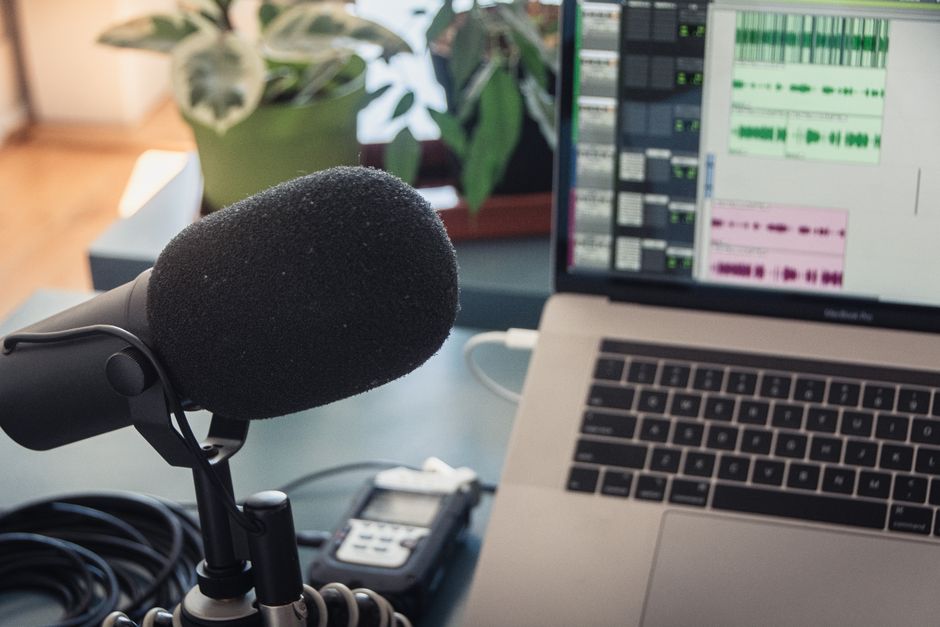
For transcription services, your workflow should start with AI-powered speech-to-text tools that generate an initial transcript. Tools like Whisper, Descript, Rev AI, and specialized medical or legal transcription AI each have strengths for different audio types. The key is selecting the right AI tool for each job based on audio quality, accent, subject matter, and required accuracy level. Process audio files through your chosen AI transcription tool, generating an initial transcript with timestamps and speaker labels.
I learned this the hard way: human review and editing is where you add the value that justifies your pricing. A qualified transcript reviewer listens to the audio while reading the AI-generated transcript, correcting errors, improving punctuation and formatting, verifying speaker identification, and handling sections where audio quality or specialized terminology challenged the AI. The reviewer also formats the transcript according to client specifications — verbatim versus clean read, specific timestamp intervals, and any special formatting requirements.
Let me give you a concrete example. For translation and multilingual services, your workflow follows a similar pattern but with translation AI tools. Use AI translation tools like DeepL, Google Translate, or specialized translation AI to generate an initial translation. Human translators then review and refine the translation, ensuring accuracy, natural language flow, cultural appropriateness, and industry-specific terminology. For premium clients, a second reviewer can provide an additional quality check.
Pricing Your Language Services
Pricing for transcription and translation services follows established industry conventions, but AI efficiency allows you to offer competitive rates while maintaining healthy margins. Understanding the pricing landscape helps you position your services effectively.
Transcription pricing is typically based on audio minutes or hours, with rates varying by complexity and turnaround time. Standard rates for general transcription range from $1-3 per audio minute, with faster turnaround commanding premium pricing. Medical and legal transcription ranges from $2-5 per audio minute. AI-assisted transcription services can offer lower rates than traditional services while maintaining higher margins due to reduced production time. One audio hour of general content might take 15-20 minutes of human time with AI assistance, compared to 3-4 hours for manual transcription.
Translation pricing is typically based on word count, with rates varying by language pair and specialization. Common language pairs (Spanish-English, French-English) typically range from $0.10-0.25 per word for general content and $0.20-0.40 per word for specialized content. Rare language pairs with limited translator supply commands significantly higher rates. Rush delivery adds a premium of 50-100 percent to standard rates. AI-assisted translation allows you to deliver faster and maintain better margins, though rates in translation are more established and harder to undercut than transcription.
Here's a real example from my own use: subtitling pricing combines elements of both transcription and translation. For same-language subtitles, pricing of $3-7 per video minute is common. For translated subtitles, pricing ranges from $5-15 per minute depending on language pair and content complexity. AI tools dramatically accelerate subtitle creation, particularly for timing and syncing, which can be the most time-consuming part of manual subtitling.
Client Acquisition and Business Development
Finding clients for transcription and translation services requires a strategic approach that combines online presence, direct outreach, and partnership development. The most successful language service businesses develop multiple client acquisition channels to ensure consistent workflow.
Online marketplaces and platforms provide initial access to clients. Platforms like Upwork, Fiverr, and specialized language service platforms connect transcriptionists and translators with clients. While these platforms take a commission, they provide immediate access to clients who need your services. Building a strong profile with positive reviews and completed projects establishes credibility that attracts higher-quality clients over time.
Direct outreach to businesses that regularly need transcription and translation services can build a stable client base. Target businesses in media production, legal services, healthcare, market research, e-learning, and content marketing. These organizations have ongoing needs for language services and value reliable, high-quality providers. Offer a free trial or sample to demonstrate your quality and turnaround time. Once you prove your value, these relationships often evolve into ongoing retainer arrangements.
Specialization creates opportunities for premium positioning. If you focus on legal transcription, build relationships with law firms and court reporting agencies. If medical translation is your niche, partner with healthcare organizations, medical device companies, and pharmaceutical firms. Specialized providers can charge higher rates and face less competition than generalists. Attend industry events, join professional associations, and publish content that demonstrates your expertise in your chosen specialization.
Too good to be true?
Scaling Your Language Services Business
Let me explain.
Scaling a language services business requires moving beyond solo operation to build a team and systematize your production process. The most profitable language service businesses are those that successfully combine AI efficiency with human quality control at scale.
I'll be honest: building a team of freelance or part-time transcriptionists and translators allows you to handle larger volumes and serve more clients. Develop clear quality standards, style guides, and training materials that ensure consistent output across your team. Use AI to assist every team member's production, maximizing efficiency across your operation. Invest in project management tools that help you assign work, track progress, and manage deadlines across multiple client projects.
Quality assurance processes become increasingly important as you scale. Implement a multi-tier quality system where each piece of work goes through initial production, quality review, and final client preparation. For premium clients, add a second review step. Track quality metrics, identify common errors or issues, and provide feedback and training to your team. Consistently high quality is your competitive advantage and the foundation of client retention and referrals.
In my experience, technology investment in better AI tools, workflow automation, and client portal systems can make a big difference to your operational efficiency. As you grow, invest in the best AI tools for your specific services, automate client onboarding and order processing, and provide clients with self-service portals for submitting work, checking status, and accessing completed projects. These investments improve margins and enhance client experience, supporting continued growth.
Bottom Line
I learned this the hard way: - AI has transformed transcription and translation services, enabling faster production and better margins while maintaining professional quality
- Choose a specific niche — general or specialized transcription, translation, or subtitling — based on your skills and market opportunity
- Build an efficient production workflow combining AI tools for initial processing with human review for accuracy and quality — your experience may differ, but this worked for me
- Price services competitively based on industry standards while using AI efficiency to maintain healthy profit margins
- Acquire clients through online platforms, direct business outreach, and specialization in high-value niches
- Scale by building a team, implementing quality assurance systems, and investing in technology for operational efficiency — your experience may differ, but this worked for me
- Combine language services with AI Freelancing to offer a broader range of AI-powered professional services