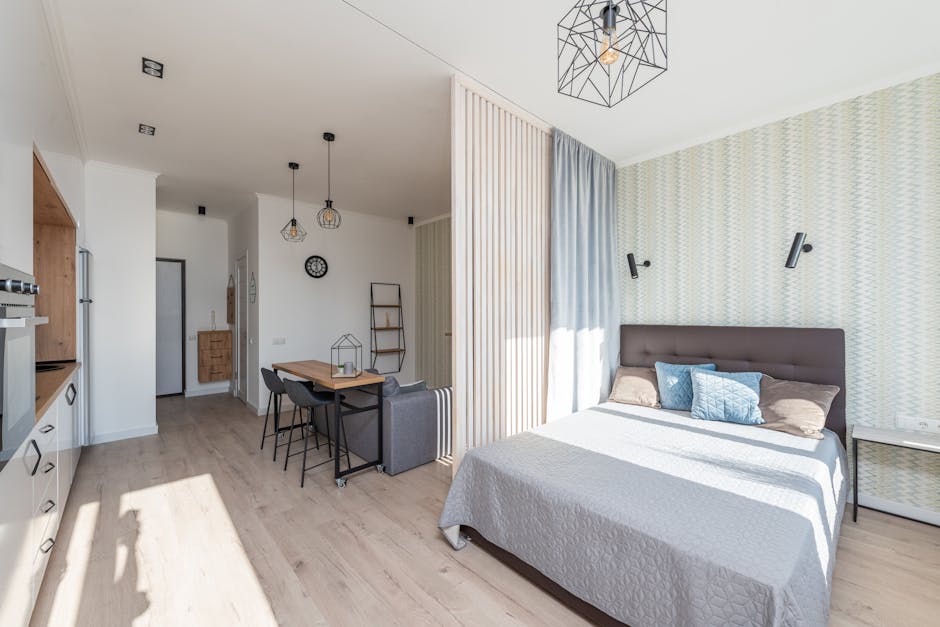
I spent last Saturday morning in a fluorescent-lit Brooklyn apartment that smelled faintly of cat urine and regret. The listing had shown a sun-drenched living room with a mid-century sofa, a fiddle-leaf fig in the corner, and what appeared to be an actual closet. What I got was a windowless box with a futon that looked like it had survived a frat party and a 'closet' that was really just a hole in the wall. This wasn't a bait-and-switch from a shady Craigslist poster. This was a professionally managed building using AI virtual staging, and I was just the latest sucker to fall for it.
According to www.theverge.com, Joyce, a native New Yorker looking for her first solo apartment, had a similar experience. She described the process as "hell" after touring a series of overpriced, tiny spaces she called "shitholes." Then she found it: a reasonably priced Manhattan studio that looked perfect online. The photos showed clean lines, cozy furniture, and a view that didn't involve a brick wall. She rushed to see it. In person, it was a dump. The furniture in the photos? Nonexistent. The view? A cleverly angled shot past a dumpster. The whole apartment had been AI-generated from an empty shell.
This is the new reality of rental listings. AI virtual staging tools—like those from companies such as BoxBrownie, Virtual Staging AI, and even some built into real estate platforms—allow landlords to take a photo of an empty room and instantly fill it with furniture, art, plants, and even people. The results are often indistinguishable from a real, professionally staged apartment. The problem? They're lies. And they're making an already miserable process even worse.
The Digital Mirage
Virtual staging isn't new. Real estate agents have been digitally adding furniture to empty rooms for years, but it used to require a designer, a Photoshop expert, and a few hours of work. Now, AI does it in seconds. You upload a photo of an empty room, choose a style—mid-century modern, Scandinavian, industrial—and the AI generates a fully furnished space. It adjusts lighting, adds shadows, and even places a coffee cup on the table. It's impressive technology. It's also deeply unethical when used in rental listings without clear disclosure.
The core issue is expectation management. When you see a photo of a cozy apartment with a couch, a rug, and a lamp, your brain subconsciously measures the room against that furniture. You assume the couch fits, that the rug covers the floor, that the lamp actually has a place to plug in. But the AI doesn't respect physics. It can shrink a couch to fit a room that's actually too small. It can add windows that don't exist. I've seen listings where the AI added a fireplace to a studio that had no chimney. The fire looked real. The room felt warm. The apartment in real life was a cold, fireless box.
According to www.theverge.com, this technology is spreading rapidly because it's cheap. A traditional staging might cost hundreds of dollars per room per month—you have to rent real furniture, hire movers, and maintain it. AI staging costs a few bucks per image. For landlords, it's a no-brainer. But for renters, it's a trap. You're not just disappointed when you arrive; you're disoriented. You start questioning your own judgment. Did you misread the square footage? Was that lamp really in the photo? You waste time and money traveling to apartments that never existed.
Why This Matters Beyond the Annoyance
You might think, "It's just furniture. Who cares?" But this isn't about aesthetics. It's about power dynamics in a housing market that already favors landlords. Renters are desperate. In cities like New York, San Francisco, and Austin, you're competing against dozens of people for every halfway decent unit. You make decisions fast. You sign leases based on photos and a five-minute tour. If those photos are lies, you're making a major financial commitment based on fiction.
I talked to a friend who works in tenant advocacy in Los Angeles. She told me about a client who signed a lease after seeing AI-staged photos of a unit that looked spacious and bright. When she moved in, the apartment was dark, cramped, and missing the built-in shelves the AI had invented. The landlord refused to let her break the lease. She's now paying $2,400 a month for an apartment she never agreed to rent. The legal argument is murky: the photos didn't technically misrepresent the square footage or the appliances, just the furniture. But the furniture changed the entire perception of the space.
Some states are starting to take notice. California requires disclosure when a listing uses virtual staging. New York is considering similar legislation. But enforcement is weak. Many listings still don't label AI-generated images, or they bury the disclosure in fine print. And even when they do, the damage is done. You've already built a mental picture of your future home. The reality can't compete.
The Tech Behind the Deception
Here's how it works. Most AI staging tools use generative adversarial networks (GANs) or diffusion models trained on thousands of professionally designed rooms. You feed it a photo of an empty room, and it generates a plausible layout, complete with furniture, decor, and lighting. The best tools can even match the style of the building—a pre-war unit gets vintage furniture, a new high-rise gets sleek modern pieces. The AI understands perspective and depth, so the furniture looks like it belongs in the room. It's genuinely impressive.
But the AI doesn't understand reality. It doesn't know that the wall it just added a window to is actually a load-bearing wall facing an air shaft. It doesn't know that the beautiful rug it placed covers a stain that the landlord never cleaned. It creates an idealized version of the space—one that often doesn't exist. And because the images are photorealistic, they bypass your skepticism. You see a photo, not a rendering. Your brain trusts it.
I tested this myself. I took a photo of my own empty storage room—a 6x8 concrete box with no windows. I uploaded it to a popular AI staging tool. Within seconds, it generated a cozy home office with a wooden desk, a bookshelf, a plant, and even a window looking out onto a sunny garden. The window was fake. The desk was fake. The plant was fake. But the photo looked real. My wife walked by and asked when I had bought that desk. That's how good this technology is.
What Renters Can Actually Do
So how do you protect yourself in a world where the listing photos might be AI-generated fiction? First, look for clues. AI staging often has subtle tells: furniture that looks slightly too large for the room, shadows that don't match the lighting, plants that look too perfect (real plants have imperfections). But these tells are getting harder to spot. Some tools now add realistic imperfections intentionally to avoid detection.
Second, demand a video tour. Live video calls are harder to fake. Even a pre-recorded video walkthrough is better than photos, because you can see the space in motion and get a sense of scale. Third, ask directly: "Are these photos AI-staged?" A honest landlord will tell you. A dishonest one might lie, but at least you've asked. Some states have laws requiring disclosure, so you can follow up with a legal threat if needed.
Fourth, visit in person before signing anything. This sounds obvious, but in competitive markets, people sign leases sight-unseen all the time. Don't. The savings aren't worth the risk. If a landlord won't let you see the unit in person, walk away. There are other apartments.
The Bigger Picture
This isn't just about rental listings. AI-generated content is creeping into every corner of our lives—product photos on Amazon, profile pictures on dating apps, even food on delivery apps. We're entering an era where you can't trust what you see. And that's profoundly destabilizing. Trust is the foundation of every transaction. When that trust is broken, the entire system suffers.
Landlords who use AI staging without disclosure are shooting themselves in the foot. Sure, they get more applications in the short term. But they also get angry tenants who leave bad reviews, break leases, and tell their friends to avoid the building. In the age of social media and online reviews, reputation matters. A few deceptive listings can poison a building's reputation for years.
What's the solution? Regulation is part of it. Clear labeling requirements, enforced by fines, would help. But the real fix is cultural. We need to decide, as a society, that honesty matters more than a quick lease. That's a hard sell in a housing market where landlords hold all the cards. But it's the only path forward that doesn't turn every apartment hunt into a detective game.
After my Saturday morning disappointment, I went home and looked at the listing again. The photos still looked great. The AI had done its job. I had to remind myself that the apartment in those photos never existed. It was a digital ghost, haunting a real space that smelled like cat pee. And somewhere, another renter is looking at that same listing right now, thinking they've found their dream home. I hope they read this first.

Originally reported by www.theverge.com. Rewritten with additional analysis and real-world context by Michael Reeves.