Introduction
Modern vehicles are more complex than ever, with sophisticated electronic systems controlling everything from engine timing to braking assistance, infotainment, and safety features. While this complexity has made cars safer and more efficient, it has also made maintenance and troubleshooting increasingly challenging for average car owners. Artificial intelligence is bridging this gap, putting professional-grade diagnostic capabilities into the hands of everyday drivers. The automotive AI market is projected to exceed $15 billion by 2032, with maintenance and diagnostics representing one of the fastest-growing segments. From smartphone apps that interpret check engine lights to predictive systems that alert drivers to potential failures before they occur, AI is making car care smarter, more proactive, and more cost-effective. This article explores the key ways AI is revolutionizing how we maintain and care for our vehicles.
AI-Powered OBD-II Diagnostics
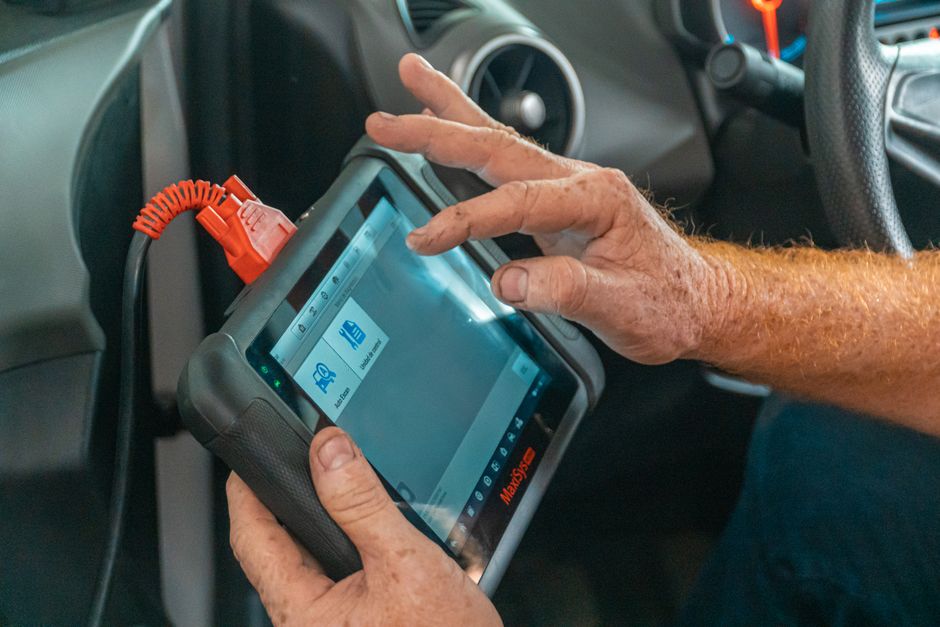
The On-Board Diagnostics II (OBD-II) port, standard in all vehicles manufactured after 1996, has traditionally been the domain of professional mechanics. However, AI-powered OBD-II scanners and companion apps are making this data accessible and understandable to everyone. Devices like FIXD, BlueDriver, and Carista pair with smartphone apps that use machine learning to interpret diagnostic trouble codes and translate them into plain English. Instead of seeing an intimidating code like P0301, a driver sees "Cylinder 1 Misfire Detected" along with a clear explanation of what this means, how urgent the issue is, and what typical repair costs might be.
What sets AI-powered diagnostics apart from traditional code readers is the depth of analysis. Rather than simply displaying the code and its generic definition, AI systems analyze the specific context of the code—when it appeared, under what driving conditions, what other codes were logged, and whether the issue is likely to be a simple sensor failure or a more serious mechanical problem. These systems draw on databases of millions of real-world repair cases to provide probabilistic diagnoses. For example, if a P0420 code (catalyst system efficiency below threshold) appears alongside certain O2 sensor readings on a specific make and model, the AI might determine there's a 70 percent chance it's a failing catalytic converter and a 30 percent chance it's a faulty oxygen sensor—information that helps drivers make informed decisions about where to start their troubleshooting.
Sound familiar?
Predictive Maintenance and Proactive Alerts
The most valuable application of AI in car maintenance is predictive analytics. Instead of relying on fixed maintenance schedules based on mileage or time intervals, AI systems learn a specific vehicle's usage patterns and predict when components are likely to need attention. For example, an AI monitoring system that tracks engine start patterns, driving conditions, and battery voltage trends might predict that the battery will need replacement in approximately three months—not because the calendar says so, but because the data shows it's approaching the end of its reliable life.
These predictive capabilities extend to nearly every vehicle system. AI can analyze brake pedal feel data from electronic brake systems to estimate remaining pad life more accurately than visual inspection alone. It can monitor transmission shift quality to detect early signs of wear in clutches or solenoids. Tire pressure monitoring systems enhanced with AI can distinguish between a slow leak and normal pressure drop from temperature changes, reducing false alarms while catching genuine problems earlier. Some luxury vehicles from Tesla, BMW, and Mercedes already incorporate these predictive maintenance features, but aftermarket devices like Automatic and Zooz are bringing similar capabilities to older vehicles. The cumulative effect is fewer unexpected breakdowns, reduced repair costs through early intervention, and extended vehicle lifespan.
So what does this mean in practice?
Virtual Mechanic Assistants and Repair Guidance
I'll be honest: when something does go wrong with a vehicle, AI-powered virtual mechanic assistants can help owners understand their options and even guide them through DIY repairs. Apps like YourMechanic and GarageSauce use AI chatbots to ask targeted questions about symptoms—"Is the noise a clicking, grinding, or whining sound?" "Does it happen when turning, accelerating, or braking?"—and narrow down likely causes. These systems combine diagnostic decision trees with machine learning models trained on thousands of repair cases to provide surprisingly accurate preliminary diagnoses.
For hands-on car owners, AI is making DIY repairs more accessible through augmented reality and step-by-step guidance. Some platforms overlay repair instructions onto a live camera view of the engine bay, highlighting exactly which bolt to remove, what tool to use, and what torque specification to apply. AI systems can identify the specific engine configuration, transmission type, and component layout from a single photo, then retrieve the correct repair procedure from a database. This technology is reducing the intimidation factor of car repair, enabling more owners to handle routine maintenance themselves while also providing helpful context when discussing problems with professional mechanics. Even for those who don't do their own repairs, AI helps them communicate more effectively with service shops and understand whether quoted work is actually necessary.
Fleet Management and Commercial Vehicle Optimization
Beyond personal vehicles, AI is transforming maintenance for commercial fleets, where vehicle downtime directly impacts revenue. Fleet management platforms like Samsara, KeepTruckin, and Geotab use AI to monitor hundreds of vehicles simultaneously, prioritizing maintenance needs based on vehicle utilization, criticality, and predicted failure probability. These systems can detect subtle performance trends across an entire fleet—such as a particular brake component failing more frequently on trucks operating in mountainous regions—and proactively recommend component replacements or driver training adjustments.
AI fleet systems optimize maintenance scheduling by considering factors beyond just vehicle condition. They can coordinate maintenance with vehicle location to minimize out-of-service time, schedule work during planned downtime, and ensure that parts are available before the vehicle arrives at the shop. Predictive algorithms can determine the optimal point to replace components: too early wastes money on usable parts, too late risks breakdowns and secondary damage. These systems also track mechanic performance and parts quality, identifying patterns like a particular repair shop having higher-than-average rework rates or a specific parts brand showing premature failure. For fleet operators managing dozens or hundreds of vehicles, these AI-powered insights translate directly to lower operating costs, higher vehicle availability, and improved safety.
What's the catch?
If You Only Remember One Thing
- AI-powered OBD-II scanners translate complex diagnostic codes into plain English explanations with probabilistic diagnoses based on millions of real repair cases. — game changer in my workflow
- Predictive maintenance systems analyze individual vehicle usage patterns to forecast component failures before they occur, reducing breakdowns and repair costs. — wish I'd known this six months ago
- Virtual mechanic assistants use natural language processing and diagnostic algorithms to help car owners understand problems and explore repair options. — game changer in my workflow
- Augmented reality repair guidance with AI component identification is making DIY maintenance more accessible to home mechanics. — took me a while to figure this out
- Commercial fleet management platforms leverage AI to optimize maintenance scheduling, reduce downtime, and improve vehicle availability across hundreds of vehicles simultaneously. — took me a while to figure this out
For more ways AI is transforming daily tasks, check out AI Gift Suggestion and Shopping Assistants and AI for Event and Party Planning.